Bernabe Towing & Recovery
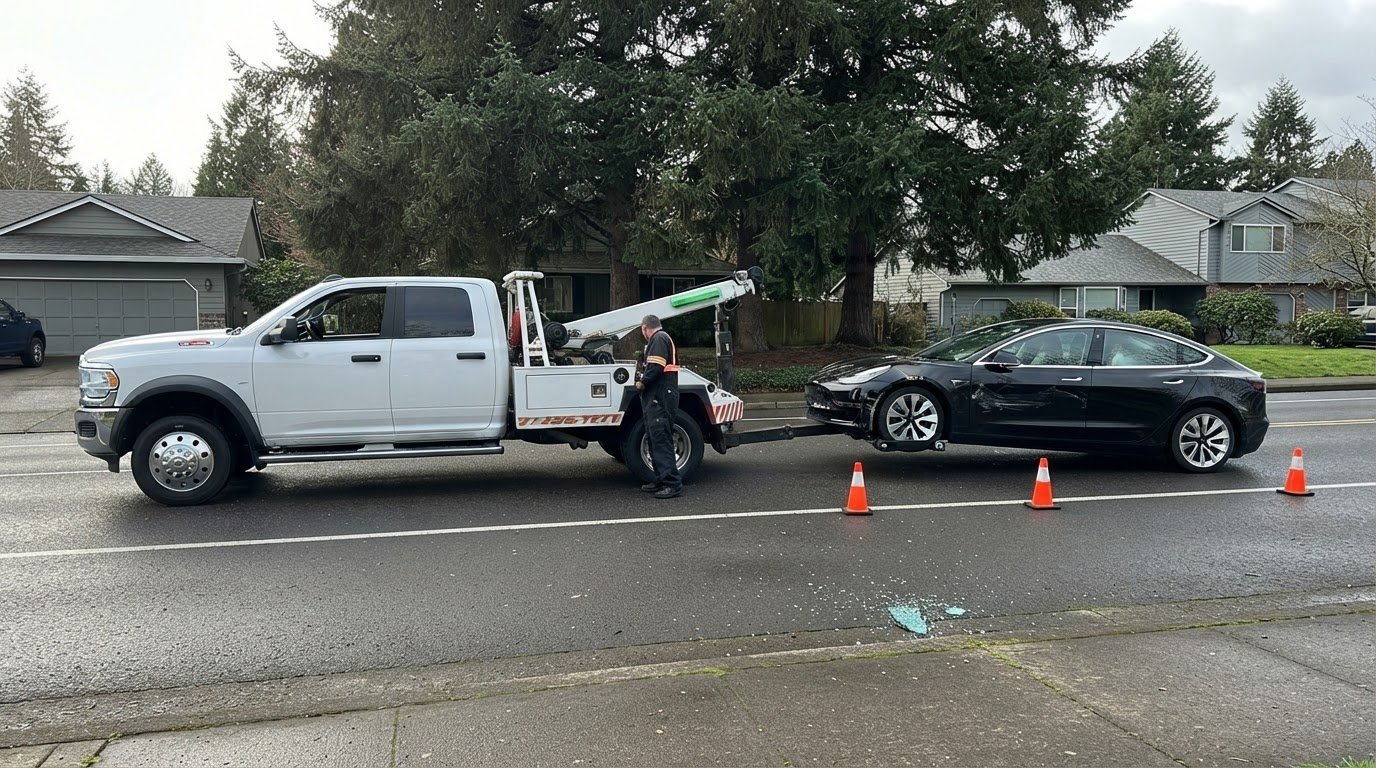
A tow is only one part of a crash response. Professional accident recovery and vehicle transportation also involve managing hazards at the scene and arranging safe removal of a damaged vehicle. According to Oregon Driver and Motor Vehicle Services, drivers must file an Accident and Insurance Report within 72 hours after a crash involving an injury or death, vehicle damage over $2,500, or a vehicle that must be towed.
After a collision, getting people to safety comes first. This guide explains how accident recovery and vehicle transportation work, what information helps coordinate a response, and how hazards such as debris and broken glass affect the scene. It also distinguishes light-duty recovery from heavy-duty recovery, so you can identify the type of assistance your vehicle needs with Bernabe Towing & Recovery.
Key Takeaways
- Learn how dispatch and recovery coordination help move a damaged vehicle while keeping scene hazards in view.
- Understand why fluid leaks, broken glass, and debris can affect recovery and vehicle removal.
- See how vehicle size and condition shape the difference between light-duty and heavy-duty recovery needs.
- Find out what can affect insurance coverage for accident towing and recovery in Oregon.
- Know when Oregon’s DMV accident report is required and the filing deadline that applies.
24/7 Dispatch and recovery
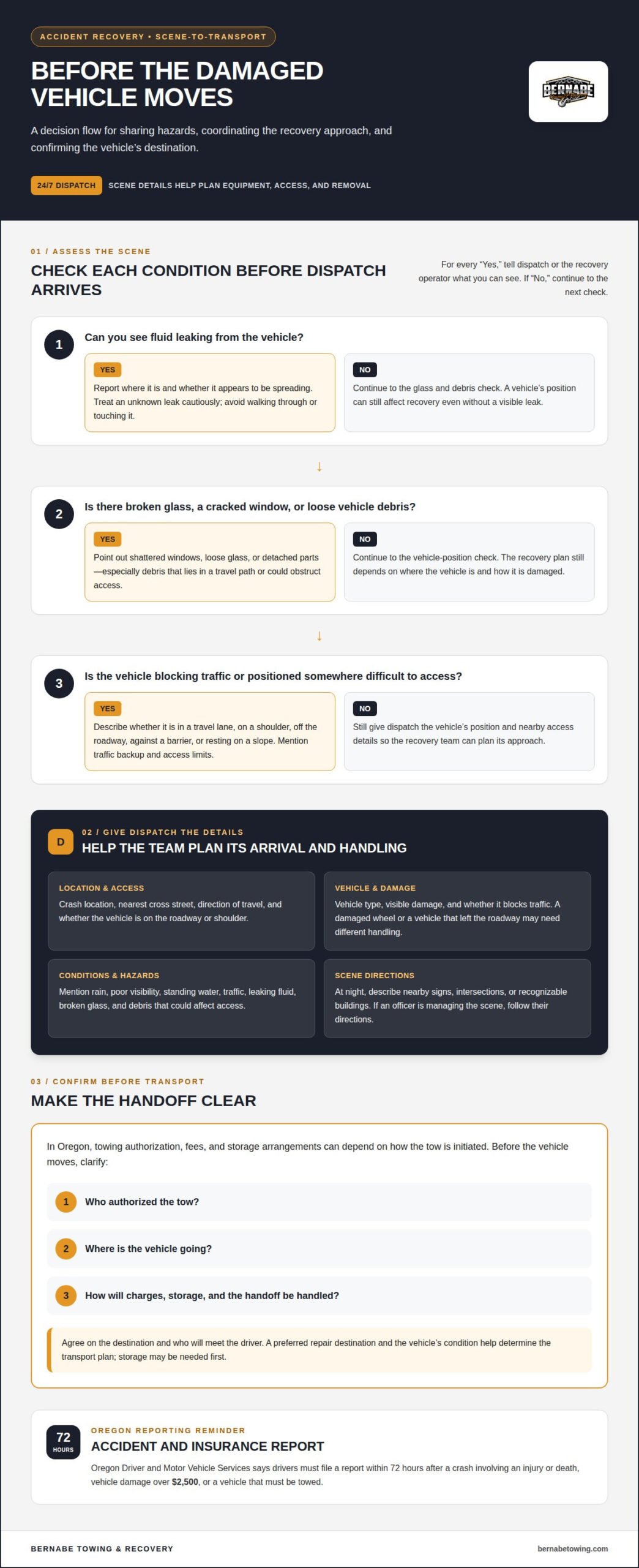
Dispatch gathers details about the scene, access, and vehicle to coordinate removal. A clear description helps the recovery team plan how to approach and handle it.
Towing authorization, fees, and storage arrangements in Oregon can depend on how a tow is initiated. Before the vehicle moves, clarify who authorized the tow, its destination, and how charges and storage will be handled.
Near Happy Valley, traffic, rain, poor visibility, and restricted access can affect where a recovery vehicle can position itself. A blocked lane calls for a different approach than a vehicle on a narrow shoulder.
Before dispatch, identify where you want the vehicle taken. Its condition, your preferred repair destination, and the circumstances at the scene help determine the transport plan.
Around-the-Clock Dispatch
A 24/7 dispatch model accepts recovery requests at any hour and organizes the response. The dispatcher needs the crash location, vehicle type, visible damage, and whether the vehicle blocks traffic. These details help determine what equipment and access the recovery requires.
For example, a car with a damaged wheel may need different handling from one that has left the roadway. Give dispatch a precise location and describe the vehicle’s position. Mention hazards such as leaking fluid or broken glass so the recovery team can plan accordingly.
Dispatch can help clarify next steps. Confirm who is authorizing the tow, where the vehicle should go, and who will meet the driver there. If an officer is managing the scene, follow their directions. Clear handoffs reduce confusion between the crash scene, recovery operator, and destination.
Oregon’s modified comparative fault rule was amended by the Oregon Legislative Assembly: an injured person cannot recover compensation if found more than 50% at fault. That rule concerns compensation, not the immediate recovery plan. Keep the vehicle’s location, damage, and destination details clear while recovery is arranged.
Local Conditions Affecting Recovery
Recovery in Happy Valley can be affected by traffic, road access, and weather. Rain can reduce visibility, while passing traffic can limit safe positioning. A vehicle blocking a travel lane creates different access challenges from one clear of traffic.
Give dispatch specific scene details, including the nearest cross street, the vehicle’s direction, and whether it is on the shoulder or roadway. Mention any traffic backup. These details help the recovery team plan its arrival and approach.
At night, poor visibility can make a vehicle harder to find. Describe nearby signs, intersections, or recognizable buildings to help pinpoint the scene. In wet conditions, mention standing water or a vehicle resting on a slope, so the recovery plan accounts for its position and surrounding hazards.
As recovery proceeds, dispatch and the operator need a clear destination and authorization. For example, a driver may prefer a repair destination, while a vehicle’s condition may require storage first. Agree on the destination and handoff details before transport begins, so the vehicle’s next stop is understood.
Fluid and hazard awareness during recovery
Choosing a recovery operator involves more than arranging a tow. An incomplete scene assessment can complicate removal: a vehicle leaking fluid, for example, needs different coordination from one with visible body damage alone. The operator should account for surrounding hazards and explain how the vehicle will be handled and moved.
Fluids can spread beyond a damaged vehicle and create hazards for people and nearby traffic. Fuel, oil, and coolant can look similar from a distance, so treat an unknown leak cautiously. Report visible fluid, where it is, and whether it appears to be spreading. Avoid walking through or touching it.
Broken glass and loose vehicle parts can also complicate recovery. A cracked window may shed glass as the vehicle moves, while a detached bumper could obstruct access or lie in a travel path. The recovery team should note these conditions before positioning equipment and plan around debris that could affect safe movement.
- Fluid: Describe where a leak appears and whether it is spreading.
- Glass: Point out shattered windows or loose glass near the vehicle.
- Vehicle position: Explain whether the car rests in a lane, on a shoulder, or off the roadway.
- Nearby hazards: Mention traffic, barriers, or debris that limits access.
A vehicle’s position can create hazards even when there is no visible leak. A car against a barrier, tilted on a slope, or blocking a lane may require a different recovery approach. Assessing the scene helps the operator plan access and avoid putting additional strain on damaged parts during removal.
Ask how the recovery plan accounts for hazards at the scene. The operator should explain the proposed handling, loading approach, and destination. For example, a car with a damaged wheel may need careful loading rather than being moved as if it were fully operational.
Watch for unclear instructions or unexplained changes to the plan. Before the vehicle moves, establish who authorized the recovery, where the vehicle is going, and how the handoff will happen. This reduces confusion when the driver, recovery operator, and destination representative are different people.
Good hazard awareness includes recognizing when recovery and cleanup are separate tasks. The operator can identify broken glass or fluid concerns and coordinate the vehicle’s removal around them. For accident recovery support, share the vehicle’s position and visible hazards so the response can be planned around the scene.
Light-duty and heavy-duty recovery
Recovery method depends on vehicle size, damage, position, and access. A professional weighs those details before choosing a flatbed, wheel-lift, or another transport approach.
Light-duty recovery generally covers passenger cars and light-duty trucks. After a collision, damage to a wheel, suspension, steering, or body can affect how a vehicle moves. A car with a wheel that will not roll presents a different loading challenge from one that can move normally. The operator assesses the vehicle’s condition and position before choosing a method.
Flatbed towing carries a vehicle on a platform. Wheel-lift towing raises one end for transport. Neither method is automatically right for every crash-damaged car. The choice depends on the damaged parts, whether the vehicle can roll, and whether the recovery vehicle can safely access the scene.
For example, a car with significant front-end damage may need a different approach from one with a damaged rear wheel. A vehicle off the roadway may also need recovery before transport. The operator considers how to load it, avoid worsening visible damage, and move it to the agreed destination.
- Vehicle condition: Note damage that affects steering, wheels, or movement.
- Position: Explain whether the vehicle is on the road, shoulder, or off-road.
- Access: Describe nearby barriers, parked vehicles, or limited working space.
- Destination: Identify where the vehicle should be taken after removal.
Heavy-duty recovery is a separate category for larger commercial vehicles, such as semi-trucks. Their size and recovery needs differ from those of passenger cars and light-duty trucks. Describe the vehicle accurately when requesting assistance so the request matches the type of recovery required.
Vehicle type alone does not determine the recovery method. A damaged passenger car may need more careful handling than an intact vehicle of similar size. An accessible light-duty truck also presents a different situation from one disabled beside a barrier. Details about damage and position help the operator plan a suitable transport option.
Before the vehicle moves, confirm the proposed method and destination with the recovery operator. If a wheel is damaged or the car cannot roll, say so clearly. This helps explain why flatbed or wheel-lift equipment may suit the vehicle and scene.
For Accident Recovery and Vehicle Transportation in Happy Valley, Oregon, start with an accurate description of the vehicle, its damage, and its location. This helps distinguish routine towing from recovery that requires a more careful plan.
Does auto insurance cover accident towing and vehicle recovery in Oregon?
Accident towing coverage depends on the terms of your auto policy. A policy may address towing separately from vehicle damage, so do not assume one type of coverage includes the other. For example, collision damage coverage and a roadside towing benefit are separate policy questions. Your declarations page and endorsements can help identify the coverages attached to your policy.
Tell your insurer the crash location, vehicle condition, and intended destination. Ask whether your policy covers accident towing or recovery, what process the insurer requires, and what documentation it needs. Record the claim number and the representative’s instructions. If the vehicle has already been moved, explain where it went and keep the towing documentation.
Oregon’s required medical coverage should not be confused with towing coverage. Oregon auto insurance policies must include at least $15,000 in PIP medical benefits per person, according to the Oregon Legislative Assembly. PIP is for medical benefits, not a promise that accident towing will be paid. PIP medical benefits generally cover treatment for up to two years after the crash.
Oregon law also requires every auto policy to include uninsured motorist coverage under ORS 742.502, according to the Oregon Legislative Assembly. That requirement does not by itself establish whether a particular tow is covered. Review the policy language for towing, roadside assistance, collision, and other applicable coverage rather than treating required coverage as a single package.
- Coverage type: Find the policy language for towing or roadside assistance.
- Claim process: Ask whether the insurer requires an approved process or specific records.
- Destination: Tell the insurer where the vehicle is going, such as a repair facility or storage location.
- Documentation: Keep the claim number, tow record, and instructions together.
For example, a driver may have vehicle damage coverage but no separate towing benefit. Another policy may include roadside assistance with conditions or limits. The exact wording matters. Ask your insurer how it handles recovery from the crash scene, transport to your chosen destination, and storage arrangements. Keep the answers with your claim details.
Do not delay safe vehicle removal while trying to interpret every policy clause at the roadside. Share the insurer’s instructions with the recovery operator, and clarify who will pay before approving optional destination or storage arrangements. Keeping a clear record connects the tow, claim, and destination without assuming the insurer will cover every part.
Keep accident paperwork distinct from the insurance claim and towing records. Oregon law requires Personal Injury Protection coverage on every auto insurance policy under ORS 742.520. Oregon drivers should file the DMV accident report even when police responded, because the police report does not replace the driver’s DMV filing. Keep the DMV filing and police report as separate records; one does not substitute for the other. The filing documents the driver’s report, while the tow records document the vehicle’s removal and destination.
An injured person in Oregon has no legal obligation to give the at-fault driver’s insurer a recorded statement. The DMV filing remains important even when police responded, while towing coverage and recovery are policy questions to address with the insurer. Keep these matters distinct when following up about the accident and the vehicle’s handling.
What to Do After a Happy Valley Crash Before Towing
Start with people, not vehicle paperwork. Call 911 after a crash, even if it appears minor. If anyone needs medical attention, tell the dispatcher where the crash occurred and describe immediate dangers. Follow directions from emergency responders at the scene before arranging vehicle movement.
When requesting a tow, give the operator a precise location in Happy Valley. Name a nearby intersection, business, or road sign, then explain which direction the vehicle faces. Say whether it is in a travel lane, on a shoulder, or off the roadway. These details help identify the vehicle and assess access to the scene.
Describe the vehicle and its condition plainly. Provide its make, model, color, and license plate if available. Explain whether a wheel is damaged, whether the vehicle can roll, and whether visible damage prevents normal movement. Mention leaking fluid, broken glass, or detached parts. For example, say if a damaged wheel is pressed against a curb.
- Scene location: Give an intersection, landmark, and travel direction.
- Vehicle details: Share the make, model, color, and plate when available.
- Condition: Describe visible damage and whether the vehicle can move.
- Destination: State the intended repair facility or other destination.
Choose a destination before the vehicle is loaded. Tell the operator whether you want it taken to a repair facility or another location. If your insurer has provided claim instructions, share the relevant details and have the claim number ready. Clarify who will receive the vehicle and how the handoff will happen.
Oregon drivers must file an Accident and Insurance Report with the DMV within 72 hours after a crash involving injury or death, vehicle damage over $2,500, or a vehicle that must be towed, according to Oregon Driver and Motor Vehicle Services. A police response doesn’t replace this filing. Keep the tow and crash details together for completing the report.
Record the recovery operator’s name and the vehicle’s destination. Keep towing paperwork, insurance claim information, and crash details together. If someone else is coordinating the vehicle, share the destination and handoff plan with them. This makes it easier to track where the vehicle went after leaving the scene.
For a vehicle that cannot be driven safely, arrange professional transport rather than attempting to move it yourself. Share the location, damage, and destination details when requesting help. Arrange accident recovery with those details ready.
Bernabe Towing & Recovery: Accident Recovery
Bernabe Towing & Recovery provides accident recovery for drivers who need professional vehicle removal after a collision. Turn to the service when damage, a disabled vehicle, or its position makes driving away impractical. When arranging assistance in Happy Valley, share the crash location, vehicle condition, and intended destination.
If a vehicle cannot be driven safely, Emergency Towing can help move it from the scene. Lockout Assistance and Jump Start Service address separate roadside problems, such as keys locked inside or a vehicle that will not start. Describe the issue clearly so the appropriate assistance can be arranged.
Have the destination and any insurer instructions ready so the recovery plan reflects where the vehicle needs to go. For accident recovery in Happy Valley, contact Bernabe Towing & Recovery to discuss the help you need.
Plan Your Next Step With Confidence
After a collision, the next step is to make a clear plan for the vehicle. Accident recovery and vehicle transportation in Happy Valley, Oregon involve deciding where the vehicle should go, who will receive it, and how the insurer’s instructions fit into the process. Keeping these details aligned gives you a practical starting point for arranging recovery.
Bernabe Towing & Recovery can help when a damaged vehicle needs recovery or towing. Lockout Assistance is available when keys are inaccessible. Explain the situation and the help needed so the request addresses the immediate problem. Clear communication helps move things forward without unnecessary steps.
Contact Bernabe Towing & Recovery to discuss the recovery assistance you need. Take the next step when you’re ready, with a clear plan for your vehicle and its destination.
Frequently Asked Questions
What accident recovery and towing services are available in Happy Valley, Oregon?
Bernabe Towing & Recovery provides accident recovery and towing for cars and light-duty trucks, as well as emergency towing and roadside assistance. A driver whose vehicle cannot be driven after a collision can request recovery and transport. Roadside assistance also includes lockouts, jump starts, tire changes, and winch-outs. The right service depends on the vehicle’s immediate problem and the help needed at the scene.
Which towing companies serve Happy Valley and what are their hours and response times?
Bernabe Towing & Recovery serves Happy Valley and nearby communities, including Tigard, Beaverton, Tualatin, Sherwood, Hillsboro, Wilsonville, King City, Lake Oswego, and Portland, Oregon. Emergency towing and accident recovery are available 24/7, with fast response times; a specific arrival estimate isn’t provided here. Share your exact location, vehicle information, and destination when requesting service so dispatch can understand the situation and coordinate the response.
Where can a towed vehicle be taken for storage or repairs near Happy Valley?
Tell dispatch your preferred repair destination. Depending on the vehicle’s condition and the scene, it may need to go to storage first. Confirm the destination before transport begins.
What are Oregon’s rules for towing, consent, fees, and vehicle storage after a crash?
Arrangements can depend on how the tow is initiated. Before the vehicle moves, confirm who authorized the tow, where it is going, and how charges and storage will be handled.