Bernabe Towing & Recovery
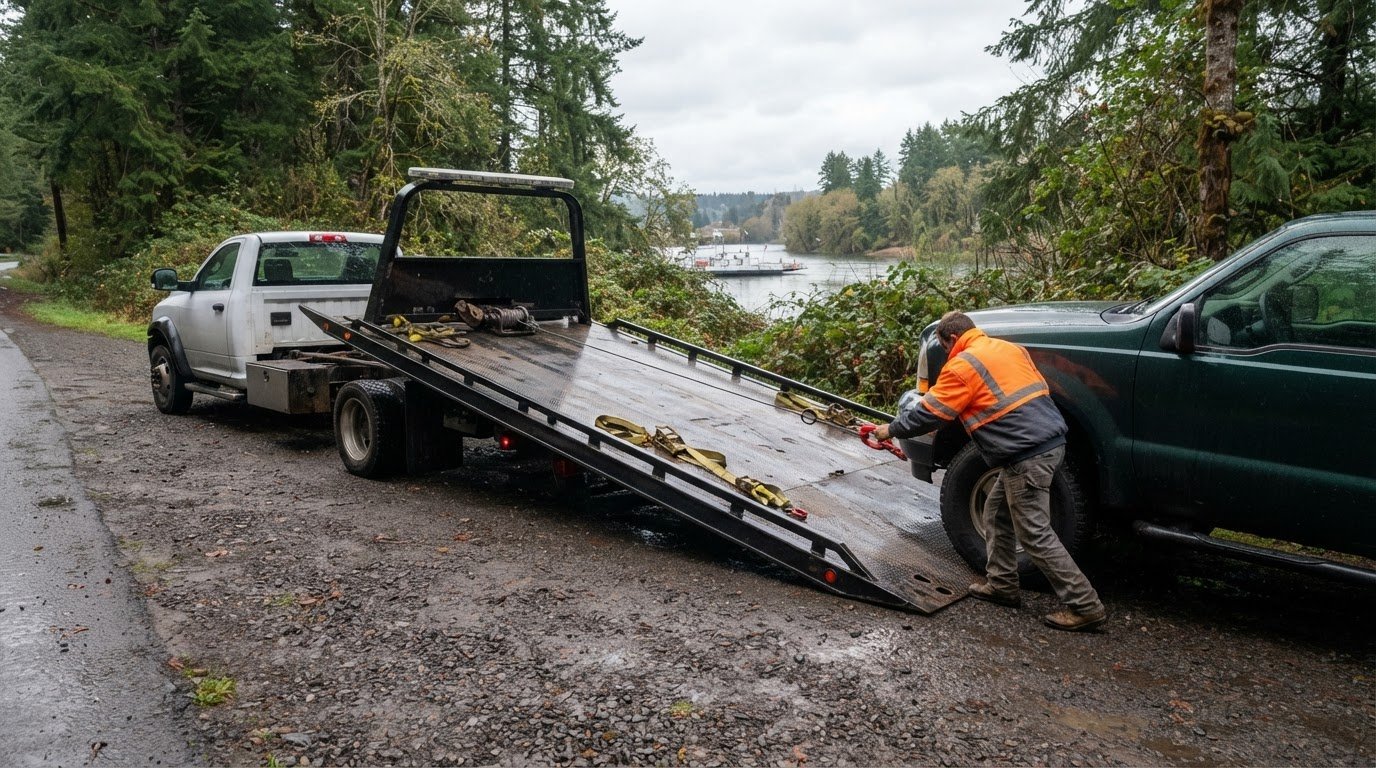
A disabled pickup or SUV can need a careful tow after dark. Bernabe Towing & Recovery provides reliable flatbed towing for pickup trucks and SUVs, available 24 hours per day, 7 days per week. Drivers in Tigard, Beaverton, Tualatin, Sherwood, Hillsboro, Wilsonville, King City, Lake Oswego, and Portland can use this guide to understand what details help plan a safe tow.
It’s reasonable to want clear answers before arranging transport, especially when a vehicle can’t be driven. Flatbed towing for pickup trucks and SUVs depends on the vehicle’s condition, size, and access at the pickup location.
Learn how to request a flatbed, which vehicles it can carry, and what location details help dispatch plan the move. This guide also explains service-area coverage and what to share when arranging flatbed towing for pickup trucks and SUVs with Bernabe Towing & Recovery.
Key Takeaways
- When requesting a tow, share your location, vehicle type, and condition so the towing team can plan the appropriate equipment and approach.
- Pickup truck and SUV size and weight affect whether a flatbed is suitable; heavy-duty towing needs differ from standard vehicle towing.
- Canby service-area details include ZIP code 97013. Your exact pickup location helps clarify whether the route is covered.
- Flatbed towing can accommodate cars, light trucks, SUVs, and vans when the vehicle and loading conditions are a fit.
- For a vehicle that can’t be driven or has been in a collision, emergency towing or accident recovery can help with the next step.
Do you tow at night in Canby?
Nighttime towing is available 24/7 in the Portland-area communities served by Bernabe Towing & Recovery, including Tigard, Beaverton, Tualatin, Sherwood, Hillsboro, Wilsonville, King City, Lake Oswego, and Portland. A request can begin with the pickup location, the vehicle’s condition, and the help needed. Those details give dispatch a practical starting point, whether a vehicle is parked at home or stopped beside a local road.
For assistance after dark, provide a street address or nearby landmark. Name the road or intersection, then describe the vehicle’s make, model, and condition. Mention access limits, such as a narrow driveway, low garage entrance, or vehicle blocked in a parking space. These details help the Bernabe Towing & Recovery team plan how to reach and load it.
A request between communities, such as Aurora and Tigard, also needs clear pickup and destination information. Give both addresses and explain any access restrictions at either end. A vehicle behind a commercial building may need directions to a particular entrance, while one at a home may be accessible from the driveway.
For a quote, share the route, vehicle type, condition, and loading needs. The quote depends on the specific request and is provided after a quote request. A vehicle that rolls and steers presents a different loading situation from one with collision damage. Make payment arrangements clear before dispatch, since accepted methods and timing can depend on the service arrangement.
Oregon roadside assistance plans or auto insurance may cover flatbed towing when the policy includes eligible towing benefits. Coverage depends on plan terms, distance limits, destination rules, and claim procedures. A dispatch request and insurance claim are separate steps, so keep the tow details and receipt for any claim.
Before dispatch, confirm the pickup point, destination, vehicle description, and requested service. Mention if the vehicle is inaccessible or has unusual loading needs. A clear landmark, such as a marked entrance or nearby business, can help identify a location at night. Update dispatch if the vehicle’s position or condition changes after the request.
Flatbed transport secures the vehicle on the platform to limit movement during the trip. Loading plans depend on vehicle condition and access. A non-running SUV needs a different approach from a vehicle that can move onto the platform. Accurate details help the Bernabe Towing & Recovery team prepare for the actual pickup rather than relying on a general vehicle description.
How to request professional flatbed towing
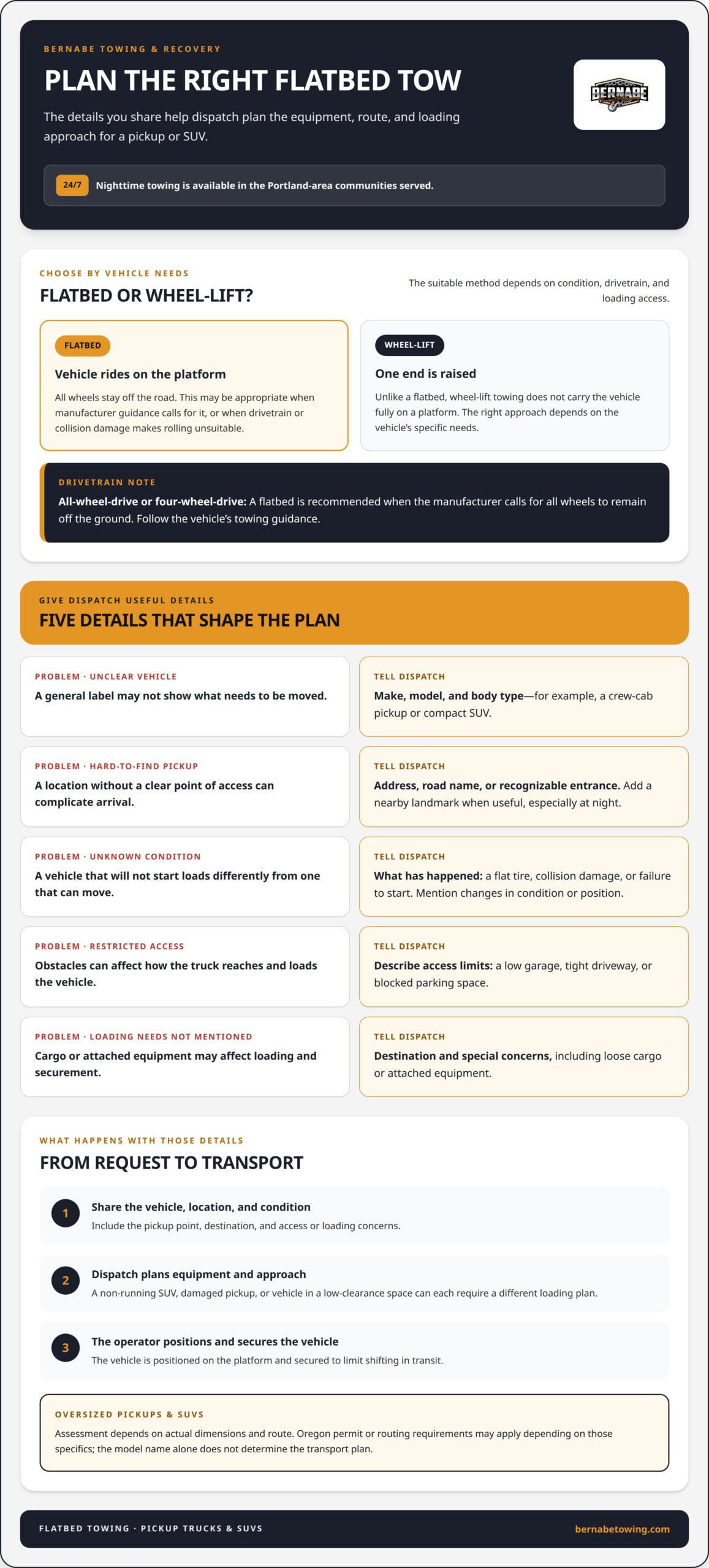
A flatbed carries the vehicle on its platform, while wheel-lift towing raises one end. For a pickup or SUV, keeping all wheels off the road can reduce rolling contact during transport. The suitable method depends on vehicle condition, drivetrain, and loading access.
For all-wheel-drive or four-wheel-drive vehicles, flatbed towing is recommended when the manufacturer calls for all wheels to remain off the ground. It’s also useful when drivetrain or collision damage makes rolling unsuitable. For example, an SUV with a damaged wheel needs different loading consideration from a running pickup.
Oversized pickups and SUVs need assessment based on their actual dimensions and route. Oregon permit or routing requirements may apply depending on those specifics, so a vehicle’s model name alone doesn’t determine the transport plan.
For flatbed towing in Tigard, Beaverton, Tualatin, Sherwood, Hillsboro, Wilsonville, King City, Lake Oswego, or Portland, choose a service suited to the vehicle’s size and condition. A passenger SUV and a larger pickup can require different equipment or loading plans. The vehicle’s actual configuration matters more than the label “flatbed.”
When requesting a tow, give dispatch details that help plan the equipment and approach:
- Vehicle make, model, and body type, such as a crew-cab pickup or compact SUV.
- Pickup location, including an address, road name, or recognizable entrance.
- Vehicle condition, such as a flat tire, collision damage, or failure to start.
- Access constraints, such as a low garage, tight driveway, or blocked parking space.
- Destination and special loading concerns, including loose cargo or attached equipment.
Before the flatbed arrives, dispatch uses these details to plan the response. Describe obstacles that could affect access. For example, a pickup inside a low-clearance structure presents a different approach from one in an open lot. Share changes to the vehicle’s location or condition so the plan reflects the current situation.
For a vehicle that needs all-wheel or four-wheel-drive protection, follow its manufacturer’s towing guidance. Flatbed transport keeps all wheels off the road, which can be appropriate when that guidance requires it. The vehicle’s condition and loading access still shape how the operator positions and secures it.
During loading, the operator positions the vehicle on the platform and secures it to limit shifting in transit. A non-running SUV, damaged pickup, and drivable vehicle each require attention to their condition and loading points. Accurate vehicle details help the operator prepare for the specific transport.
For towing assistance in the Portland-area communities listed above, request towing assistance with the vehicle’s location, type, and condition ready.
Heavy-duty pickup towing
A heavy-duty pickup can need a different towing plan from a light-duty truck. Its cab, bed, accessories, and cargo affect the vehicle’s overall size and loading needs. For example, a work pickup carrying equipment may present different securement concerns from the same truck with an empty bed.
“Heavy-duty towing” describes the demands of the vehicle and recovery, not simply the pickup’s appearance. The truck’s condition, access, load, and destination all influence the plan. A pickup with collision damage may need a different approach than one that starts and steers. Share these details before dispatch so the response can be planned around the actual vehicle.
Availability and capacity are separate questions. A service operating 24 hours doesn’t automatically have the equipment or capacity for every heavy-duty pickup. Likewise, a suitable tow truck’s capacity doesn’t establish that dispatch runs around the clock. For a nighttime breakdown, communicate both the time-sensitive need and the pickup’s size and condition.
Heavy loads can shift during transport, particularly if cargo isn’t secured or the vehicle changes position during loading. Tools, materials, and equipment in a pickup bed can affect balance and loading. Tell dispatch if the truck carries a substantial or shifting load, or if cargo has spilled. That information helps the towing team consider access, loading, and safe handling.
Useful details to give when arranging heavy-duty pickup towing include:
- Make, model, cab configuration, and any modifications that change the truck’s dimensions.
- Whether the pickup is loaded, and whether cargo has moved or spilled.
- Its condition, including whether it can roll, steer, or start.
- Pickup access, such as a narrow driveway, low structure, or soft roadside shoulder.
- The destination and any access restrictions there.
These details matter in Canby when a large pickup is stopped in a tight parking area or beside a narrow road. A flatbed needs workable access for positioning and loading. The vehicle’s weight, dimensions, and condition help determine whether that method is appropriate. Heavy accessories or cargo can change the plan, so describe them rather than relying only on the truck’s model name.
Before transport, the operator assesses the vehicle and loading conditions, then secures it to limit movement on the platform. Loose cargo inside the pickup bed is a separate concern from securing the vehicle itself. Accurate information helps distinguish those needs and reduces surprises during loading. For a pickup needing emergency assistance, describe its size, load, condition, and exact location clearly.
What roads do you cover around Canby?
The listed service area includes Canby, Oregon, and the 97013 ZIP code. Coverage is easier to assess when the pickup point is identified by its street address, road name, or nearest intersection. A location inside Canby and a destination outside town involve different route details, so provide both ends of the tow request.
Road access also affects how a flatbed can reach a vehicle. A pickup beside a narrow street, inside a parking structure, or on a private driveway may need a different approach than one in an open parking lot. Share nearby landmarks and access restrictions, such as a locked entrance or low clearance, when describing the location.
To make a Canby-area request clear, provide:
- The exact pickup address or the closest cross street.
- The road name and a recognizable landmark, such as a marked entrance.
- The vehicle’s position, such as a driveway, lot, or roadside shoulder.
- The destination address and any access limits at that location.
- Any changes to the vehicle’s position or condition since the request began.
These details help distinguish one Canby location from another, especially when an address is difficult to see from the road. For example, a vehicle behind a commercial building may need directions to the correct entrance. A roadside pickup may require a clear description of which side of the street the vehicle occupies.
When choosing a towing service in Canby, online reviews can offer insight into other customers’ experiences. Also consider whether the service handles the vehicle and situation, such as a flatbed request for a pickup or SUV. Clear communication about the location, vehicle, and destination supports a more useful dispatch conversation.
One customer testimonial claims help can reach anywhere in Canby in half an hour. That statement reflects a testimonial, not a general arrival-time promise. The actual route, pickup access, traffic, and distance to the vehicle affect response time. Giving a precise location helps dispatch identify the route and understand the pickup conditions.
A mobile crane and a forklift serve different purposes from a towing service. A crane lifts suspended loads, while a forklift handles palletized or bulky materials. Vehicle towing instead moves a disabled or damaged vehicle between locations. If you need a pickup truck transported, describe the vehicle and destination when requesting service.
Canby road coverage is most useful when the pickup and drop-off points are both specific. A street address, nearby intersection, and access note give dispatch practical routing information. For a vehicle in ZIP code 97013, include its exact position within the area rather than relying on the ZIP code alone.
Flatbed towing for cars, light trucks, SUVs, and vans
A flatbed can transport cars, light trucks, SUVs, and vans with all wheels resting on the platform. This approach suits vehicles that shouldn’t roll on their own tires during a tow. The vehicle’s dimensions, condition, and loading access determine the right setup.
For a passenger car, the operator considers its wheel position, ground clearance, and damage before loading. A car with a damaged tire differs from one with collision damage affecting steering. Sharing the condition helps the towing team plan how to load and secure it for transport.
Light trucks and SUVs vary in body size, weight, drivetrain, and accessories. A compact SUV and a full-size pickup don’t necessarily need the same loading plan. Tell dispatch about modifications such as a raised suspension or attached equipment, since these details can affect clearance and positioning.
Vans also differ by body style and cargo. A passenger van, cargo van, and modified van can have different dimensions and loading needs. Mention roof equipment, cargo, or damage that changes the vehicle’s shape or access. This information helps determine whether the vehicle can be positioned safely on the platform.
Flatbed towing can be useful during recovery when a vehicle won’t start, has collision damage, or shouldn’t be driven. For example, transporting an SUV with a damaged wheel avoids rolling that wheel along the road. A vehicle that starts and moves may still need a flatbed if its condition makes driving unsuitable.
Before dispatch, provide details that distinguish your vehicle from others in the same category:
- Body type and model, such as a cargo van or crew-cab pickup.
- Visible damage, missing or damaged tires, and whether the vehicle starts.
- Modifications or attached equipment that affect vehicle height or width.
- Loading access, including a narrow driveway or low overhead clearance.
- Whether cargo inside the vehicle could move during transport.
During loading, the operator positions the vehicle on the flatbed and secures it to limit shifting in transit. Its condition affects the approach: a running car differs from a van that cannot steer. Access matters too. A confined driveway can limit how the truck aligns with the vehicle, while an open lot offers more room to position the platform.
The key takeaway is that vehicle category alone doesn’t decide the tow method. Condition, dimensions, drivetrain, cargo, and access all shape the plan for a Canby pickup. For a car, light truck, SUV, or van that needs transport, request vehicle towing and share its type and condition.
Bernabe Towing & Recovery
Bernabe Towing & Recovery provides towing support when a car, light-duty truck, or SUV can’t continue safely. For a disabled vehicle, emergency towing can move it from the roadside or another pickup location. After a collision, accident recovery addresses the vehicle’s removal needs.
The right request depends on what happened. A vehicle that won’t start may need towing, while a lockout or dead battery may call for a different type of roadside assistance. Share the vehicle type, its condition, and its location so the service request matches the problem.
For help with a disabled vehicle or collision recovery, contact Bernabe Towing & Recovery.
Plan the next move for your vehicle
Choosing flatbed towing for pickup trucks and SUVs in Canby, Oregon, starts with matching the transport plan to the vehicle’s condition and destination. Once you know where the vehicle needs to go, give dispatch a clear destination and describe the help needed. If the vehicle’s condition or location changes, share that update with dispatch.
A calm, specific request helps turn a roadside problem into a practical next step. Describe what happened, where the vehicle is, and what outcome you need. Those details give the towing team a useful starting point without requiring you to diagnose the problem yourself.
For towing assistance in Canby, contact Bernabe Towing & Recovery. Share the vehicle’s situation and the destination you have in mind, and take the next step toward getting it moved.
Frequently Asked Questions
How fast can you get to Canby?
Bernabe Towing & Recovery provides fast response times, but arrival depends on the pickup location and current road conditions. A vehicle near a main road may be easier to reach than one at a private property with a hard-to-find entrance. Give dispatch the exact location, a nearby landmark, and any access directions. That helps the team identify the pickup point and coordinate the response.
How much does a tow from Canby cost?
The quote depends on the specific tow and is provided after you request one. Factors include the pickup and destination, vehicle type, and loading requirements. For example, a vehicle that needs careful recovery may require a different plan from one that can be loaded easily. Share the route and vehicle details when requesting a quote so the estimate reflects the service needed.
Stranded in Canby?
Call Bernabe Towing & Recovery at (971) 205-7677 for assistance in Canby. Emergency towing is available 24/7, and the right request depends on what happened. A vehicle that won’t start needs a different response from one involved in a collision or stuck off the road. Explain the situation, give the pickup location, and describe any immediate access concern.
What is the average cost of flatbed towing in Canby, Oregon?
There isn’t one flatbed-towing price that applies to every Canby tow. The quote is based on the individual request and is provided after you request it. Vehicle size, distance, condition, and loading requirements can affect the service plan. For a useful estimate, provide the destination and describe issues such as a damaged wheel, restricted access, or a vehicle that cannot roll.
Do Canby tow companies charge extra for SUVs, lifted trucks, or oversized vehicles?
Costs can vary with the vehicle and the work required, so don’t assume every SUV or modified pickup has the same quote. Bernabe Towing & Recovery provides transparent pricing with no hidden fees. When requesting a quote, describe a lifted suspension, oversized dimensions, or attached equipment. Those details help account for loading needs and the route without guessing about an extra charge.
How quickly can a flatbed tow truck arrive in Canby, Oregon?
Arrival timing varies with the truck’s route, the vehicle’s exact location, and access to the pickup point. A roadside location with a clear landmark is easier to identify than an unmarked private entrance. Provide the nearest intersection, the side of the road, and directions to the vehicle. Bernabe Towing & Recovery offers fast response times, but no fixed arrival time applies to every call.
What areas and highways near Canby do local flatbed towing services cover?
Canby is included in Bernabe Towing & Recovery’s service-area list. Listed highway coverage includes I-5, I-205, US-26, OR-217, Highway 99W, OR-99E, OR-212, and OR-224. Give dispatch the road or highway, nearest exit or intersection, and direction of travel. For example, identifying the correct side of a divided route helps distinguish the pickup point.
What information should I provide when booking a flatbed tow in Canby?
Provide your exact location, vehicle details, and destination. Include the vehicle’s make and model, whether it starts or rolls, and any visible damage or modifications. Mention access issues, such as a low garage entrance or narrow driveway. If you’re on a highway, identify the nearest exit and direction of travel. These details help dispatch plan the appropriate response and transport.