Bernabe Towing & Recovery
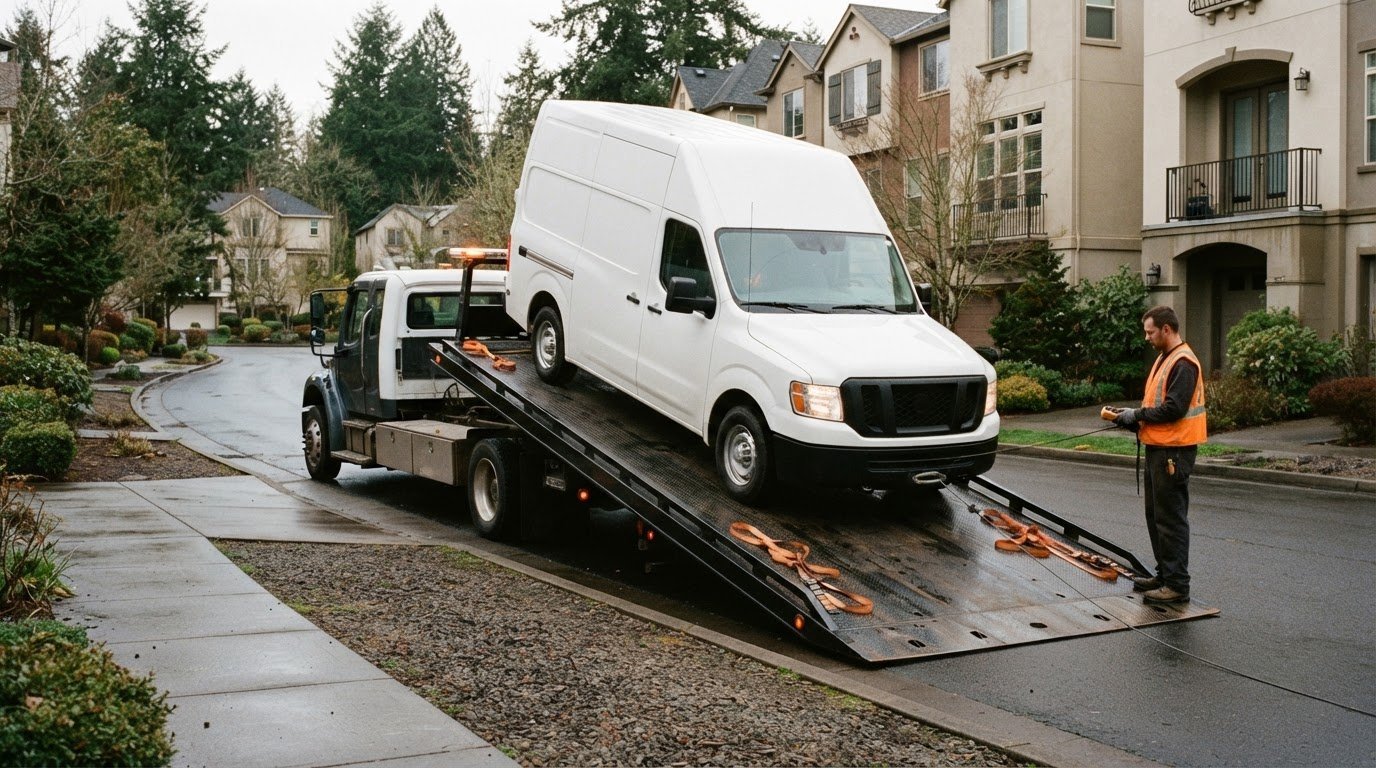
A disabled work truck near Villebois needs a safe towing plan suited to the vehicle, not a guess based on the route alone. For medium-duty towing for delivery vans and work trucks in Wilsonville, Oregon, the cost depends on the job and is provided after a quote request. Key factors include towing distance, vehicle size and condition, location and access, service time, and whether specialized recovery equipment is needed. The truck’s weight, shape, and position also help determine the right towing setup.
A breakdown can put a delivery schedule on hold, so it helps to know what to do first and what details can shape the next steps. If you can, pull over safely, switch on your hazard lights, and avoid roadside repairs in busy traffic. This article explains what can affect towing costs, when roadside assistance or work truck towing may be appropriate, and what to know about flatbed towing. You’ll also learn how to describe the vehicle and its location so the towing plan can account for access, condition, and equipment needs.
Key Takeaways
- Understand which details shape a towing estimate, including the truck’s condition, access, and recovery needs.
- Learn how vehicle size and mounted equipment can affect the choice and setup of a flatbed tow.
- See what information helps determine whether roadside assistance or a tow is the more suitable next step.
- Recognize how breakdowns, accidents, and other vehicle problems can affect the recovery plan.
- Find out when emergency towing, accident recovery, lockout assistance, or a jump start can help get a work vehicle moving again.
Roadside assistance
A work-vehicle breakdown near Wilsonville calls for a safe stopping place and a towing plan suited to the vehicle. Medium-duty vehicles, including delivery vans and work trucks, may be too heavy for standard tow trucks. Their size and condition, along with the recovery location, help determine the appropriate equipment.
Which towing companies provide medium-duty towing in Wilsonville, Oregon? Look for a towing operator that handles commercial vehicles and matches its equipment to the truck’s weight, dimensions, and position.
Wilsonville drivers may need roadside assistance on I-5, OR-99E, Wilsonville Road, or Boones Ferry Road. These routes carry significant daily traffic, making the exact stopping location important. Share the road name, direction of travel, nearest exit or intersection, and a clear description of the vehicle. A delivery van stopped in a narrow shoulder may need a different approach than a work truck parked at a job site.
Move out of traffic if the vehicle can be driven safely, then turn on the hazard lights. Avoid roadside repairs beside moving traffic. In rain, poor visibility, or other hazardous weather, stay clear of the travel lane and avoid standing behind or beside the disabled vehicle. Tell the tow operator about traffic exposure, limited shoulder space, and nearby obstacles. These details help identify access needs and suitable recovery equipment.
What should drivers do to secure cargo and protect a delivery van before towing? Tell the operator about the cargo, its placement, and any mounted equipment, then keep loose items contained and the load balanced. Don’t shift heavy cargo beside traffic or climb into an unsafe vehicle. The tow operator should account for the vehicle’s weight and shape and secure the load evenly, with extra care around mounted equipment.
Roadside assistance can address some problems at the vehicle’s location, while a disabled or damaged van may need towing. A locked-out driver or a vehicle that won’t start has different needs from a truck immobilized by collision damage. Describe what happened, whether the vehicle moves, and any visible damage. This helps clarify whether roadside assistance or towing equipment is needed.
For a van carrying parcels, a brief description of the cargo and loose items can help with loading plans. For a work truck with racks or mounted tools, point out anything that changes its height, width, or balance. Clear details about the route, access, weather, and vehicle condition help the operator plan roadside assistance in Wilsonville and reduce avoidable risks during loading.
How much does a tow truck cost in Wilsonville, OR?
A Wilsonville tow estimate depends on the vehicle, distance, access, condition, and recovery equipment. For medium-duty towing for delivery vans and work trucks in Wilsonville, Oregon, dispatch details help shape the plan and estimate. The pickup location also matters, including whether the truck is coming from Aurora or already nearby.
Dispatch and Tow Estimates
Dispatch connects the breakdown location, vehicle details, and towing plan. A 24-hour dispatch service describes when calls can be handled, not a guaranteed arrival time. Ask what the estimate covers, including the requested destination and any specialized recovery needs. A truck sent from Aurora may involve a different travel distance than one already near Wilsonville.
“24/7 towing dispatch” and “24-hour dispatch” describe availability, not the cost or timing of a specific tow. An estimate should reflect the actual pickup location, destination, vehicle size and condition, site accessibility, service time, and equipment needed. A disabled work truck in an accessible lot may call for a different plan than one obstructing a tight driveway.
Information for a Medium-Duty Tow Request
Give dispatch the exact location, a nearby intersection or landmark, vehicle type, and destination. Describe whether the truck rolls or steers, and mention any visible damage. Include its approximate weight and dimensions if available, plus racks, mounted tools, or other equipment that changes its shape or balance.
For a cargo van, explain whether the load is secured and whether items have shifted. Mention tight entrances, low clearance, soft ground, or limited room around the vehicle. These details help assess access and suitable equipment before dispatch, rather than relying only on the label “work truck.”
Are there Oregon rules or permits for towing commercial vans and trucks? The vehicle configuration, cargo, route, and planned tow are relevant details when considering permit requirements. Describe those specifics when arranging the tow.
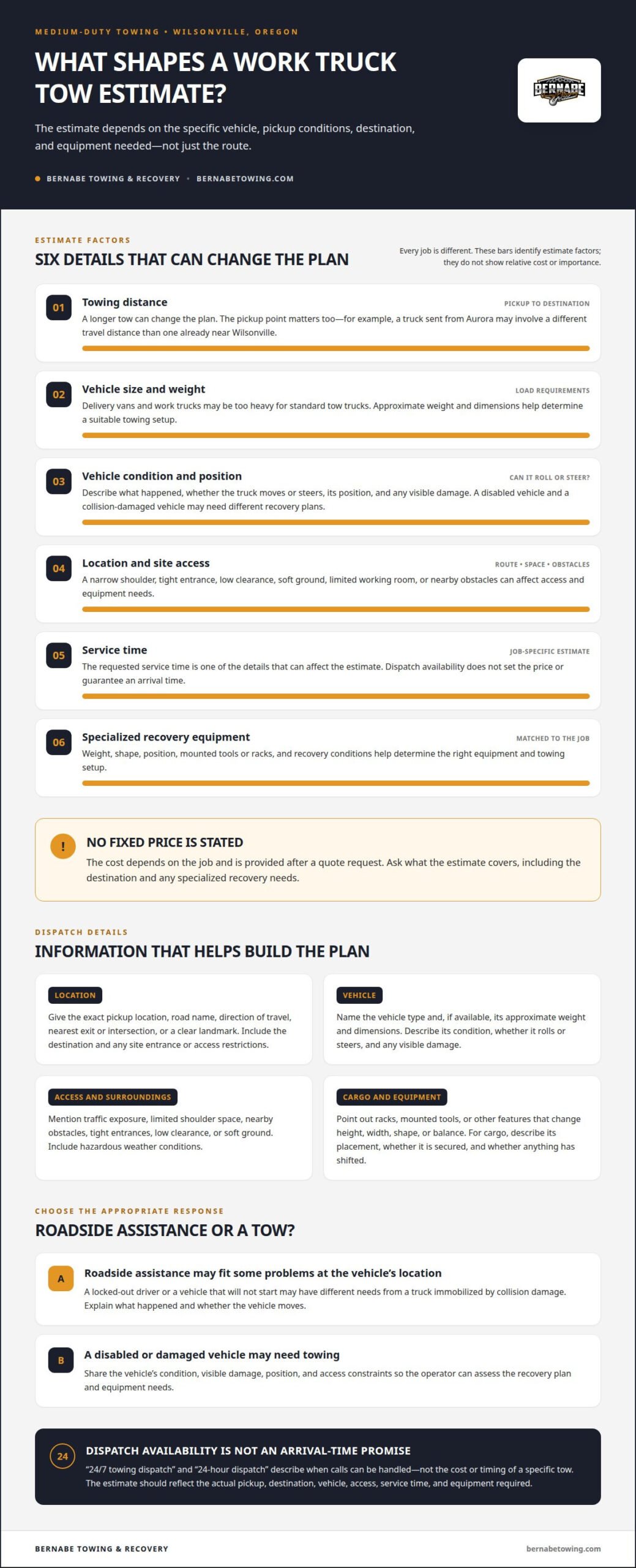
The cost depends on the job and is provided after a quote request. Towing distance, vehicle size and condition, location, accessibility, service time, and specialized recovery equipment can all affect the estimate. A longer tow or difficult access may change the plan, while a vehicle’s weight and bulk can require equipment suited to a heavier load.
Dispatching from Aurora is one example of why the pickup point matters. For medium-duty towing for delivery vans and work trucks in Wilsonville, Oregon, share the road, direction of travel, and a nearby exit or intersection when applicable. At a business site, provide the entrance and any access restrictions. Clear location details help dispatch assess the route and equipment needs.
To request a tow estimate, provide the vehicle, condition, location, and destination details together. That gives dispatch a practical starting point for matching the towing plan to the job.
Towing costs and factors that affect pricing
A tow estimate for a Wilsonville work truck reflects the job’s details, not just the vehicle’s name. Distance, vehicle size and condition, location, access, service time, and specialized recovery equipment can all affect the estimate. Each factor changes the transport plan in a different way, so describing the actual situation helps explain the quote.
Distance matters because the tow moves a vehicle from its pickup point to its destination. A van transported across Wilsonville involves a different route from a truck going farther beyond town. Share the intended destination when requesting an estimate. The pickup and drop-off locations help define the distance involved.
Vehicle size and bulk affect which tow truck can handle the job. A regular tow truck may not suit a heavier work vehicle, which can require equipment designed for the load. The vehicle’s condition matters, too. A truck that rolls and steers differs from one with collision damage or wheels that cannot move normally.
Location and accessibility shape the work required at pickup. A truck parked in an open lot gives equipment more room than one in a narrow driveway or tight loading area. A vehicle positioned off the roadway after an accident may also need recovery equipment before transport. Share obstacles such as restricted entrances or limited maneuvering space.
Service time is another estimate factor, but it doesn’t explain the full cost on its own. Conditions at the pickup site matter alongside the time the job takes. For example, a work truck that is easy to reach may require a different operation from one blocked by another vehicle or positioned where equipment has little room to work.
Specialized recovery equipment can affect the estimate when a standard hookup is not suitable. A vehicle stuck off a paved surface, damaged in an accident, or unable to roll may need additional recovery steps. Its condition, position, and access determine the setup. Provide those details so the planned transport reflects the actual job.
For a clearer estimate, organize the key details before describing the job:
- Vehicle: Identify whether it’s a delivery van, box truck, or another work vehicle.
- Condition: Explain whether it starts, rolls, steers, or has visible damage.
- Locations: Give the pickup point and intended destination.
- Access: Describe tight entrances, obstacles, or off-road positioning.
- Equipment: Mention mounted tools, racks, or cargo that affect the vehicle’s shape.
The cost depends on the job and is provided after a quote request. For example, a damaged truck with difficult access and specialized recovery needs involves a different job from a mobile van in an open lot. These details help connect the estimate to distance, vehicle condition, location, and the equipment needed for transport.
Work truck and flatbed towing
Flatbed towing can move a delivery van or work truck with all its wheels on the deck. The right setup depends on the vehicle’s weight, shape, condition, and the tow truck’s specifications. A flatbed is not automatically suitable for every medium-duty vehicle; its size and capacity must fit the actual load.
That range describes the vehicles, not a universal capacity limit for tow trucks. What weight and towing-capacity limits apply to medium-duty tow trucks? Limits depend on each tow truck’s specifications and the vehicle’s weight and shape. Those details determine whether a particular truck and flatbed can handle the job.
Vehicle shape matters as well as weight. A tall van, a box truck, and a work truck with a mounted rack can have different loading requirements. The operator should evaluate both weight and shape before dispatch. Sharing the vehicle type and mounted equipment makes that assessment more useful than identifying it only as a “work truck.”
Parking and access also affect the towing approach. Some medium-duty tow trucks are designed to reach urban parking lots, alleys, and job sites. A van backed into a narrow loading area, for example, may need a different approach from a truck sitting in an open lot. Tight turns, low overhead clearance, and limited room to position equipment can affect whether a flatbed can be used at the pickup site.
Mounted equipment and cargo need careful attention during loading. Work vehicles should be loaded securely and in a balanced manner, especially when they carry attached tools or equipment. An uneven load can change how the vehicle sits on the deck. Describe racks, liftgates, toolboxes, or other mounted features so the operator can account for them when planning the recovery.
Before dispatch, the towing operator should assess:
- Vehicle details: Identify the vehicle type and provide its known weight and dimensions.
- Configuration: Point out mounted equipment that changes its shape or balance.
- Condition: Describe damage or any issue that affects how the vehicle can be loaded.
- Pickup access: Explain whether the truck is in a parking structure, alley, job site, or tight space.
- Flatbed fit: Match the vehicle’s size and load to the tow truck’s specifications.
A sound plan considers the vehicle, the loading area, and the equipment being dispatched. For example, a work truck with mounted tools at a constrained job site calls for attention to both clearance and load balance. Evaluating those factors before loading helps guide a suitable flatbed recovery without assuming every medium-duty vehicle fits the same setup.
Common reasons for a tow
A work vehicle needs towing when its condition or position makes continued driving unsuitable. In Wilsonville, a delivery van with a flat tire may need roadside assistance, while a truck with collision damage may require recovery and transport. The right response depends on what stopped the vehicle, whether it can move safely, and where it is located.
A vehicle that won’t start may have a drained battery or another issue preventing operation. A jump start can help with a discharged battery, but a van that still won’t run may need towing. Tell dispatch what happened before the failure, whether dashboard lights appear, and whether the engine turns over. Those details help clarify whether the problem is a discharged battery or a vehicle that cannot be driven.
Tire trouble is another common reason for a call. A damaged tire on a work truck can make driving unsafe, especially if the vehicle carries tools or cargo. A tire change may address a roadside problem; damage to the wheel or vehicle may call for towing instead. Describe the tire’s condition and the truck’s position, particularly if it stopped beside a highway.
An accident can leave a van unable to roll, steer, or continue without further damage. Recovery needs depend on the vehicle’s position, visible damage, and access around it. Share whether the vehicle blocks traffic, sits off the road, or has loose cargo. The operator can use these details to plan a suitable response and transport.
A work truck stuck in mud, gravel, or a roadside ditch may need winch-out recovery rather than a routine tow hookup. The surface, slope, and vehicle position affect how recovery can proceed. For example, a van with one wheel off firm ground presents a different situation from a truck immobilized on a muddy job site. Describe the terrain and any nearby obstacles.
Common problems and the details that help explain them include:
- Starting failure: Say whether the engine turns over or the vehicle remains unresponsive.
- Tire damage: Identify the affected tire and whether the vehicle can stand safely.
- Collision damage: Describe visible damage and whether the vehicle rolls or steers.
- Vehicle stuck: Explain the surface, slope, and position relative to the roadway.
- Lockout: State that keys are inaccessible inside the work vehicle.
For a Wilsonville service-area call, share the nearest road or landmark and explain whether the van is on a highway, at a business entrance, or on a job site. Give clear information about its condition, cargo, and access. Request towing assistance when the vehicle cannot be driven safely or needs recovery from its position.
Bernabe Towing & Recovery
Bernabe Towing & Recovery helps drivers with a disabled work vehicle, an accident, or a roadside problem in the Wilsonville area. Emergency Towing and Accident Recovery can help when a vehicle cannot continue safely. For a dead battery or locked-out driver, Jump Start Service and Lockout Assistance address those immediate problems.
For a delivery van or work truck, explain its type, condition, location, and what happened. Details such as visible accident damage or whether the vehicle starts help clarify the situation. If the issue is a tire or a vehicle stuck off the road, describe that clearly, too. This information helps identify the relevant roadside assistance or towing service.
For help with a roadside problem or disabled vehicle, contact Bernabe Towing & Recovery.
Plan your next step with confidence
For medium-duty towing for delivery vans and work trucks in Wilsonville, Oregon, a clear description of the vehicle and situation gives the conversation a useful starting point. Note what happened, where the vehicle is, whether it can move, and any visible damage or access constraints. If the situation changes, such as a breakdown becoming an accident recovery, share that update before towing begins.
Bernabe Towing & Recovery provides Emergency Towing, Accident Recovery, and Lockout Assistance. The next step depends on what has left the vehicle unable to continue or the driver unable to access it. Give the relevant details so the need is clear and the assistance can match the situation.
Contact Bernabe Towing & Recovery to discuss help for your work vehicle. A steady, practical next step can help you move forward.
Frequently Asked Questions
Can I get a tow truck near Villebois after an accident?
Yes, accident recovery is available for drivers in Wilsonville, including near Villebois. Call (971-205-7677) and share the nearest street or landmark, the vehicle type, and whether it can roll or steer. If the vehicle is in a dangerous position, move to a safer place if possible and describe the traffic conditions. Clear details help dispatch understand the situation and plan the response.
Stranded in Wilsonville?
Call (971-205-7677) for emergency towing or roadside assistance in Wilsonville. Explain what happened and whether you need help with a vehicle that won’t start, a tire problem, a lockout, or a vehicle that needs towing. Bernabe Towing & Recovery serves communities including Tigard, Beaverton, Tualatin, Sherwood, Hillsboro, King City, Lake Oswego, and Portland, Oregon. Share your exact location when calling.
What vehicles qualify for medium-duty towing, including delivery vans and work trucks?
Medium-duty towing is generally intended for vehicles heavier than standard tow trucks are designed to handle, including delivery vans, box trucks, and work trucks. The actual vehicle weight, dimensions, condition, and mounted equipment affect whether a towing setup is suitable. Share the make, model, configuration, and any attached equipment to help assess the vehicle.
What are the typical medium-duty towing rates in Wilsonville and nearby areas?
Rates depend on the individual job, so there isn’t one typical amount that applies to every Wilsonville tow. Bernabe Towing & Recovery provides transparent pricing with no hidden fees. The destination also helps define the requested transport, whether you need the vehicle taken to a repair facility, dealership, residence, or another requested location. Provide both pickup and destination details when requesting pricing.
How quickly can a medium-duty tow truck reach Wilsonville, Oregon?
Arrival timing depends on the pickup location, current traffic, and the distance the dispatched truck must travel. Bernabe Towing & Recovery describes its response times as fast but doesn’t publish a specific arrival time. If your van is near an I-5 entrance or a busy Wilsonville intersection, share the direction of travel and a nearby landmark to help identify the pickup point.
Do Wilsonville towing companies offer flatbed, wheel-lift, or roadside recovery for work trucks?
Flatbed and wheel-lift equipment are available, with the appropriate setup depending on the vehicle and situation. Work trucks may also need roadside recovery if they’re stuck or damaged. The equipment must suit the vehicle and allow it to be loaded safely. If a van has limited clearance or a truck carries mounted equipment, share those details so the recovery plan accounts for its configuration.