Bernabe Towing & Recovery
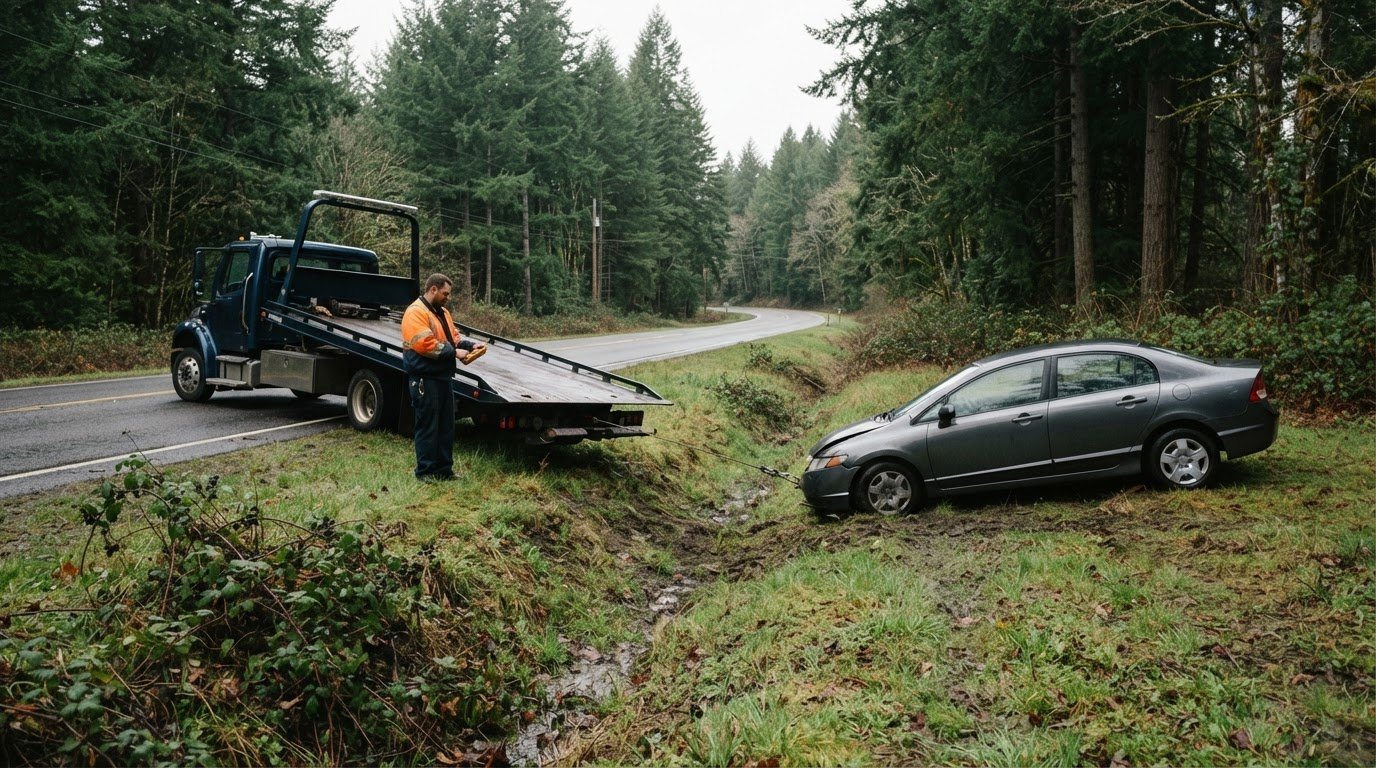
Need vehicle recovery after a crash in Portland? Car accident towing and vehicle recovery in Portland, Oregon, involves more than moving a damaged car. The scene may require coordination with law enforcement, highway clearance, or recovery from a ditch or embankment. The right approach depends on the vehicle’s position and how it can be moved.
It’s understandable to want a clear plan while dealing with a collision. This guide explains how accident towing, law enforcement coordination, highway clearance, and winch-outs work across Portland and nearby communities. You’ll learn what recovery may involve in different situations and when towing or accident recovery can help move the process forward.
Key Takeaways
- Recovery needs can differ across Portland and Vancouver, depending on the crash location and the vehicle’s position.
- Law enforcement coordination can affect when and how a vehicle is moved from an accident scene.
- A ditch or embankment recovery requires a winch-out approach suited to the vehicle’s position and surrounding terrain.
- Highway clearance focuses on moving disabled vehicles out of the roadway and restoring access through the incident area.
- Taking practical steps at the scene before arranging a tow can help make the next stage of accident recovery more orderly.
Portland service area
Portland-area collisions can happen on city streets, highway approaches, or roads serving nearby communities such as Tigard and Beaverton. Give the dispatcher the exact street, nearest cross street, direction of travel, and a visible landmark. “Eastbound near the I-5 bridge” is more useful than “near downtown.” Also describe whether the vehicle is upright, blocking a lane, or off the roadway.
Oregon’s tow vehicle definition is identified by legal reference ORS 801.530, according to the Oregon Legislative Assembly. That reference identifies the vehicle category; it doesn’t determine which towing method suits a damaged car. The vehicle’s condition, position, and access for the tow truck help shape the recovery approach.
Choose between flatbed and wheel-lift towing based on the vehicle’s condition, whether it can roll, and access at the pickup location. A flatbed carries the vehicle on its platform, while a wheel-lift raises one end for towing. Tell dispatch about collision damage, blocked wheels, or limited clearance so the appropriate equipment can be sent.
Oregon car insurance coverage for accident towing, recovery, and storage depends on the terms of your policy. Review its towing or roadside assistance provisions and ask your insurer how collision recovery and storage relate to coverage. Keep towing and storage paperwork with your claim records.
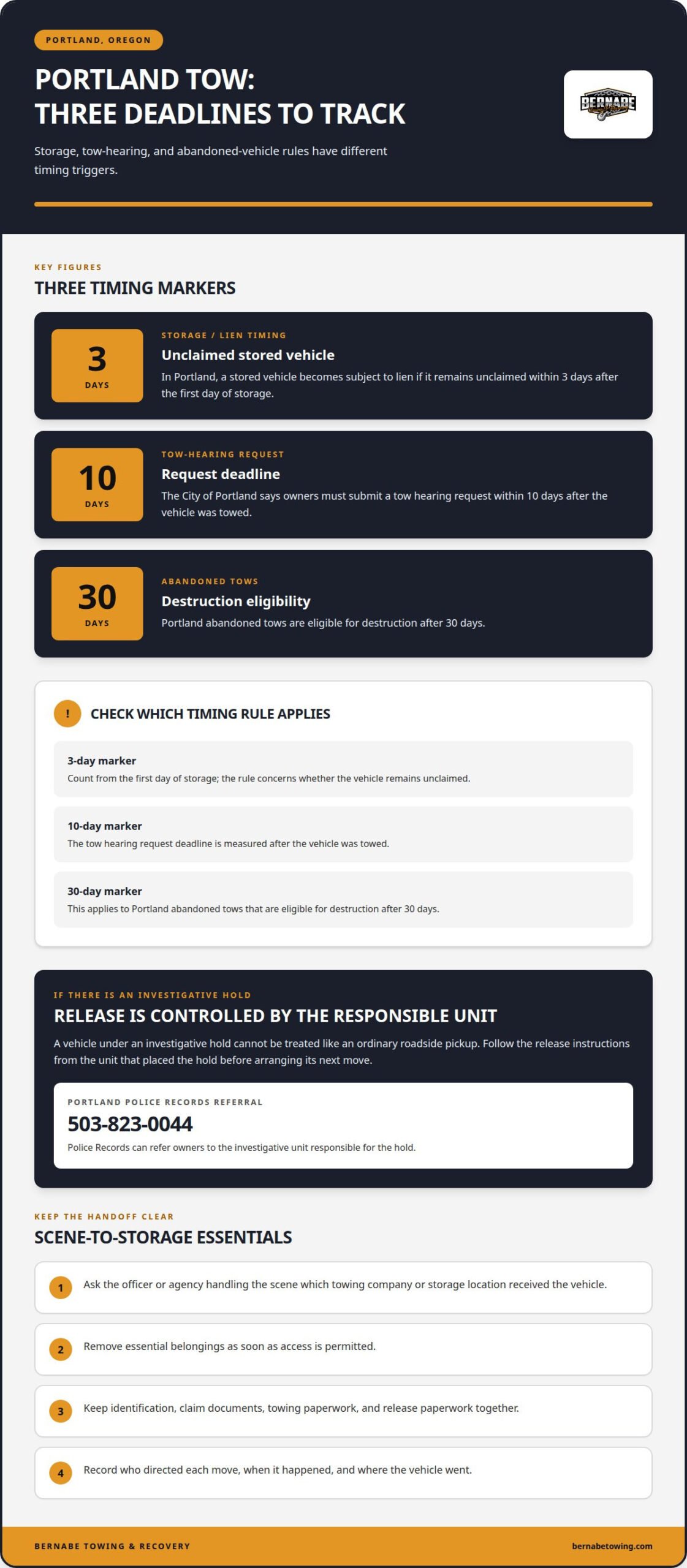
Consent, charges, and release steps depend partly on whether the driver arranged the tow or law enforcement directed it. Charges vary by case and depend on factors such as recovery difficulty and storage duration. In Portland, a stored vehicle becomes subject to lien if it remains unclaimed within 3 days after the first day of storage. The City of Portland says owners must submit a tow hearing request within 10 days after the vehicle was towed.
The destination depends on who arranged the tow and where the vehicle can be stored. Ask the officer or agency handling the scene which towing company or storage location received it. For a Portland vehicle held at an investigative unit’s direction, Police Records can refer owners to that unit at 503-823-0044.
Delays can extend storage and bring the lien deadline closer. Portland abandoned tows are eligible for destruction after 30 days. Remove essential belongings as soon as access is permitted, and keep identification, claim documents, and release paperwork together. If the vehicle is under an investigative hold, follow the responsible unit’s release instructions before arranging its next move.
When choosing a towing or recovery provider, ask whether the business has the required certificate and registration. In Oregon, a tow/recovery business certificate and registration are required for businesses that solicit or advertise towing services. You can also confirm what recovery work the provider is being asked to perform and where the vehicle will be taken, then keep the provider’s information with your claim and release records. If you are comparing options at the scene, make sure the dispatcher knows the vehicle’s condition and location before equipment is sent. Clear communication can help you understand the proposed service and coordinate next steps with the insurer or the agency handling the vehicle.
Coordination with law enforcement
After a Portland collision, officers may manage access to the scene and the damaged vehicle. Their instructions can affect when recovery begins and where the vehicle goes. Tell the responding officer if you need personal items or have a preferred destination. Ask whether the vehicle is subject to an investigative hold before arranging transport. This helps distinguish scene instructions from later towing arrangements.
A hold changes the recovery plan. The investigative unit that placed it controls the release decision, so the vehicle cannot be treated like an ordinary roadside pickup. In Portland, Police Records can refer people to the investigative unit responsible for a hold at 503-823-0044. Have the incident details ready when seeking that referral, including the vehicle description and location.
For car accident towing and vehicle recovery in Portland, Oregon, give the officer and dispatcher clear details about the scene. Share the exact location, direction of travel, vehicle description, and any access concerns. For example, explain if the car blocks a lane or is beyond the shoulder. Keep the incident number or officer’s name with your paperwork, if available.
Coordinating with law enforcement helps distinguish scene clearance from later transport. Officers may need to complete their work before the vehicle can be moved. Timing and sequence depend on the incident and the instructions at the scene. Don’t assume the vehicle can be moved just because traffic has started passing again.
When responders request recovery support, the operator needs the vehicle’s position and condition. A car on its wheels presents different access needs from one resting on its side or down an embankment. Rotator tow trucks can support first responders in rescue operations. Equipment and positioning depend on the recovery task and directions given at the scene.
Before movement begins, establish the destination and who can receive the vehicle. If an officer directs the tow, record the company name and storage location provided. If an investigative hold applies, ask which unit controls release and what instructions govern the next step. Clear coordination for car accident towing and vehicle recovery in Portland, Oregon, can help prevent confusion between the scene, storage facility, and investigative unit.
Keep a simple record of each handoff. Note when the vehicle moved, who gave the direction, and where it went. Save towing paperwork with the collision details. If instructions change, record the new direction and the name or unit providing it. In Portland, promptly share location updates, especially if responders move the vehicle to a safer staging point.
Separately, in the United States, a person with a qualifying foreign driver’s license may legally drive for 1 year before needing an Oregon license. Oregon DMV issues title and registration for tow/recovery vehicles with a combined weight of 26,000 pounds or less. For tow/recovery vehicles with a combined weight over 26,000 pounds, Oregon’s Commerce and Compliance Division issues registration. Oregon tow/recovery vehicles registered with the Commerce and Compliance Division must display both DMV and CCD plates. These requirements address driver eligibility and the registration of recovery vehicles.
Ditch and embankment winch-outs
A car in a ditch needs a recovery plan based on its position, not just its destination. The operator assesses the slope, ground surface, vehicle orientation, visible damage, and access for recovery equipment. For example, a sedan resting nose-down beside a Portland road presents different access needs from an upright car on a wide shoulder.
Start with a clear description of the scene. Give the location, nearest cross street, direction of travel, and whether the vehicle is in water or on unstable ground. Describe which end is lower and whether the car has rolled or struck an obstacle. These details help the operator plan the approach and assess the winch-out.
At the scene, the operator assesses the vehicle’s position and a practical route toward level ground. A winch line can draw a vehicle toward a recovery point as the operator manages its movement. The route matters: a direct pull may not suit a car angled against a bank, near trees, or beside a roadway.
Embankment recoveries can require careful coordination between the recovery vehicle and the car’s position. Rotator tow trucks can remove vehicles from embankments or off-road positions after major accidents. Their rotating boom can help reach vehicles where repositioning the truck would be difficult. The chosen setup depends on slope, clearance, and available access.
Unstable terrain changes the assessment. Mud, loose gravel, standing water, and a soft shoulder can affect where recovery equipment can be positioned. Rotator tow trucks can recover vehicles from floodwaters or unstable terrain during emergencies. Drivers should report visible water, ground movement, or blocked access rather than approaching a stranded vehicle to inspect it.
A useful dispatch description includes these scene details:
- The road name, nearest cross street, and direction of travel.
- Whether the vehicle is upright, tilted, or overturned.
- Whether it is in a ditch, on an embankment, or off-road.
- Visible damage, nearby obstacles, and any water or soft ground.
After the vehicle reaches stable ground, the next step depends on its condition. A car with collision damage may need transport rather than further movement at the roadside. If the vehicle needs extraction from a ditch or embankment, a winch-out service addresses that recovery task. Share any change in the vehicle’s position before the equipment arrives.
Highway incident clearance
A disabled vehicle on I-5 or I-84 can obstruct traffic and limit access around a crash. Highway clearance begins with an accurate location, including the route, direction, nearest exit, and affected lane. For example, “northbound I-5 just past the I-84 merge” gives dispatchers a clearer starting point than “on the freeway.”
Describe what responders will find when they arrive. Report whether the car is in a travel lane, on a shoulder, or against a barrier. Mention visible damage, blocked wheels, debris, and whether another vehicle is involved. These details help the recovery operator understand the access challenge and prepare for the scene.
Traffic conditions shape where the tow truck can approach and position itself. A car near a ramp may need a different setup from one beside a concrete divider. Rotator tow trucks can help clear blocked roadways during emergencies. Their rotating boom can support a recovery when the truck cannot easily reposition beside the vehicle.
Useful details to give dispatch include:
- The highway name, direction, nearest exit, and cross street or landmark.
- The vehicle’s lane or shoulder position and its orientation.
- Whether damage, debris, or a barrier affects access.
- A safe staging point or changed location, if responders move the vehicle.
At a Portland-area crash, the location can change as officers manage the scene. If an officer directs the car to a nearby staging area, pass that update to dispatch rather than relying on the original pin. On Vancouver-area routes, state the direction and nearest interchange clearly. Similar road names or entrances can otherwise lead responders to the wrong approach.
Highway clearance also means coordinating vehicle removal with activity at the scene. Police may need to finish an investigation or manage traffic before the car moves. Tell the recovery operator about any officer’s instructions and follow directions given at the scene. The operator needs room to access the vehicle without disrupting the recovery sequence.
Once the car is accessible, its position and damage guide the loading method. A vehicle with a damaged wheel, blocked path, or contact with a barrier may require a different approach from one resting on the shoulder. Explain these conditions before equipment arrives. Clear information supports an organized handoff from the highway scene to the vehicle’s next destination.
Oregon car accident: Steps to take before towing.
Before arranging a tow after an Oregon collision, address immediate safety and scene access. Check yourself and passengers for injuries, then move away from moving traffic if you can do so safely. Don’t stand beside a disabled car in an active lane. If the vehicle is on I-5 or another busy road, follow directions from responding officers.
Tell the responding officer where the vehicles stopped and what happened. Give a precise location, such as an intersection, highway direction, or nearby exit. If a vehicle blocks a lane, sits against a barrier, or is down an embankment, describe its position. Officers may need to manage the scene before the vehicle can be moved.
Record useful details while the scene is accessible. Note the other driver’s name and contact information, vehicle details, and insurance information. Take photos only from a safe location, capturing damage, vehicle positions, and nearby road signs. Don’t walk into traffic or return to a dangerous area for a picture. Keep the incident number and officer’s name with your notes.
Before arranging a tow, identify the vehicle’s condition and intended destination. Tell dispatch whether it starts, whether a wheel is damaged, and whether it can roll. A car with a damaged wheel or collision damage may need a different loading approach from one that still moves. Say whether you want it taken to a repair facility or another destination.
Use this short information list during the call:
- Exact crash location, direction, and nearest landmark.
- Vehicle make, model, color, and visible damage.
- Whether the car is in a lane, on a shoulder, or off-road.
- Officer instructions, incident details, and preferred destination.
Before the vehicle leaves, retrieve essential belongings if the scene permits. Check the passenger area for keys, medication, a phone, and documents. Don’t enter a vehicle that is unstable, exposed to traffic, or awaiting police work. Ask the officer before retrieving items if the vehicle is part of an investigation.
Keep the tow paperwork, destination, and storage information together with collision records. If officers direct the tow, note their instructions and the receiving location. These details help you track the vehicle and communicate with your insurer. For help moving a collision-damaged vehicle after the scene is ready, request post-accident assistance.
Bernabe Towing & Recovery: Accident Recovery
Bernabe Towing & Recovery provides accident recovery when a collision leaves a vehicle damaged, disabled, or difficult to move. Once officers release the scene, accident recovery can transport the vehicle from the roadway to its intended destination. Emergency towing is also available after a crash when a vehicle needs to be moved.
If the immediate problem is a locked vehicle or a battery that won’t start, lockout assistance and jump start service address those specific roadside needs. Share the crash location, vehicle condition, and destination to clarify what assistance is needed.
For help with a collision-related tow or recovery, contact Bernabe Towing & Recovery.
Make the Next Move With Confidence
Once the scene is clear, decide how to move forward with the vehicle. Choose a destination that suits your immediate plans, and keep the towing details with your collision records. A clear handoff can make the transition from roadside disruption to your next steps easier to manage.
Car accident towing and vehicle recovery in Portland, Oregon, can involve different needs depending on the crash location and the vehicle’s condition. If you need help moving a vehicle, Bernabe Towing & Recovery provides accident recovery and emergency towing. For a separate roadside issue, lockout assistance is also available.
Arrange accident recovery with Bernabe Towing & Recovery and take the next step when you’re ready. A steady plan starts with getting the vehicle where it needs to go.
Frequently Asked Questions
Need vehicle recovery?
Yes. Arrange recovery if a collision leaves your car unable to move safely or stranded off the roadway. Bernabe Towing & Recovery provides accident recovery and emergency towing for cars and light-duty vehicles. When requesting help, describe the vehicle’s position, visible damage, and whether it can roll. Share your intended destination, such as a repair facility or residence, so the transport plan starts with clear details.
What towing and vehicle recovery services are available after a car accident in Portland, Oregon?
After a crash, accident recovery and emergency towing can help move a vehicle from the scene. The appropriate service depends on the vehicle’s position and whether it can be moved safely. Bernabe Towing & Recovery also provides lockout assistance and jump starts for related roadside problems. For example, if keys are locked inside after a collision, lockout assistance addresses that immediate issue; it does not replace recovery for a damaged vehicle.
Which Portland towing companies offer 24/7 accident response and roadside assistance?
Bernabe Towing & Recovery offers 24/7 accident recovery, emergency towing, and roadside assistance in the Portland area. Roadside help includes jump starts, tire changes, and lockout service. For a crash on a local street or highway, provide the exact location, vehicle details, and destination when requesting help. This information helps communicate the situation clearly and identify the type of assistance needed.
When must police authorize or arrange towing after a crash in Portland?
Follow police directions when an officer manages the crash scene, directs a tow, or places an investigative hold on the vehicle. A hold means the investigative unit controls the vehicle’s release, so transport arrangements must wait for its instructions. If you’re unsure who controls release, ask the officer for the responsible unit. In Portland, Police Records can refer owners to the investigative unit that placed a hold.