Bernabe Towing & Recovery
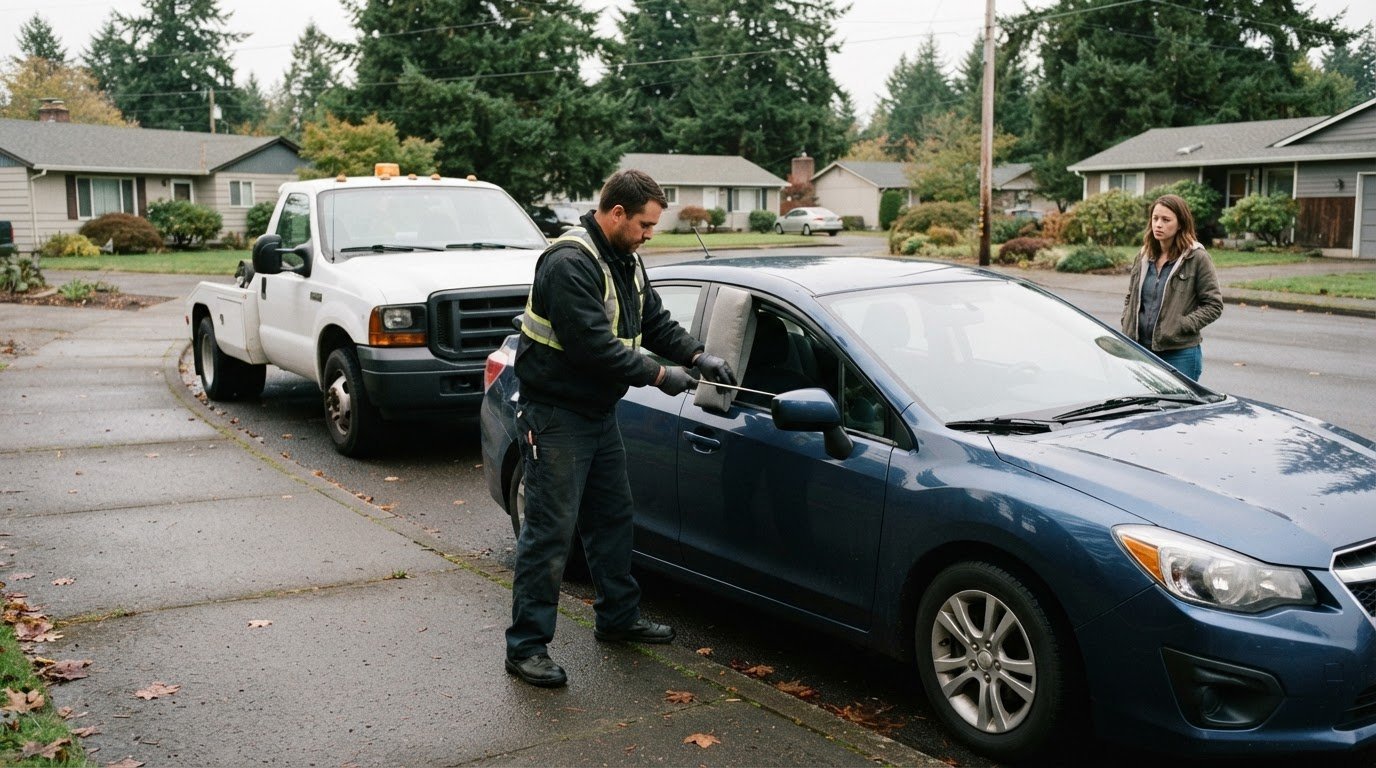
A roadside emergency is easier to manage when you know the next step. Emergency vehicle towing and roadside assistance in Aloha, Oregon, can help when your vehicle is disabled, stuck, locked, or involved in a collision. The right response depends on whether the problem can be handled where the vehicle is or it needs to be moved.
Being stranded is stressful, and practical information can help. This guide explains the towing and roadside services available, what details to share when requesting help, and how the vehicle’s condition affects the service needed.
Here’s a clear look at towing, accident recovery, jump starts, tire changes, lockout assistance, and winch-outs in Aloha. You’ll also learn how Bernabe Towing & Recovery can help when your vehicle is disabled.
Key Takeaways
- Understand how the situation and vehicle condition help determine whether roadside assistance or towing is the right next step.
- Learn what information can help describe a breakdown, collision, flat tire, dead battery, or lockout clearly.
- See how towing needs can differ for passenger vehicles and motorcycles, including the importance of matching the tow approach to the vehicle.
- Find out which roadside problems can be addressed with a jump start, tire change, or lockout assistance, and when a vehicle may need towing.
- Explore how Bernabe Towing & Recovery can help with emergency towing, accident recovery, jump starts, and lockouts in Aloha.
24/7 Emergency towing and dispatch
Emergency towing starts with locating the vehicle and understanding what happened. A car disabled on a neighborhood street needs a different response from one blocking a travel lane. Sharing the location, vehicle condition, and access details helps dispatch identify the service needed and send an appropriate tow truck.
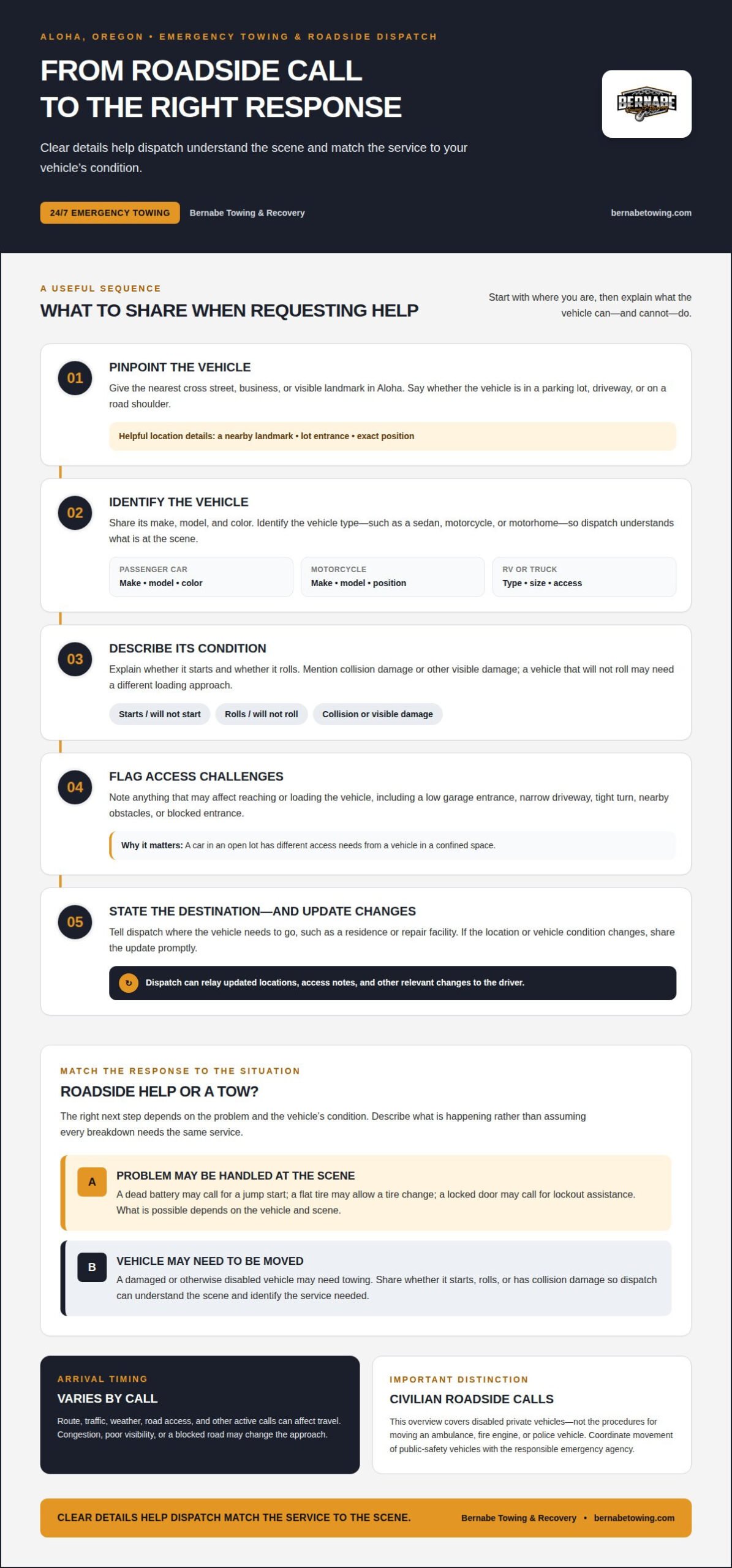
When requesting help, give the nearest cross street, business, or visible landmark in Aloha. Describe the vehicle’s make, model, color, and location, such as a parking lot, driveway, or road shoulder. Explain whether it starts, rolls, or has collision damage, and mention access challenges such as a low garage entrance or narrow driveway. These details help dispatch understand the scene.
Radio-dispatched tow trucks receive job details through communication between dispatch and the driver. A dispatcher can relay the pickup location, vehicle description, access notes, and requested destination. If the vehicle is difficult to find, a nearby landmark or an update about its exact position can help clarify the route. Radio communication also allows the driver to receive relevant changes, such as a blocked entrance or a corrected location.
The term “emergency vehicle” can refer to different things. A disabled private car needing urgent assistance is not the same as an ambulance, fire engine, or police vehicle. This overview covers civilian roadside calls, not the procedures for moving public-safety vehicles.
How quickly can a tow truck reach Aloha during peak traffic or bad weather? Arrival times vary by call. The route, traffic, weather, road access, and other active calls can all affect travel. Congestion may slow an otherwise direct route, while poor visibility or a blocked road can change the approach.
Share updates promptly if the situation changes. If the vehicle moves from a driveway to a nearby lot, provide the new location. Describe any change in its condition instead of assuming the original details still apply. A vehicle that will not roll may need a different loading approach from one that moves freely. Accurate information helps dispatch match the service to the scene.
Passenger car and motorcycle towing
For a passenger car in Aloha, the towing plan depends on its condition and location. A sedan in an open lot has different access needs from an SUV disabled in a narrow driveway. Tell dispatch whether the vehicle rolls, has collision damage, or is in a confined space. Also provide the requested destination, such as a residence, repair facility, or another location.
Motorcycles need a different loading approach from cars because they can tip when moved. Share the make and model, location, and whether the motorcycle can roll. If it has fallen or shows visible damage, mention that before the tow begins. A motorcycle at a curb may be easier to access than one wedged beside a parked vehicle, so clear details help dispatch understand the scene.
RVs require consideration of their size, weight, condition, and access route. A motorhome in an open parking area presents different conditions from a trailer in a tight residential driveway. Explain whether the vehicle is a motorhome or towable RV, where it is, and whether it can move. This helps determine whether the requested tow suits the situation.
Vehicle categories can include passenger cars, motorcycles, RVs, and light-duty trucks, but the right tow setup depends on the vehicle’s size, condition, and access. An ambulance, fire engine, or police vehicle is different from a privately owned vehicle, and its movement should be coordinated with the responsible emergency agency.
Before requesting help, provide the vehicle details and pickup conditions in a simple order:
- Identify the vehicle, such as a sedan, motorcycle, or motorhome.
- Describe its condition, including whether it rolls or has collision damage.
- Give the exact pickup location and note access challenges, such as a low clearance or tight turn.
- State the intended destination and any relevant loading or parking constraints.
Specific details help avoid assumptions. “Blue sedan near the west entrance, unable to roll” is more useful than “car in a lot.” For a motorcycle, say whether it is upright or down. For an RV, describe nearby obstacles and the available approach. Clear information helps dispatch match the vehicle and scene with an appropriate towing plan.
Roadside assistance for dead batteries, flat tires, lockouts, and fuel needs
A dead battery, flat tire, locked door, or empty tank may not require towing. The right response depends on the vehicle’s condition and the problem at the scene. A car that will not start may need a jump start, while a damaged or otherwise disabled vehicle may need towing. Describe the symptoms clearly so dispatch can identify the appropriate help.
After a breakdown or collision near Aloha, provide the exact location, vehicle description, and current condition when requesting help. A nearby intersection, business, or parking-lot entrance can help identify the pickup point. For a collision, describe visible damage and whether the vehicle can move. If there is immediate danger or someone needs urgent medical help, contact emergency services.
A tire change may help if the vehicle and scene allow it. Explain whether the tire is completely flat, whether the vehicle is in a driveway or roadside location, and whether it has a usable spare. A vehicle without a spare, or one that cannot be safely reached for service, may need another solution. Describe the situation rather than assuming every tire problem calls for the same response.
For a dead battery, report whether the engine clicks, turns over, or stays silent when you try to start it. These details help describe the problem. A jump start may get the vehicle running, but it does not repair the cause of the battery problem. If the vehicle still will not start afterward, towing may be the next practical step.
Lockouts call for vehicle lockout assistance rather than a tire or battery response. Tell dispatch that the keys are inside, identify the vehicle, and mention whether a child, pet, or urgent need is involved. A locked car in a driveway presents different access conditions from one in a busy parking area. Clear details help the response fit the circumstances.
Running out of fuel is another roadside problem, and the next step depends on the vehicle’s location and condition. Share the location and explain that the tank is empty. Do not describe it as a mechanical failure unless there is another symptom. An accurate description helps identify whether roadside assistance or towing better fits the situation.
- State the specific problem, such as a flat tire, dead battery, lockout, or empty tank.
- Give a precise location and describe obstacles around the vehicle.
- Explain whether the vehicle starts, moves, or has visible collision damage.
24/7 Emergency towing in Aloha
Emergency Vehicle Towing and Roadside Assistance in Aloha Oregon starts with identifying why the vehicle cannot continue. A car that will not start, has collision damage, or cannot move safely may need transport. First determine whether roadside help can address the issue where the vehicle is or whether it needs towing. A car that will not roll presents a different situation from one that starts but has a damaged tire.
Auto insurance or roadside coverage pays for towing only if the applicable policy includes that benefit. Coverage limits depend on the policy terms, eligible service, and any per-event or distance limits.
For Emergency Vehicle Towing and Roadside Assistance in Aloha Oregon, Bernabe Towing & Recovery helps distinguish the immediate towing need from later repair costs. Towing moves the vehicle; it does not determine the cause of a breakdown or collision. Collision coverage and roadside benefits may have different policy terms. Keep the tow details, destination, and incident information together for the insurer.
Location affects the service plan as well as travel. A vehicle in a parking lot may have open access, while one in a narrow driveway or beside a busy road can require a different approach. Tell dispatch if the car blocks an entrance, cannot roll, or has visible damage. Those facts help define the job before the tow begins.
Useful details to provide include:
- The vehicle’s make, model, and color.
- The nearest cross street, entrance, or recognizable landmark.
- Whether it starts, rolls, or has collision damage.
- The destination you want for the vehicle.
- Any access issue, such as a tight turn or blocked parking area.
Insurance reimbursement and direct payment are separate arrangements. A policy may require you to arrange service and submit documentation, or describe another process. Policy terms determine the steps. Do not assume a towing benefit covers every distance, destination, or roadside problem simply because the plan includes assistance.
For a collision, tell dispatch whether the vehicle can move and whether it obstructs traffic. For a breakdown, describe the symptoms rather than guessing at the cause. If the vehicle is stuck off the pavement, mention its position and nearby obstacles. Clear information helps identify whether towing, roadside assistance, or accident recovery best fits the situation.
Before arranging a tow through an insurance benefit, review the relevant coverage section and its limits. Note any distance allowance, event cap, reimbursement process, or required documentation. The policy terms determine how coverage applies to your vehicle transport needs.
Which towing and roadside assistance companies serve Aloha, Oregon?
Drivers in Aloha may need help with a vehicle disabled on a residential street, in a parking lot, or after a collision. The right service depends on the vehicle’s condition and what happened. A car that will not start, for example, needs a different response from a vehicle damaged in an accident.
This page covers emergency towing and roadside needs in Aloha, Oregon. Share the vehicle’s location, make and model, whether it can roll, and any visible damage. If you are stranded near a business, name the landmark. In a large lot, describe the nearest entrance or row.
Describe the immediate problem instead of guessing at its cause. Say whether the vehicle has a dead battery, flat tire, lockout, collision damage, or another issue. “The engine won’t start” is more useful than diagnosing a mechanical failure without knowing the cause. If the vehicle cannot move or is blocking access, include that detail and its location.
A roadside call can involve distinct kinds of assistance. A locked vehicle calls for lockout help; a disabled car that cannot be moved may need towing. After a collision, the vehicle’s position and damage help establish the recovery need. Giving a concise, accurate description helps connect the request with the service required, instead of treating every roadside problem as the same job.
For a useful service request in Aloha, provide:
- The precise pickup location, using an intersection or nearby landmark.
- The vehicle type, such as a passenger car or light-duty truck.
- The problem and whether the vehicle starts or rolls.
- Visible damage or access issues, such as a tight driveway.
- The destination, if the vehicle needs to be moved.
These details also distinguish routine roadside assistance from vehicle recovery. A car with a flat tire in an open parking space differs from a collision-damaged vehicle off the roadway. Describing the scene clearly gives dispatch a practical starting point and helps match the response to the situation in Aloha.
For a disabled vehicle or roadside problem in Aloha, request emergency towing assistance and provide the location and vehicle condition.
Bernabe Towing & Recovery: Emergency Towing
Bernabe Towing & Recovery provides emergency towing in Aloha when a vehicle cannot continue safely or needs to be moved after a breakdown. Accident recovery can help move a collision-damaged vehicle from the scene. A dead battery or locked vehicle may call for a jump start or lockout assistance instead.
When requesting help, describe the vehicle’s location, condition, and immediate problem. Say whether it starts or rolls and whether collision damage affects access. These details help identify the appropriate service and give dispatch a clear picture of the request.
For emergency towing, accident recovery, a jump start, or lockout assistance in Aloha, contact Bernabe Towing & Recovery.
Choose the Next Step With Confidence
For Emergency Vehicle Towing and Roadside Assistance in Aloha, Oregon, focus on the immediate need: does the vehicle need transport, or can the problem be addressed where it is? Keep its current location and condition in mind as you decide what support is needed.
Bernabe Towing & Recovery provides emergency towing, accident recovery, and lockout assistance. These services can help with a disabled vehicle, a vehicle involved in a collision, or keys locked inside. Share the relevant details when requesting help so the service matches the problem.
If you need roadside help in Aloha, contact Bernabe Towing & Recovery to discuss your situation. A practical next step can help you move from being stranded toward a clear plan.
Frequently Asked Questions
Which providers offer emergency towing 24/7 in Aloha?
Bernabe Towing & Recovery provides 24/7 emergency towing in Aloha. Drivers can call (971) 205-7677 and share their location, vehicle details, and destination to request service. The company also serves nearby communities including Tigard, Beaverton, Tualatin, Sherwood, Hillsboro, Wilsonville, King City, Lake Oswego, and Portland, Oregon. For a vehicle stopped in a difficult-to-find spot, include a nearby landmark when describing its location.
Which roadside services are available in Aloha, such as jump-starts, tire changes, lockouts, and fuel delivery?
Bernabe Towing & Recovery offers 24/7 roadside assistance in Aloha, including jump starts, tire changes, lockout assistance, and fuel delivery. For example, explain whether your car is parked at home, in a business lot, or beside the road, and identify the service you need. Call (971) 205-7677 with your location and vehicle information so the request can be directed to the appropriate roadside service.