Bernabe Towing & Recovery
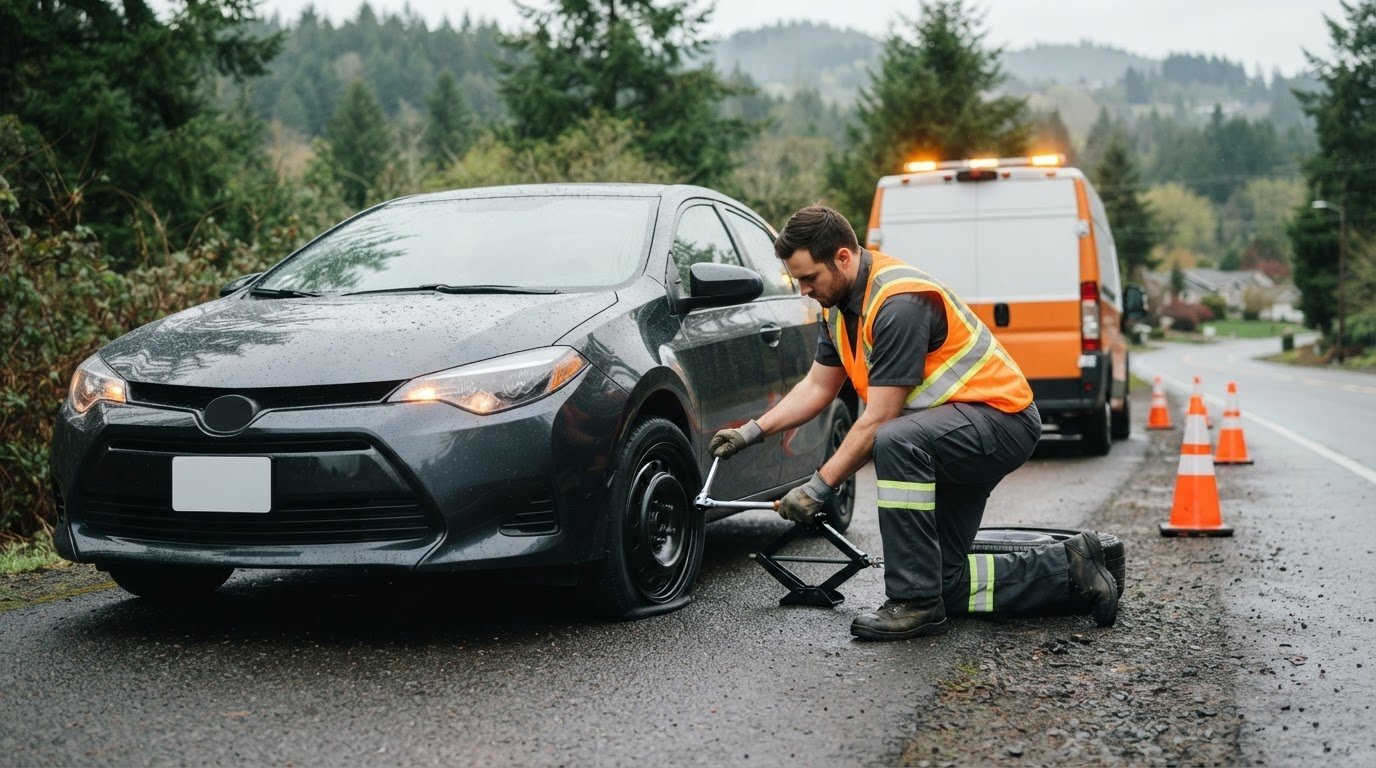
What if the safest response to a flat tire is not changing it yourself? A tire change service can help when the roadside is unsafe, your vehicle has no usable spare, or you’re unsure how to use the jack and tools without damaging the vehicle.
It’s understandable to want to get moving quickly, but a flat doesn’t always mean it’s safe to change the tire. Traffic, a narrow shoulder, poor visibility, missing equipment, or uncertainty about fitting the spare can all make it wiser to wait for roadside help.
This guide explains how to make the first safety decision, what a basic spare-tire change involves, and what to check before relying on your spare. You’ll also learn when the job is beyond a roadside fix and how Bernabe Towing & Recovery provides tire-change assistance in Portland and nearby communities, including Tigard and Beaverton. If changing the tire won’t resolve the situation, towing may be another option.
Key Takeaways
- A roadside tire change replaces a wheel with an available spare. It doesn’t repair a damaged tire.
- Use your hazard lights and follow your vehicle’s guidance, but don’t attempt a change if you can’t work safely away from traffic.
- A tire change service can help if you lack tools, feel unsure about the process, or have damage that makes a spare change unsuitable.
- Share your exact location, vehicle description, affected tire, and spare-tire status when requesting roadside help.
- Bernabe Towing & Recovery provides tire-change assistance across Portland and nearby communities. Towing is another option when needed.
Tire Change Service: What It Does When You Have a Flat
A tire change service replaces a flat wheel with a compatible, usable spare at the roadside. Tire repair fixes damage to the tire itself. That distinction matters: changing the wheel may let you move the vehicle, but it doesn’t patch a puncture or restore a damaged tire. For background on what is a tire, see the overview of tire types and construction.
Whether a roadside change is possible depends on more than the flat itself. The spare must be present and suitable for the vehicle, the necessary equipment must be available, and there must be a safe place to work. If any of these conditions aren’t met, another form of assistance may be the better next step.
What roadside tire-change assistance typically involves
Assistance generally starts with assessing the vehicle and affected wheel. If the situation and equipment allow, the wheel is changed by lifting the vehicle at the manufacturer-designated jack point, removing the affected wheel, fitting the spare, and securing it according to the vehicle’s guidance. The right equipment and procedure can vary by vehicle.
This is a wheel change, not a full inspection or repair of every tire problem. The spare and the vehicle’s supplied tools determine what can be done at the roadside. A missing or incompatible spare, or equipment that’s unavailable or unsuitable, can prevent a straightforward change. Follow the owner’s manual for vehicle-specific precautions and spare-tire limitations.
When a flat tire needs more than a wheel change
A spare can replace a damaged wheel only if it’s usable and compatible. If the vehicle has no spare, or the spare is damaged or otherwise unsuitable, a roadside wheel change may not be possible. Visible sidewall damage also means the tire itself needs more than a wheel change to be fixed. Fitting a spare doesn’t repair the damaged tire.
Consider the whole situation before trying to continue. If the vehicle can’t be safely lifted or the spare can’t be fitted correctly, don’t force the change. When the vehicle can’t safely continue, towing may be appropriate. A tire change service can address the immediate wheel-replacement need; towing can move the vehicle when a spare change won’t resolve the situation.
What to Do Before a Tire Change on an Oregon Roadside
Check your safety before you check the tire. Turn on your hazard lights, then consider whether you and your passengers can move away from traffic safely. A narrow shoulder, fast-moving vehicles, poor visibility, bad weather, or nearby hazards can make a roadside wheel change unsafe. If there isn’t room to work clear of traffic, don’t attempt the change there.
Assess the stopping location first
Look at the conditions around the vehicle before opening doors or unloading equipment. If it’s safe to exit, move yourself and passengers away from moving traffic and follow your vehicle manufacturer’s roadside guidance. Don’t stand behind or beside the vehicle where passing traffic could reach you. If there’s immediate danger, follow local emergency guidance.
Hazard lights can help alert approaching drivers, but they don’t make an unsafe shoulder safe. If traffic is close, visibility is poor, or weather makes it difficult to stay clear of vehicles, wait in a safer location and request assistance. A tire change service should never require you to put yourself in a dangerous position.
Check what you can without taking risks
From a safe position, note which tire is flat and whether you can see damage to the wheel or vehicle. If you can check without stepping into traffic, look for a spare, jack, and lug wrench. Don’t crawl beneath the vehicle or reach into a dangerous area to find tools. Follow the owner’s manual for vehicle-specific precautions.
A flat tire can affect how the vehicle handles, and driving on it may cause further damage or make the vehicle difficult to control. Don’t continue driving if the vehicle feels unsafe or the tire is visibly damaged. Arrange roadside help instead.
Before requesting tire-change help, use this roadside help for a flat tire checklist:
- Switch on hazard lights and assess traffic, visibility, shoulder space, weather, and nearby hazards.
- Move occupants away from traffic only when it’s safe to exit.
- Identify the affected tire and note any visible wheel or body damage.
- Check whether a spare and the vehicle’s tools are accessible from a safe position.
- Share your location and these details when requesting assistance.
If the location isn’t safe or you can’t access a suitable spare and tools, roadside help is a practical next step. Drivers in Portland and nearby communities can get roadside tire-change help from Bernabe Towing & Recovery.
DIY Tire Change or Professional Tire Change Service?
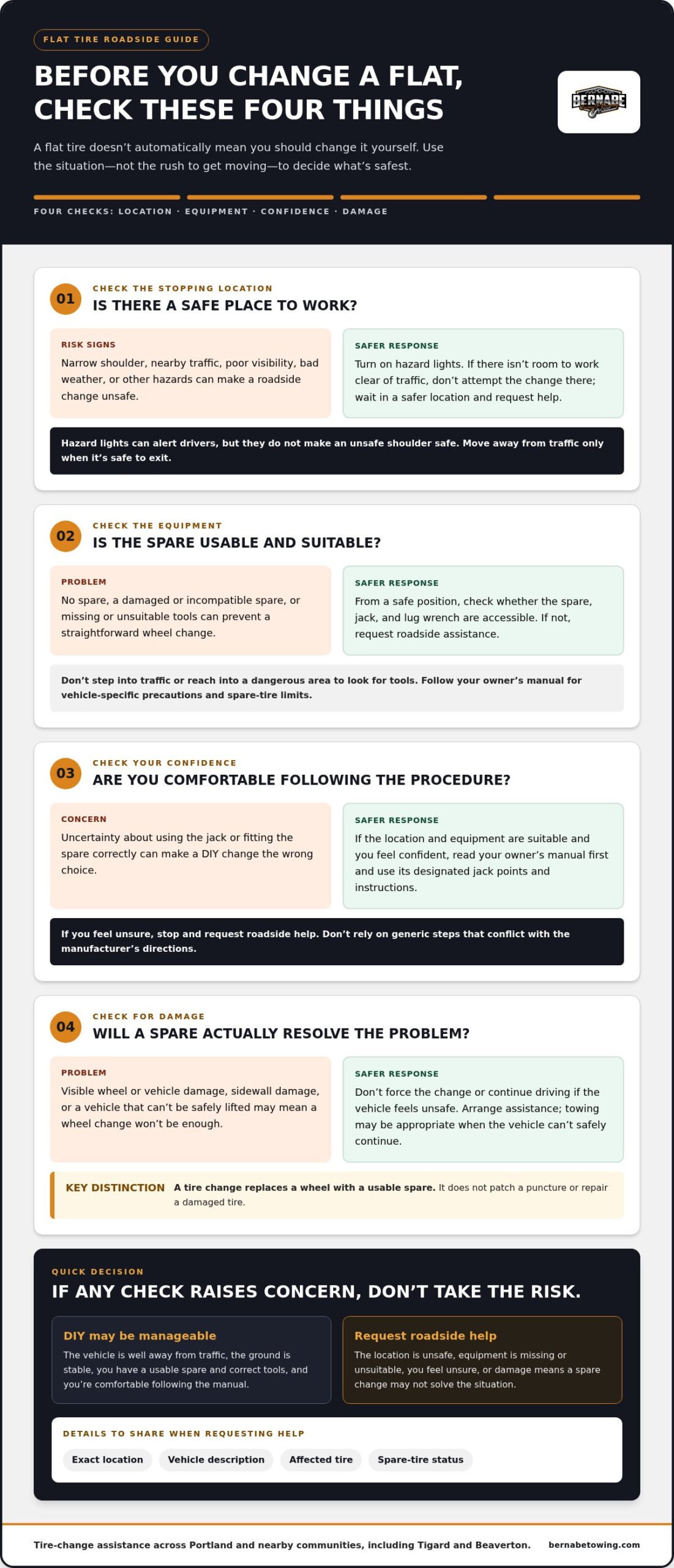
A flat tire doesn’t automatically mean you should change it yourself. Decide based on four things: whether the location is safe, whether you have the right equipment, how confident you feel using it, and whether the vehicle or wheel appears damaged. If any of these raise concerns, stop and request roadside help instead of taking a risk.
When changing the tire yourself may be manageable
A cautious DIY change may be reasonable if the vehicle is well away from moving traffic, the ground is stable, you have a usable spare and the correct tools, and you’re comfortable following the procedure. Read the owner’s manual first. It identifies the vehicle’s designated jack points and provides instructions for its wheels and equipment.
Don’t rely on generic online steps if they conflict with the manufacturer’s directions. A compact spare may have specific use limits, so follow its instructions rather than assuming it’s suitable for unrestricted driving. If a tool is missing, the ground is uneven, or you’re unsure how to proceed, pause and choose a safer option.
When roadside tire-change help is the safer choice
Request help if changing the wheel would expose you to traffic, visibility is poor, the shoulder is too narrow, or weather and nearby hazards make the work unsafe. Missing tools, an absent or unsuitable spare, or uncertainty about lifting the vehicle are also good reasons not to attempt the change. There’s no benefit in rushing through a job you can’t complete safely.
Vehicle condition matters, too. Visible damage to the wheel or nearby parts may mean a spare swap won’t make the vehicle safe to drive. A tire change service can help with a roadside wheel change when conditions and equipment allow. If the vehicle can’t safely continue or a change won’t resolve the problem, towing may be the next step.
Use this quick decision check:
- Location: Is there a safe place to work away from traffic?
- Equipment: Are the spare and correct tools available and usable?
- Confidence: Can you follow the vehicle manual without guessing?
- Condition: Does the wheel or vehicle show damage that makes a swap unsafe?
If any answer points to risk or uncertainty, leave the wheel alone and arrange assistance. For more guidance on what roadside support can involve, read this professional tire change help guide.
How to Prepare for Tire Change Help in the Portland Metro Area
Clear details help roadside assistance understand where you are and what the flat-tire situation involves. Before requesting help, note your location, vehicle, affected tire, and whether a spare is available. Mention immediate safety concerns, too, such as being stopped close to moving traffic or having limited room beside the vehicle.
Details to share when requesting roadside assistance
Give the clearest location you can, including a street address, highway name, direction of travel, or nearby landmark. Then describe your vehicle and say which tire is affected, such as the front passenger-side tire. Mention visible wheel or body damage and whether you can safely access a spare. Lead with any traffic or visibility hazard.
- Location: Address, road, direction, or nearby landmark.
- Vehicle: Make, model, color, or general vehicle type.
- Tire: Which tire is flat and whether damage is visible.
- Spare: Whether one is present and accessible.
- Safety: Any immediate concern about traffic or the stopping location.
This information helps clarify whether a roadside tire change may address the problem or whether another solution is needed. Bernabe Towing & Recovery provides roadside assistance in Portland and nearby communities, including Tigard, Beaverton, and Tualatin. Coverage also includes Sherwood, Hillsboro, Wilsonville, King City, and Lake Oswego.
What happens if the spare cannot be used
If there’s no spare, or it’s damaged or unsuitable, a wheel change may not be possible at the roadside. Don’t drive on a flat or force an unsuitable spare into use. If the vehicle can’t be driven safely, towing may be appropriate. The details you share help explain the situation and the assistance needed.
For broader preparation beyond a flat tire, see this commuter roadside assistance guide. If you need roadside tire-change help in the Portland metro area, request tire change assistance from Bernabe Towing & Recovery.
Get Tire Change Service from Bernabe Towing & Recovery
Bernabe Towing & Recovery provides roadside tire-change assistance for drivers in the Portland metro area. If you have a flat and need help with a wheel change, share your location and a brief description of the vehicle and tire situation. Include whether a spare is available.
Local roadside tire-change support
Service coverage includes Portland and nearby communities such as Tigard, Beaverton, Tualatin, and Hillsboro, as well as Sherwood, Wilsonville, King City, and Lake Oswego. Describe where the vehicle is stopped as clearly as possible. A nearby street, highway, landmark, or direction of travel can help identify the location.
When requesting a tire change service, include the affected tire and whether you have a spare. Mention any visible damage to the wheel or vehicle, and explain if traffic or the stopping place creates an immediate safety concern. You don’t need to diagnose the problem. A straightforward description gives a clearer picture of the roadside situation.
Next steps after a flat tire
Keep the decision simple: get yourself and any passengers away from traffic if it’s safe, then consider whether the spare and tools are accessible and suitable. If the location or equipment makes a DIY change unsafe, request roadside help rather than attempting the job. A tire change can replace a wheel with a usable spare, but it won’t repair a damaged tire or resolve every vehicle problem.
If there’s no usable spare, the wheel or vehicle is damaged, or the vehicle can’t safely continue after a change, towing may be the appropriate next step. The right option depends on the conditions at the scene and what the vehicle needs. Avoid driving on a flat tire or trying to use equipment that doesn’t seem safe.
A flat tire can disrupt your plans, but a clear next step can make the situation easier to manage. Bernabe Towing & Recovery provides tire-change assistance and towing for cars and light-duty vehicles in the Portland area. If you need roadside tire-change assistance, request help from Bernabe Towing & Recovery and describe your location, vehicle, and flat tire.
Choose a Safe Next Step for Your Flat Tire
A flat tire doesn’t always call for a roadside wheel change. First decide whether you’re safely away from traffic, then consider whether you have a usable spare and the right tools. If the location feels unsafe, you’re unsure about the process, or the vehicle is damaged, don’t risk a DIY change. A tire change service can help replace a wheel with a suitable spare, while towing may be safer if the vehicle can’t continue.
Share your location, vehicle details, affected tire, and spare availability when requesting assistance. Bernabe Towing & Recovery provides roadside tire-change assistance in Portland and surrounding metro communities, including Tigard, Beaverton, Tualatin, Sherwood, Hillsboro, Wilsonville, King City, and Lake Oswego.
If you need help with a flat, request roadside tire change assistance from Bernabe Towing & Recovery. A clear, safety-first decision can help you move forward with confidence.
Frequently Asked Questions
Can I drive on a flat tire to reach a tire shop?
Usually, you shouldn’t drive on a flat tire to reach a shop. A deflated tire can affect handling and may cause additional damage to the tire or wheel. If you’re already moving, slow down carefully and stop at a safe location as soon as you can. Turn on your hazard lights and assess the situation. If the vehicle can’t continue safely, request roadside assistance or towing.
Is it safe to change a tire on the side of the road?
Only attempt a roadside change if the vehicle is in a safe place, away from moving traffic, and you can follow the manufacturer’s instructions. A narrow shoulder, poor visibility, bad weather, or passing traffic can make the task unsafe. Keep passengers clear of traffic, and don’t work beneath the vehicle. If you can’t safely reach the wheel or use the equipment, stay in a safer location and request assistance.
What do I need for a tire change?
You generally need a usable spare tire and the equipment specified for your vehicle, which may include a jack and lug wrench. Check your owner’s manual for the correct jack points and wheel-changing instructions, since equipment and procedures can differ by vehicle. You also need a safe, stable place to work. If a tool is missing, the spare is unsuitable, or you’re uncertain about the process, arrange roadside help instead.
Can roadside assistance change a tire if I do not have a spare?
A roadside wheel change generally requires a usable spare that fits the vehicle. If there isn’t one available, replacing the flat with a spare may not be possible. Don’t drive on the flat or try to continue if the vehicle feels unsafe. Tell roadside assistance that you don’t have a spare, describe your location and vehicle, and explain any visible damage. Towing may be an option if the vehicle can’t be driven safely.
How long does a roadside tire change take?
There isn’t one fixed time for every roadside tire change. The process depends on factors such as the vehicle, the condition of the wheel, access to the spare and tools, and whether the roadside location is safe for the work. Traffic, visibility, or other hazards can affect the situation as well. Share these details when requesting help so the circumstances are clear. Don’t rely on a specific time estimate unless it’s provided for your situation.
What should I do after installing a compact spare tire?
Follow the instructions and limitations supplied with the compact spare and in your vehicle’s owner’s manual. Compact spares may have restrictions on speed or distance, so don’t assume you can use one like a regular tire. Drive only as directed, and arrange to have the damaged tire addressed promptly. If the spare doesn’t fit correctly, appears damaged, or the vehicle handles abnormally, stop somewhere safe and request assistance.
Does Bernabe Towing & Recovery provide tire change service around Portland?
Yes. Bernabe Towing & Recovery provides tire change service and roadside assistance for drivers in Portland and surrounding metro communities. Service coverage includes Tigard, Beaverton, Tualatin, Sherwood, Hillsboro, Wilsonville, King City, and Lake Oswego. When requesting help, share your location, vehicle description, which tire is affected, and whether a spare is available. If a tire change can’t make the vehicle safe to continue, towing may be another option.