Bernabe Towing & Recovery
You are standing on the shoulder of a busy Portland highway, the sound of the collision still ringing in your ears, while traffic rushes past your crumpled bumper. In that high-stress moment, the pressure to clear the scene can lead to rushed decisions that impact your vehicle’s value and your insurance claim. It’s completely normal to feel confused about the right steps for towing after accident situations, especially when you’re worried about predatory fees or further damage to your car.
We understand that a crash is more than just a mechanical problem; it’s a major disruption to your life. This guide explains the essential steps of professional vehicle recovery to help you protect your car and your future insurance claims. You’ll learn how to ensure your vehicle is taken to a reputable location and what to expect during the recovery process. We’ll also cover how a professional winch-out or tow can prevent additional damage, giving you the steady, reliable support you need to move from the scene of the crash toward a full resolution.
Key Takeaways
- Learn why specialized accident recovery is different from a standard tow and why it is necessary for vehicles with suspension damage or those stuck off-road.
- Discover how to prioritize your safety at the scene and the specific logistics of arranging towing after accident events to ensure your vehicle is handled properly.
- Understand your options for vehicle destinations, from preferred repair shops to secure storage lots, and how insurance typically manages these costs.
- Find out how professional recovery drivers document damage and use specialized equipment to prevent secondary damage that could lead to denied insurance claims.
- Get insights into navigating local recovery needs in the Portland metro area, including Tigard and Beaverton, with a focus on rapid response and professional transport.
Understanding Accident Recovery: More Than Just a Standard Tow
Accident recovery is a specialized field that goes far beyond simply hooking a car to a truck. While standard towing usually involves moving a vehicle that has stalled or run out of fuel, recovery involves the complex task of uprighting, winching, and safely retrieving vehicles involved in collisions. When you require towing after accident damage occurs, the mechanical integrity of your vehicle is often compromised. Standard equipment might not be able to handle a car with a snapped axle or one that has been pushed into a ditch. Professional recovery specialists use advanced vehicle recovery methods to ensure the car is moved without causing further structural issues.
Towing vs. Recovery: Key Differences
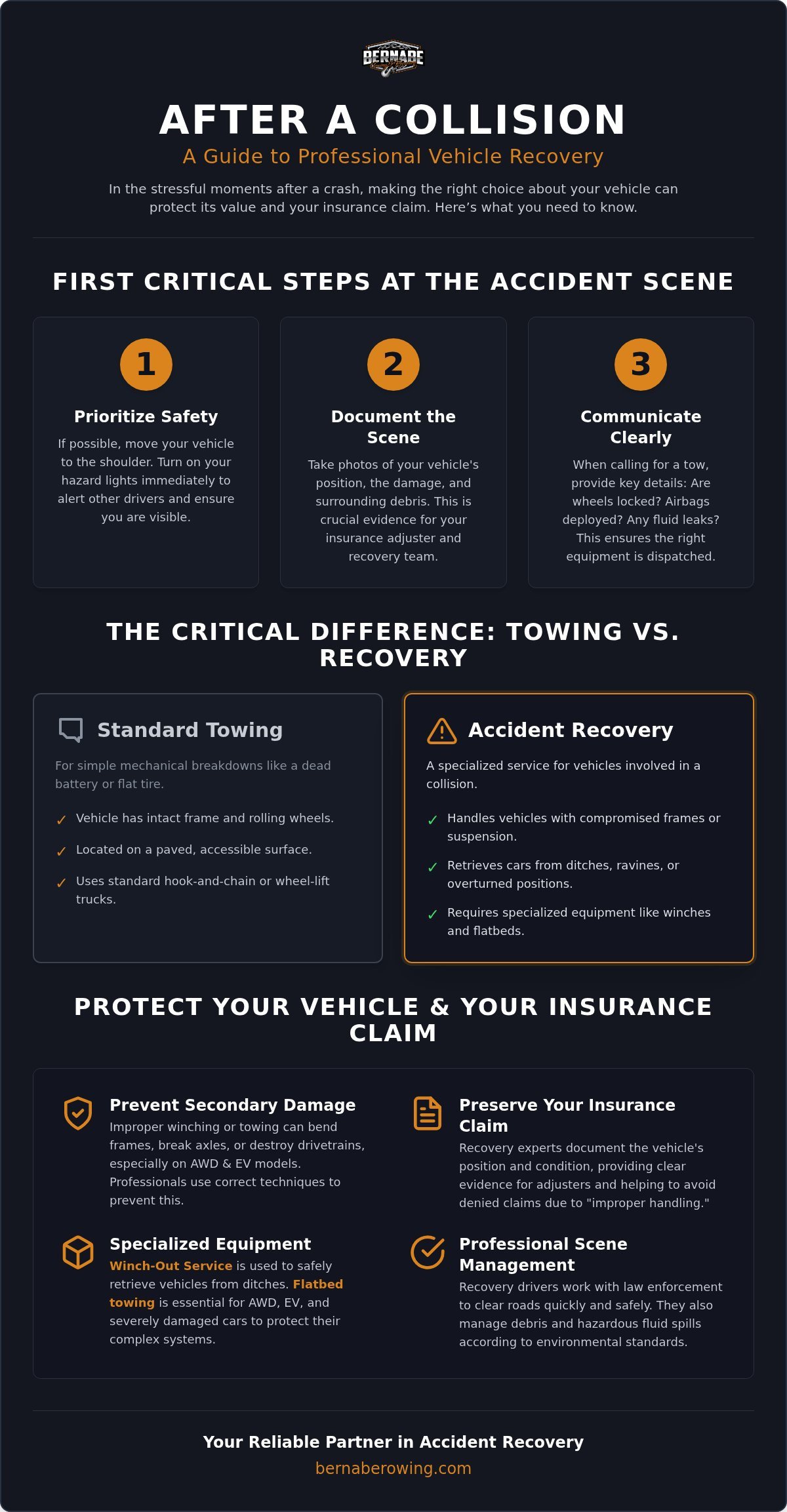
The main difference lies in the condition and location of the vehicle. Standard towing is designed for mechanical breakdowns where the car’s wheels still roll and the frame is intact. In contrast, accident recovery is required when a vehicle is immobilized by impact or located off the pavement. If your car is stuck in a ravine or resting on its side, you need a specialized Winch-Out Service to retrieve it safely. This process requires heavy-duty cables and precise tension control to avoid bending the frame. For modern vehicles, especially All-Wheel Drive (AWD) models and electric vehicles (EVs), flatbed transport is essential. Attempting to drag these vehicles with a traditional hook-and-chain setup can destroy the drivetrain or damage sensitive battery components.
The Recovery Specialist’s Role at the Scene
A recovery expert acts as a critical coordinator during a crisis. In areas like Portland and Tigard, we work closely with local law enforcement to clear the roadway as quickly as possible to prevent secondary crashes. This role involves more than just moving the car; it includes managing the scene. We ensure that shattered glass, plastic debris, and hazardous fluids like coolant or oil are cleared according to local environmental standards. Beyond the cleanup, we focus on preserving the vehicle’s condition. By documenting how the vehicle was positioned and using soft-touch tie-downs, we help preserve evidence that insurance adjusters need to evaluate your claim. This professional approach prevents “secondary damage” that often occurs when an untrained operator tries to force a damaged vehicle onto a truck, potentially saving you from a denied insurance claim later.
Immediate Steps: Safety and Logistics at the Accident Scene
The moments following a crash are chaotic and stressful. Your first priority must always be safety. If the vehicle is still movable, steer it toward the shoulder to clear the path for traffic. Turn on your hazard lights immediately to alert other drivers of the hazard. Following these steps to take after a car accident ensures you remain visible and protected while waiting for assistance. Once you are in a safe position, take photos of the vehicle’s location and the surrounding debris. These images provide essential context for the recovery team and your insurance adjuster, showing exactly how the impact occurred before the scene is cleared.
When you are arranging for towing after accident damage, clear communication with the dispatcher is vital. Let them know if the wheels are locked, if the airbags deployed, or if there are active fluid leaks. This information helps us bring the correct equipment, such as a flatbed or specialized dollies, to handle your car safely. If you find yourself in a crisis in the Portland area, contacting a reliable service like Bernabe Towing can help streamline the process and lower your stress levels. Our team is ready to act, providing a steady presence to help you navigate the immediate logistics of vehicle transport.
Assessing the Need for a Winch-Out
Sometimes a vehicle isn’t just damaged; it’s physically trapped. If you have slid off an icy road or into a ditch, you likely need a professional Winch-Out Service. Never attempt a DIY recovery using a friend’s truck on a busy Oregon highway. Improper hook points can tear off bumpers or ruin suspension components. Professional operators identify reinforced frame points to pull the vehicle back to the roadway without causing secondary damage. We assess the tension required to retrieve the vehicle safely, ensuring that a simple slide-off doesn’t turn into a total loss due to frame damage. For a detailed walkthrough of what this process involves, our guide to car recovery after accident vehicle extraction explains each step from initial winch-out to final destination.
Working with Local Authorities in Beaverton and Tigard
In Beaverton and Tigard, local police often use a rotation list for towing to clear scenes quickly. You should know that you generally have the right to request your own local towing company if they can arrive within a reasonable timeframe. When you call, provide a precise location. Use a GPS pin from your phone or identify nearby landmarks like specific highway mile markers or business signs. Tell the dispatcher if the vehicle is over an embankment or on its side. This accuracy ensures the recovery team arrives with the right tools, minimizing the time you spend on the hazardous roadside.
Insurance and Storage: Where Does Your Vehicle Go?
Once the immediate danger has passed and the roadway is cleared, the next decision involves where to transport your vehicle. There are typically three primary destinations for your car following a collision. You can have it towed to your residence, a preferred auto body shop, or a secure storage lot. If you’re unsure of which repair facility to use or if the accident happens after business hours, a storage lot is the most common choice. Choosing a local service in Tigard or Beaverton simplifies these logistics, as it keeps the vehicle close for inspection and reduces the distance for future transport.
Managing the logistics of towing after accident events involves understanding the costs associated with storage. In Portland, for example, Class A vehicles typically incur no storage charges for the first four hours. After that window, a daily rate of $33 for each 24-hour period is standard. It’s also vital to check your policy for Insurance cover for towing and storage. Most full-coverage policies include these expenses, but you might need to pay the towing company directly and seek reimbursement later. Keeping all documentation, including the tow receipt and the incident report, ensures you have the proof needed for a smooth transition to your insurance provider.
The Role of the Insurance Adjuster
The insurance adjuster is a key figure in the “Release of Vehicle” process. They’ll typically visit the storage lot within a few days to perform a thorough inspection and determine if the car is a “Total Loss” or repairable. If the car is repairable, you must provide the storage facility with a formal release to allow a secondary tow to your chosen body shop. If you don’t act quickly, daily storage fees can accumulate, so stay in constant contact with your adjuster to authorize the move as soon as the inspection is complete. Having a professional recovery team already on standby helps move the vehicle to a repair-ready status without unnecessary delays.
Secure Storage Lot Protocols
A secure storage lot provides a controlled environment to protect your vehicle from theft or further weather damage while it awaits inspection. At Bernabe Towing, we prioritize vehicle security by maintaining restricted access to our facility. This protection extends to your personal belongings inside the car. If you need to retrieve essentials like house keys, insurance papers, or garage door openers, you can usually access your vehicle during standard business hours. Some facilities may charge a “Gate Fee” for after-hours access, which is approximately $55 for Class A vehicles in the Portland metro area. Always call ahead to ensure someone is available to assist you with the retrieval process.
Why Professional Recovery is Essential for Your Insurance Claim
Professional recovery is the critical bridge between a roadside crisis and a successful insurance claim. When you arrange for towing after accident damage, you’re not just moving a car; you’re preserving evidence. Improper handling by an untrained operator can cause secondary damage, such as bent frames or snapped axles. Insurance adjusters are trained to spot these issues. If they determine that the damage occurred during a botched recovery rather than the initial crash, they may deny that portion of your claim. Using an expert ensures the vehicle reaches its destination in the same state it was in immediately following the impact.
The chain of custody is a formal record of who had control over the vehicle at every stage. This record prevents disputes about when specific damage occurred. If an insurance company questions a repair bill, your recovery documentation provides a clear timeline. Professional operators also preserve the point of impact. By not disturbing the vehicle’s damaged areas during the load-up, we keep the forensic evidence intact for the adjuster’s analysis. This level of care protects your vehicle’s value and supports your right to a fair settlement.
Preventing Frame and Suspension Damage
Modern vehicles require specific recovery angles to maintain their structural safety. Unibody integrity refers to the structural wholeness of a vehicle where the chassis and body are manufactured as a single, unified piece to maximize passenger safety during an impact. Amateurs often use snatch straps or chains hooked to the wrong places. This can twist the unibody frame, making the car unsafe to drive even after mechanical repairs. We use precision winching and specialized tie-down points to distribute the weight of the vehicle evenly during transport, preventing any unnecessary stress on the suspension or drivetrain.
The Importance of Recovery Documentation
A professional recovery operator acts as a neutral third-party witness. Our documentation includes the precise state of the vehicle at the moment of arrival, which can be vital if fault is contested. A detailed invoice serves as proof of the accident’s severity and the specialized labor required to clear the scene. This paperwork is often the first thing an adjuster looks for when verifying the details of a claim. By providing a clear, itemized record of the recovery, you eliminate guesswork for the insurance company and speed up the approval process for your repairs.
Many drivers think they can save money by pulling it out themselves with a friend’s truck. This is a mistake. Most insurance policies require professional handling for accident recovery. If you attempt a DIY winch-out and cause further damage, you risk voiding your comprehensive coverage. To protect your investment and ensure a smooth claims process, contact Bernabe Towing for professional accident recovery today. We provide the steady, reliable support you need to move forward with confidence.
Bernabe Towing: Reliable Accident Recovery in the Portland Metro Area
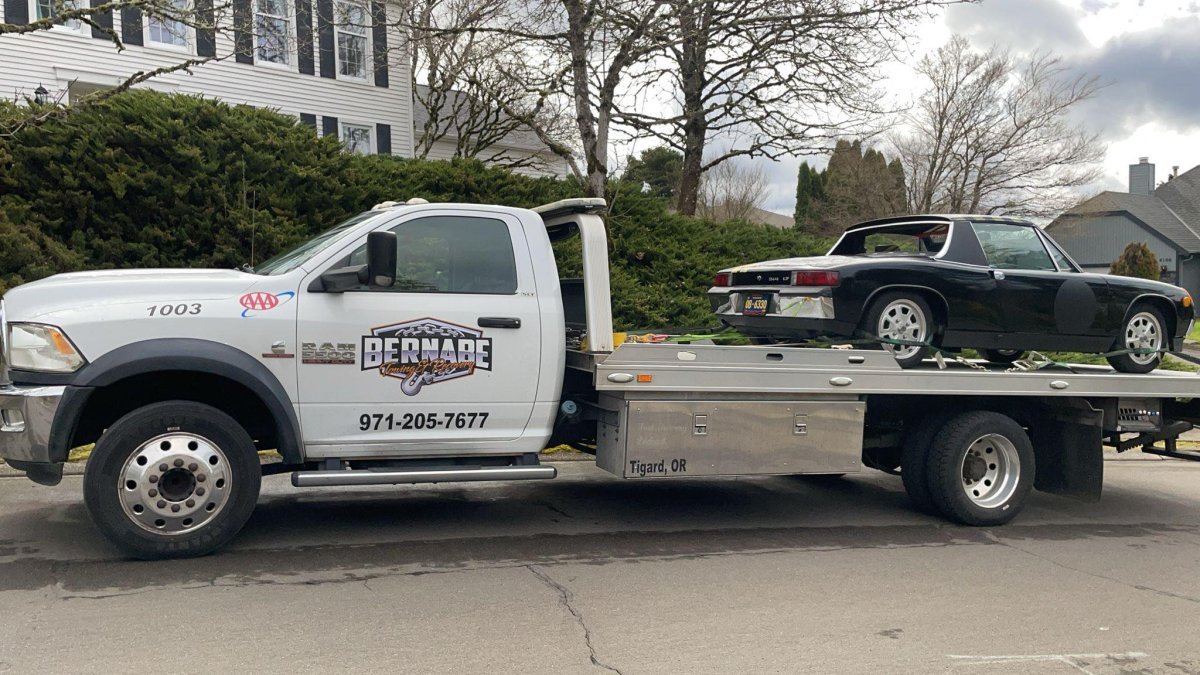
Bernabe Towing & Recovery stands as a dependable local expert for drivers throughout the Portland metro area. When you’re facing the aftermath of a crash, our team maintains a “ready-to-act” attitude to help lower your stress levels immediately. We specialize in light-duty accident recovery, which means we have the exact tools required for cars, SUVs, and light-duty trucks. If you have a lowered vehicle or a car with sensitive suspension, our specialized equipment ensures a damage-free transport. We handle the logistical heavy lifting of your recovery so you can focus entirely on the well-being of your family.
Securing professional towing after accident scenes is about more than just moving metal. It’s about a commitment to your safety and the long-term protection of your vehicle’s value. We operate with professional composure, providing a steady and reassuring presence in Tigard, Beaverton, and the surrounding communities. Our operators are seasoned professionals who understand that every minute spent on the shoulder of a busy highway is a minute too long. We prioritize efficiency and no-nonsense service to resolve your crisis as quickly as possible. Beyond accident recovery, our team also handles other roadside emergencies, including a professional car lockout service that protects your vehicle’s electronic integrity and locking mechanisms during a damage-free entry.
Serving Our Local Oregon Communities
Our deep knowledge of local roads in Hillsboro, Tualatin, and Lake Oswego allows us to reach your location with rapid response times. We’ve spent years building strong relationships with local law enforcement, which helps us coordinate smooth scene clearances that follow all municipal standards. By focusing exclusively on light-duty recovery, we provide a level of specialized care that general towing companies often miss. Whether you’re on a busy freeway or a quiet suburban street, we know the terrain and the quickest routes to get your vehicle to a reputable location. To see how this expertise is applied in practice, review our accident recovery Tigard Oregon professional vehicle extraction case study, which details how precision methods protect your vehicle from secondary damage. This local expertise ensures you aren’t left waiting when you need help the most.
What to Expect When You Call Bernabe
You can expect clear, functional communication from the moment you speak with our dispatchers. We provide realistic arrival times and stay in constant contact so you aren’t left guessing on the side of the road. Our professional operators understand the high-stress nature of a collision and arrive prepared to act. They handle your vehicle with technical proficiency, ensuring it is secured properly for transport to a storage lot or repair facility. We prioritize getting your car to a safe destination without unnecessary delays. This methodical approach moves you quickly from a state of crisis to a state of resolution. If you need immediate assistance, you can count on Bernabe Towing to provide the reliable support your situation requires.
Secure Your Vehicle and Your Peace of Mind
Navigating the aftermath of a collision is difficult, but understanding the recovery process gives you the control needed to protect your property. You now know that specialized equipment prevents secondary frame damage and that proper documentation is a vital component of a successful insurance claim. Whether your car is headed to a secure storage lot or a preferred local repair shop, your focus should remain on your personal well-being while professionals handle the mechanical logistics.
Choosing a dependable partner for towing after accident events ensures that your light-duty vehicle receives the technical care it deserves. If you need immediate accident recovery, call Bernabe Towing & Recovery for 24/7 support. We are locally owned and operated in Tigard, specializing in light-duty vehicle recovery with rapid response times for accidents throughout the Portland metro area. Our team provides the steady, professional presence required to clear the scene safely and efficiently. You don’t have to manage this crisis alone. We are ready to act so you can move forward with confidence.
Frequently Asked Questions
Do I have to use the towing company the police call after an accident?
You generally have the right to choose your own provider in the Portland metro area. While local police in Tigard or Beaverton often use a rotation list to clear the roadway quickly, you can request a specific local company like Bernabe Towing & Recovery. If our team can arrive within a reasonable timeframe, authorities usually allow us to handle the scene. This ensures your vehicle is managed by experts you trust rather than a random choice.
Does insurance cover the cost of accident recovery and towing?
Coverage for towing after accident events typically depends on your specific insurance policy. Most comprehensive or collision plans cover the cost of recovery and transport to a repair facility. You might need to pay the initial fee upfront and submit the receipt for reimbursement. It’s best to contact your insurance provider immediately to verify if they have a preferred network or specific limits on storage fees at a local lot in Tigard.
What is the difference between towing and winch-out service?
Towing involves transporting a vehicle that is already on a flat, accessible surface to a new destination. A winch-out service is a specialized recovery method used when a vehicle is stuck in a ditch, mud, or over an embankment. We use heavy-duty cables and motorized pulleys to safely pull the car back onto the roadway. This process requires precise angles to avoid causing secondary damage to the vehicle frame or suspension components.
Where will my car be taken if I am transported to the hospital?
If you are unable to provide instructions due to an injury, law enforcement will typically authorize a tow to a secure storage lot. This ensures the vehicle is off the public road and protected from theft or vandalism. Once you are stable, you can contact the towing company to arrange for the vehicle’s release. We keep detailed records of every transport to help you or your family locate the car quickly in Tigard.
Can I choose which repair shop my car is towed to after a crash?
You have the final say on where your vehicle is repaired. While insurance companies may suggest “preferred” shops in areas like Hillsboro or Beaverton, you aren’t legally required to use them. You can request that we transport your car directly to your trusted mechanic or a specific body shop. If the accident occurs after hours, we can store it safely at our lot until your chosen shop opens the following business morning.
What should I remove from my car before the tow truck takes it away?
You should remove all essential personal items and important documents before the vehicle is towed. This includes your insurance card, vehicle registration, house keys, and high-value electronics like tablets or laptops. Don’t forget to check the glove box and center console for garage door openers or loose cash. While our storage lots are secure, having these items with you prevents the need for a return trip to our facility during business hours.
How long can a vehicle stay in a storage lot after an accident?
A vehicle can remain in a storage lot as long as needed, but daily fees will accumulate. In Portland, Class A vehicles typically incur no storage charges for the first four hours, followed by a $33 daily rate for each 24-hour period. Most insurance adjusters aim to inspect the vehicle within three to five business days. It is important to authorize the release of the vehicle as soon as the inspection is finished.
Is a flatbed tow truck better for an accident-damaged car?
A flatbed tow truck is often the safest choice for towing after accident damage. By lifting the entire vehicle onto the platform, we prevent the wheels from spinning and avoid putting stress on a damaged drivetrain. This is particularly critical for All-Wheel Drive (AWD) vehicles and electric cars, which can suffer internal mechanical failure if dragged. Our professional operators assess your car’s condition to ensure we use the most protective transport method available.