Bernabe Towing & Recovery
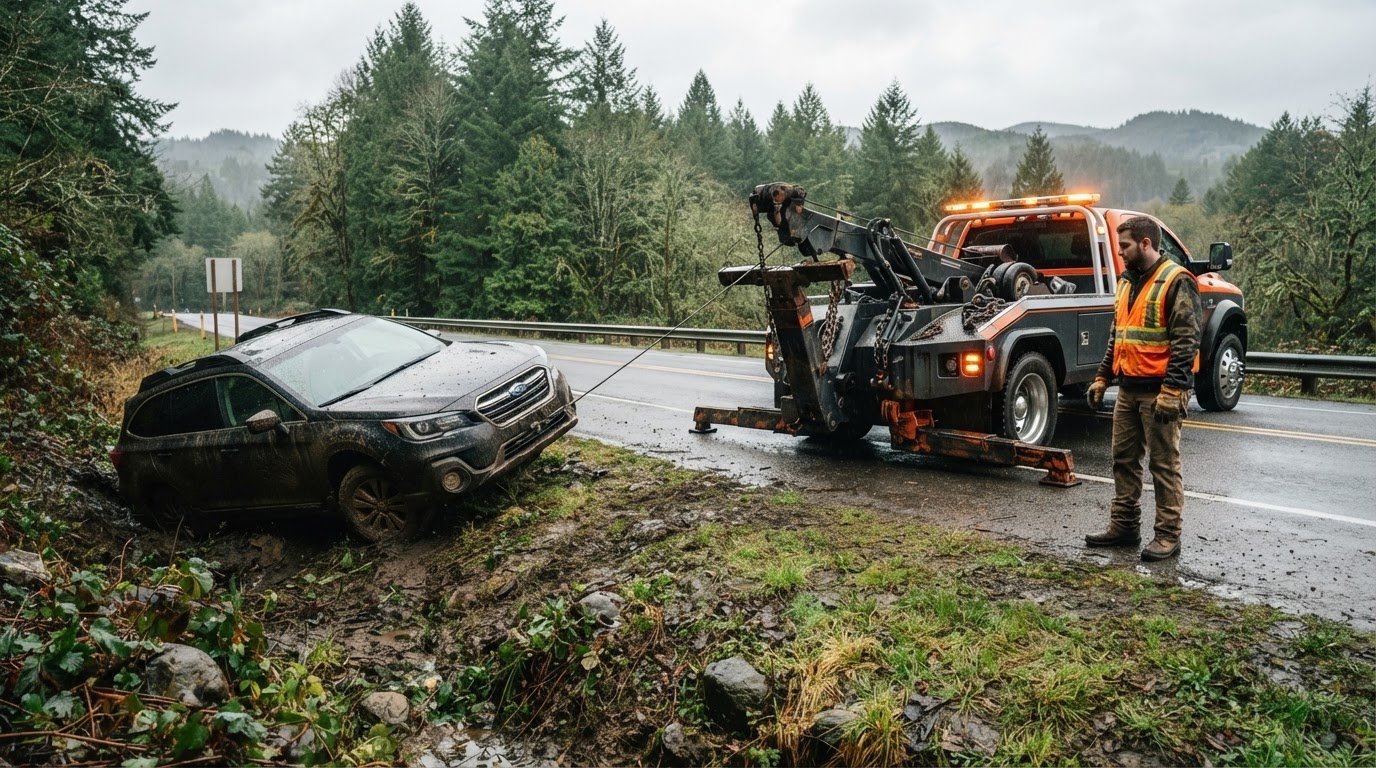
The safest recovery isn’t always the strongest pull. If your car is stuck in mud, has slid into a ditch, or has lost traction on uneven ground, a winch out service may be more suitable than a routine tow. The right option depends on the vehicle’s position, the terrain, and whether there’s a safe path to recover it. It’s understandable to worry about whether your vehicle can be driven, how it will be moved, and where to wait safely.
This guide explains when professional winching may be appropriate and what a recovery crew considers before moving a vehicle. You’ll learn how the process works, why assessing the recovery path matters, and what to tell the dispatcher: your location, vehicle details, and what it’s stuck in. We’ll also cover practical steps to take while help is on the way, especially if you’re near traffic or on unstable ground. With a clearer picture of the process, you can make a more informed choice between a winch-out and a regular tow, and help the recovery team understand the situation before they arrive.
Key Takeaways
- A winch-out pulls a stuck vehicle free; towing transports a vehicle to another location. A recovery may not include a full tow.
- A professional winch out service starts by assessing the vehicle’s position, terrain, and access before choosing how to recover it.
- Lost traction, uneven ground, restricted access, or a difficult vehicle position can signal that ordinary driving or towing may not be suitable.
- When requesting help, share your precise location, vehicle type, what happened, terrain, and any immediate hazards.
- Bernabe Towing & Recovery serves Portland-area communities including Portland, Tigard, Beaverton, and Tualatin; confirm current coverage when requesting service.
Winch Out Service vs. Towing: What’s the Difference?
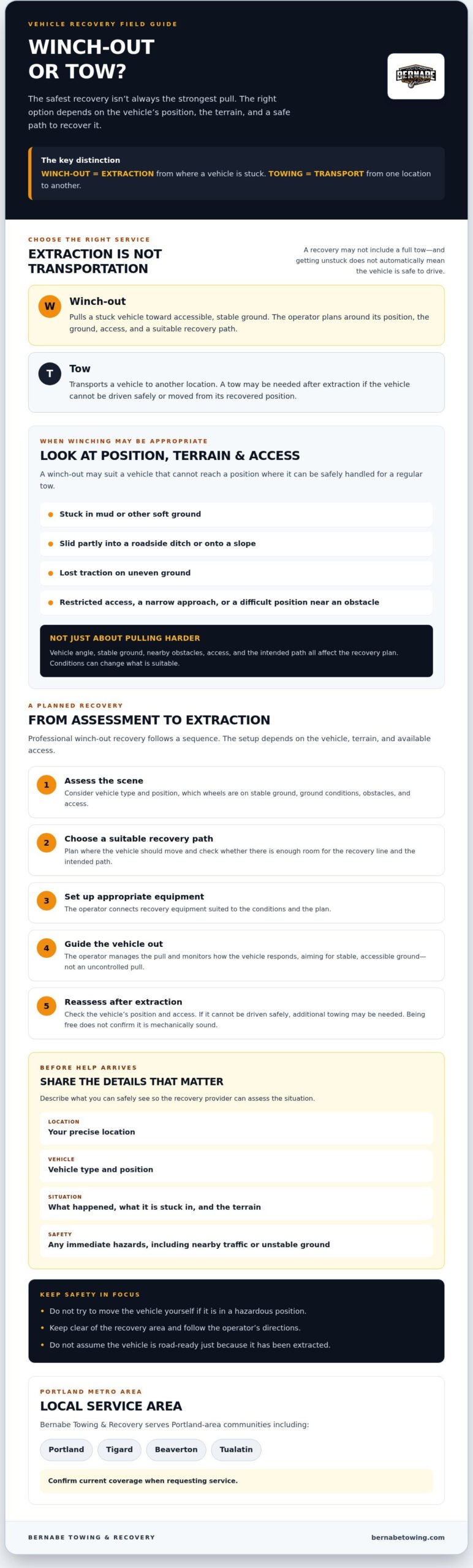
A winch-out pulls a stuck vehicle toward accessible ground; towing transports it from one location to another. The services can work together, but they solve different problems. A vehicle that can’t move safely because it’s stuck or positioned off the roadway may need to be recovered before it can be driven or loaded for transport.
A winch is a mechanical device that pulls a load using a cable or rope wound around a drum. For a winch out service, the operator considers the vehicle’s position, the ground beneath it, available access, and a suitable recovery path. The goal is to move the vehicle toward a reachable area, not simply to pull harder.
When Does a Vehicle Need Winching Instead of a Standard Tow?
Winching may be appropriate when a vehicle can’t reach a position where it can be safely handled for a regular tow. It might be stuck in soft ground, partly down a roadside ditch, or blocked by a narrow approach. The visible terrain is only part of the decision: the vehicle’s angle, nearby obstacles, and room to access it matter too.
Conditions vary. A car in shallow mud on level ground presents a different situation from one that has slid onto a slope or become wedged near an obstruction. If the vehicle is in a hazardous position, don’t try to move it yourself. Describe what you can safely see to the dispatcher so the recovery provider can assess what help may be suitable.
Winch-Out Service vs. Towing: What Is the Difference?
Think of the distinction as extraction versus transportation. A winch-out brings a stuck vehicle back to accessible ground. Towing moves it to another destination. A winch-out doesn’t automatically include a complete tow, and being recovered doesn’t necessarily mean the vehicle is safe to drive.
For example, after an extraction, the vehicle may be accessible but still unable to move because of its position or condition. In that case, a tow may be needed next. The operator assesses the scene and vehicle before determining whether recovery, towing, or both are appropriate. Sharing accurate details about where the vehicle is and what prevents it from moving helps clarify the request.
How Professional Winch-Out Recovery Works from Assessment to Extraction
A professional recovery follows a sequence, not a guess. The operator gathers details about the vehicle and its location, assesses the scene, plans a suitable pull, selects the necessary equipment, carries out the recovery, and reassesses the vehicle’s position. The approach depends on the vehicle, terrain, and available access.
A controlled assessment matters more than force alone: the right recovery path helps guide the vehicle while accounting for the conditions around it. The U.S. Army describes recovery and towing as an inherently dangerous task, underscoring why recovery should be planned with safety in mind rather than improvised.
What Does the Operator Assess Before Pulling?
Before connecting equipment, the operator considers the vehicle type, its direction and position, and which wheels are on stable ground. They also look at ground conditions, obstacles, and whether there’s enough room for the recovery line and the vehicle’s intended path. A vehicle close to a ditch edge, for example, may call for a different setup than one stuck on open, level ground.
If access is limited, the ground shifts, or the scene presents a safety concern, the operator may change the plan. Recovery should proceed only when the setup and path are appropriate for the conditions.
What Happens During and After the Extraction?
Once a plan is in place, the operator connects appropriate recovery equipment and manages the pull, monitoring how the vehicle responds. The setup and pace depend on the scene. The aim is to guide the vehicle toward stable, accessible ground rather than rely on an uncontrolled pull. Keep clear of the recovery area and follow the operator’s directions.
After extraction, the operator reassesses the vehicle’s position and whether it’s on stable ground with enough access to move. If it can’t be driven safely, additional towing may be needed. Recovery doesn’t confirm that a vehicle is mechanically sound, so don’t assume it’s road-ready just because it’s free.
If your car or light-duty truck is stuck in the Portland area, you can review Bernabe’s winch-out service as a local recovery option. Share what happened and describe the vehicle’s position so the situation can be assessed.
Which Situations Call for a Winch-Out, and When Is It Not Enough?
A vehicle may need extraction when it can’t regain traction or reach a position where it can move safely. The cause matters: a car settled into soft ground, one that has slid partly off the roadway, and a vehicle blocked by limited access can each require a different assessment. A professional off-road winch out may help in some of these situations, but the terrain alone doesn’t determine whether it’s suitable.
Common Reasons Drivers Request Vehicle Extraction
Consider what’s preventing the vehicle from moving:
- Lost traction: Tires may spin without gaining ground in mud, snow, or sand. Each surface behaves differently, and the vehicle’s position affects the options.
- Uneven ground: A vehicle that has slid into a roadside ditch or off the roadway may be unable to return to a stable, accessible position under its own power.
- Restricted access: A narrow approach, nearby obstacles, or limited space around the vehicle can make ordinary towing difficult to arrange.
- Vehicle position: A car angled awkwardly or partly obstructed may need recovery before it can be moved or transported safely.
These conditions can arise across Portland-area communities, but no two scenes are identical. Don’t keep accelerating if the vehicle isn’t moving, since that may worsen its position. Describe the surface, the vehicle’s location, and what you can see when you request help.
When Should You Request More Than a Winch-Out?
Extraction addresses the vehicle’s position, not necessarily its condition. If there’s collision damage, a damaged wheel that may require tire change service, or another visible problem, tell the dispatcher and operator. The vehicle may need accident recovery or further assessment after it’s moved. A successful winch-out doesn’t confirm that the vehicle is safe to drive, and it doesn’t replace mechanical repair.
If your vehicle was involved in a crash, the Accident Recovery Guide: What Happens to Your Vehicle After a Crash explains what may happen after the scene is secured. Keep in mind that a winch-out only addresses the vehicle’s position, so additional assistance may be needed if it’s damaged or can’t move safely.
For context, OSHA’s vehicle safety standards address motor vehicles on off-highway construction jobsites. They aren’t a universal rule for every roadside recovery, but they underscore why vehicle condition and safe operation deserve attention. If you’re unsure whether the vehicle can move safely after extraction, ask the recovery provider about towing rather than attempting to drive it.
What Should You Do Before a Winch-Out Truck Arrives?
Protect yourself first. Stay clear of moving traffic, unstable ground, and any vehicle that appears unsafe. Don’t approach a hazardous vehicle or stand near recovery equipment. If your current location puts you in immediate danger, contact emergency services and move only if there’s a clearly safe route. Otherwise, follow the dispatcher’s guidance and wait in a safer position.
What Information Should You Give the Dispatcher?
Clear details help the dispatcher understand the scene and determine what response may be appropriate. Share:
- Your precise location: Give the street address, nearby intersection, direction of travel, or a recognizable landmark. Mention whether you’re in Portland, Tigard, Beaverton, Tualatin, or another nearby community.
- Vehicle details: Identify the vehicle type, such as a car or light-duty truck, and describe its position. Say whether it’s partly off the roadway, angled, or blocked from access.
- What happened: Explain what the vehicle is stuck in or on, such as mud, snow, sand, or a roadside shoulder, and whether it can move at all.
- Visible damage and hazards: Report collision damage, nearby traffic, unstable ground, limited access, or anything else that could affect a safe approach.
Be specific, but don’t put yourself at risk to inspect the vehicle or terrain more closely. If you’re unsure about a detail, say so rather than guessing.
How Can You Stay Safer While Waiting?
Keep your distance from the stuck vehicle and the area where recovery may take place. If you’re safely inside the vehicle and it’s away from traffic and other immediate hazards, remain there and follow the dispatcher’s instructions. If you need to leave because the vehicle or location is unsafe, move only when you can do so without entering traffic or crossing unstable ground.
Don’t try to drive free if the wheels are spinning, the vehicle is shifting, or movement could worsen its position. Avoid improvised recovery with another vehicle, straps, or equipment that hasn’t been assessed for the situation. A professional winch out service involves choosing an approach for the actual scene, not simply applying more force.
If you’re in Bernabe Towing & Recovery’s Portland-area service region, including Portland, Tigard, Beaverton, and Tualatin, contact Bernabe about winch-out service and share these details when requesting help. Confirm current service availability and coverage when you call.
Requesting Winch-Out Service in the Portland Metro Area
A professional recovery provider may be the right next step if your vehicle can’t move under its own power, is stuck off the roadway, or can’t be accessed safely for a standard tow. Avoid trying to pull it free yourself if the ground, vehicle position, or nearby traffic makes the situation uncertain. A winch-out can address the vehicle’s position, but it doesn’t automatically mean the vehicle is safe to drive afterward.
What to Expect When You Contact Bernabe Towing & Recovery
Bernabe Towing & Recovery provides winch-outs, towing, and vehicle recovery for cars and light-duty trucks in the Portland metropolitan area. Its listed communities include Portland, Tigard, Beaverton, Tualatin, Sherwood, Hillsboro, Wilsonville, King City, and Lake Oswego. Coverage and winch-out availability can depend on your exact location and circumstances, so confirm both when you contact the company.
Help the dispatcher understand what’s needed by sharing:
- Your precise location, including a nearby intersection, landmark, or direction of travel.
- Your vehicle type and its position, such as partly off the road or unable to move.
- What happened and what the vehicle is stuck on or in.
- Any visible damage, traffic exposure, unstable ground, or access limitations.
Clear details help the provider consider the situation before deciding what response may be suitable. Don’t put yourself at risk to gather information. Report only what you can safely observe, and mention if conditions change while you’re waiting.
How to Decide on Your Next Step After Recovery
Once the vehicle is extracted, check whether it’s on stable, accessible ground, but don’t assume it’s roadworthy. If it’s damaged, making unusual noises, or unable to move safely, towing may be the next step. Tell the operator what you notice and ask about arranging a tow if needed. Extraction and transportation solve different problems.
If you’re in Bernabe’s Portland-area service region and need help assessing a stuck vehicle, Contact Bernabe Towing & Recovery for winch-out assistance. Share your location and the recovery details, then confirm current service availability for your situation.
Choose a Safer Path to Vehicle Recovery
A winch-out and a tow serve different purposes: extraction helps move a stuck vehicle to accessible ground, while towing transports it elsewhere. A professional assesses the vehicle’s position, terrain, and access before selecting an approach. If the vehicle is damaged or can’t move safely after recovery, don’t assume it’s roadworthy; towing may be the next step.
Before requesting a winch out service, share your location, vehicle details, what happened, and any visible hazards. Stay clear of traffic and unstable ground, and avoid improvised attempts to pull the vehicle free.
Bernabe Towing & Recovery is a locally owned and operated Portland-area business providing winch-outs, accident recovery, and towing for cars and light-duty trucks. Service availability depends on your exact location and situation, so confirm coverage when you reach out. Contact Bernabe Towing & Recovery for winch-out assistance and share what’s happening. With clear information and a careful recovery plan, you can take the next step with greater confidence.
Frequently Asked Questions
What is a winch-out service?
A winch-out service uses recovery equipment to pull a stuck vehicle toward accessible ground. It’s different from towing, which transports a vehicle to another location. An operator assesses the vehicle’s position, the ground, available access, and a suitable recovery path before choosing an approach. Getting unstuck doesn’t necessarily mean the vehicle can be driven afterward; it may still need towing if it’s damaged or unsafe to move.
When do I need a winch-out instead of a tow?
You may need a winch-out if your vehicle can’t move safely because it’s stuck, partly off the roadway, or difficult to access for a standard tow. The operator considers the vehicle’s position and the surrounding conditions, not just the surface it’s on. If the vehicle is already accessible but can’t be driven, towing may be more appropriate. A provider can assess the situation and advise which service fits.
Can a winch-out damage my vehicle?
Vehicle damage is possible during a recovery, and no winch-out can be guaranteed damage-free. The risk depends on factors such as the vehicle’s condition and position, ground stability, and the recovery setup. A professional assessment helps determine an appropriate approach, but it can’t remove every risk. Tell the operator about existing damage and follow directions during the recovery. Afterward, don’t drive if the vehicle seems unsafe or damaged.
Can I use another vehicle and a strap to pull my car out?
It’s safer not to improvise a recovery using another vehicle and a strap. The equipment, attachment points, vehicle positions, and ground conditions may not suit the situation, and a sudden movement could create hazards or damage. Stay clear of traffic and unstable ground, and don’t keep trying to drive free if the vehicle shifts or remains stuck. Contact a recovery provider and describe the vehicle’s position and surroundings.
What information should I give when requesting a winch-out?
Give the dispatcher your precise location, vehicle type, and a clear description of what happened. Explain where the vehicle is positioned, what it’s stuck on or in, and whether it appears damaged or can move. Mention nearby traffic, unstable ground, limited access, or other visible hazards. In Portland, Tigard, Beaverton, Tualatin, or another nearby community, landmarks and cross streets can help clarify where assistance is needed.
Can a winch-out service recover a car from a ditch or mud?
A winch-out may help recover a car from a ditch or mud, but suitability depends on the exact conditions. The vehicle’s angle, ground stability, access, and possible damage can all affect the recovery plan. A shallow roadside ditch and a vehicle positioned on unstable ground aren’t the same situation. Describe what you can safely observe to the dispatcher so the provider can assess whether winching may be appropriate.
Does Bernabe Towing & Recovery provide winch-out service in Portland, Oregon?
Yes. Bernabe Towing & Recovery provides winch-out service for cars and light-duty trucks in Portland and listed Portland-area communities, including Tigard, Beaverton, Tualatin, Sherwood, Hillsboro, Wilsonville, King City, and Lake Oswego. Coverage and current availability can depend on your exact location and circumstances, so confirm when you contact the company. Share your vehicle details, position, and any hazards to help explain the recovery situation.