Bernabe Towing & Recovery
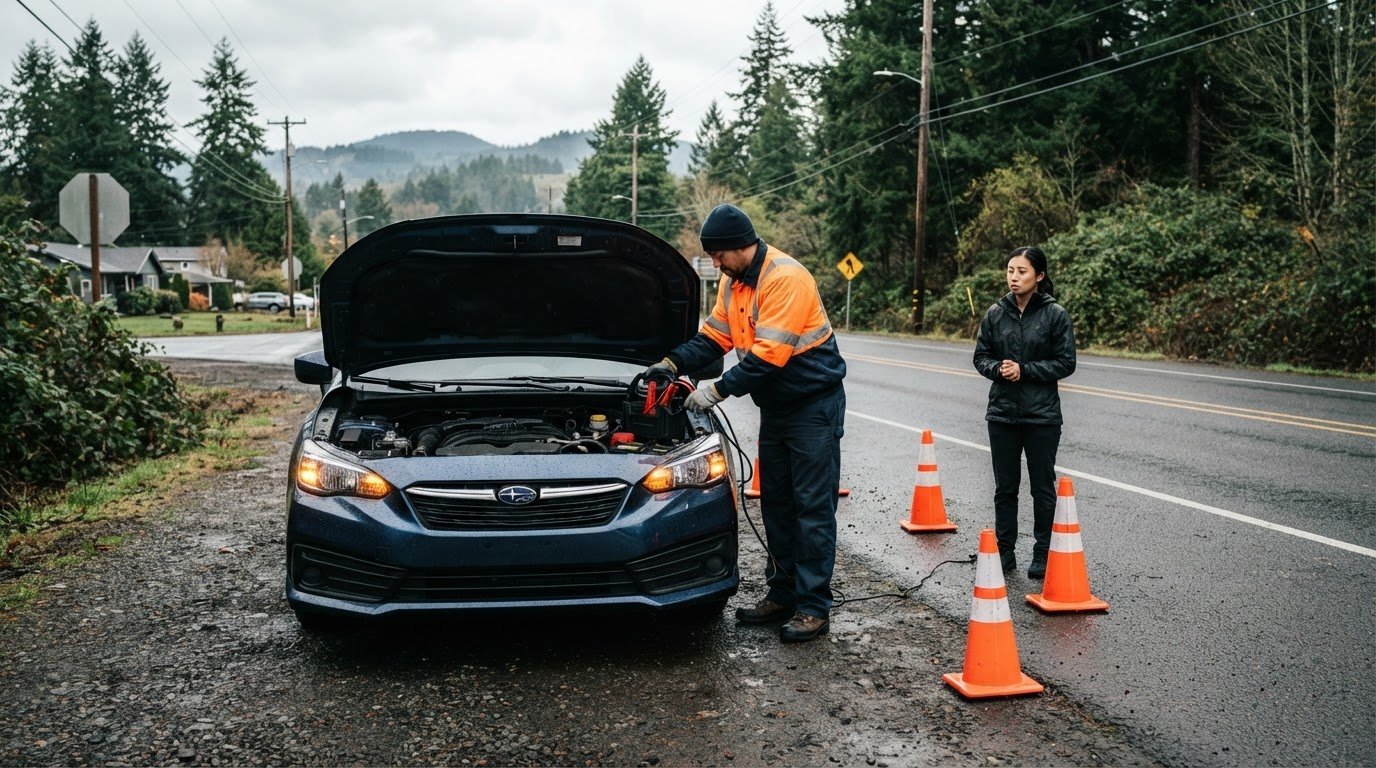
A weak battery may be why your car won’t start, but guessing can lead to unsafe or unhelpful attempts. Before trying a roadside battery boost, check what the vehicle is telling you and make sure you’re in a safe place. Repeatedly turning the key won’t confirm the cause, and some vehicles require specific jump-start procedures.
Being stranded and unsure whether a boost is likely to work can be stressful. This checklist will help you recognize common signs of a discharged battery, gather useful details, and decide what to do next. You’ll learn when a boost may be appropriate, when to avoid jump-starting, and when ongoing trouble calls for roadside assistance or a vehicle inspection. In the Portland area, Bernabe Towing & Recovery offers on-site jump start service, with coverage that includes Portland, Beaverton, Tigard, and other nearby communities.
Key Takeaways
- Dim lights, slow cranking, or clicking can point to a battery issue, but none of these symptoms confirms the cause on its own.
- Check your surroundings first. Don’t inspect the battery or attempt a boost from an unsafe roadside position.
- Before a roadside battery boost, consult your owner’s manual for the correct procedure for your vehicle.
- Seek further help if a boost doesn’t work or the vehicle appears unsafe or damaged. A successful start doesn’t prove the battery or charging system is healthy.
- When requesting help, share your exact location, vehicle details, and what happened when you tried to start it.
Roadside Battery Boost Checklist: Is the Battery Likely the Problem?
A no-start can be unsettling, but you don’t need to identify the exact fault before making a safe decision. A roadside battery boost supplies external power to help start a vehicle. It may help when the battery is discharged, but it won’t resolve every cause of a vehicle that won’t start. “Boost” is commonly used to mean a vehicle jump start; Jump start explains the general terminology and equipment involved.
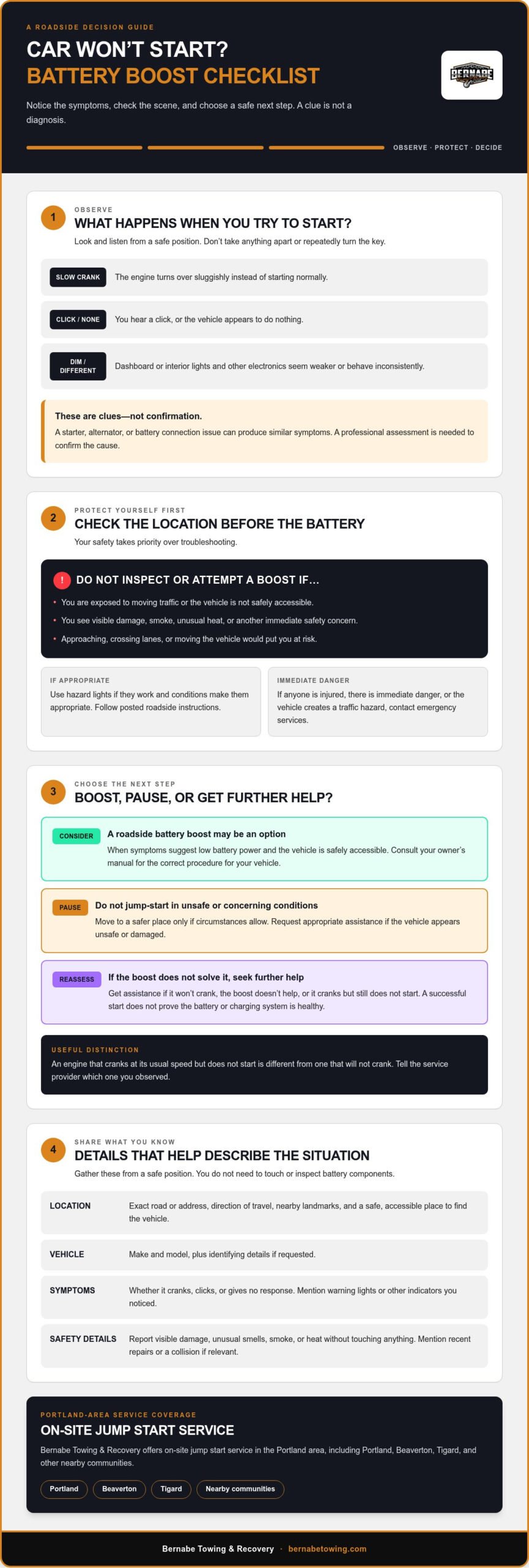
Notice what happens when you try to start the car, but don’t take anything apart. Dim dashboard lights, slow engine cranking, clicking, or no response can be clues. A starter, alternator, or battery connection issue can produce similar symptoms. A symptom may suggest a battery problem, but an assessment is needed to confirm the cause.
What signs can point to a weak or discharged car battery?
Notice whether the engine turns over slowly, the dashboard lights look dim, or you hear a click instead of the engine cranking. Check from a safe position whether the interior lights and other electronics seem to work as usual. These observations help you describe the problem, but they aren’t a diagnosis. Avoid probing or dismantling components to investigate.
- Slow cranking: The engine turns over sluggishly rather than starting normally.
- Clicking or no response: You hear a click, or the vehicle appears to do nothing when you try to start it.
- Different behavior from normal: Lights or electronics seem weaker than usual or behave inconsistently.
Repeated failed attempts provide little additional information and don’t establish that the battery is at fault. Note whether the engine cranks at all: an engine that cranks at its usual speed but doesn’t start is different from one that won’t crank. Share that distinction when you seek help.
When is a roadside battery boost worth considering?
A boost may be worth considering if the symptoms suggest low battery power and the vehicle is safely accessible. Stop troubleshooting if you see visible damage, smoke, unusual heat, or another immediate safety concern. Don’t approach or attempt a boost in those conditions. Move to a safer place if possible and request appropriate assistance.
If the car starts after a boost, that’s useful, but it doesn’t confirm that the battery or charging system is healthy. If it won’t crank, the boost doesn’t help, or it cranks without starting, you may need further assistance. A roadside battery boost is one possible next step, not a guarantee of what’s wrong or what will resolve it.
Before a Roadside Battery Boost: Check Your Location and Vehicle
Before considering a roadside battery boost, assess the scene rather than the battery. If you’re close to moving traffic, don’t inspect the vehicle or attempt a boost from that position. Move to a safer location only if circumstances allow, and follow posted roadside instructions. Your safety takes priority over troubleshooting.
How can you make the roadside scene safer?
Use your hazard lights if they work and conditions make them appropriate. Avoid standing where you’re exposed to passing traffic, and don’t cross lanes or move the vehicle if doing so would put you at risk. If anyone is injured, there’s immediate danger, or the stopped vehicle is creating a traffic hazard, contact emergency services.
Preparation before a breakdown can also help. Ready.gov’s Emergency supply kit in your car guidance includes jumper cables among suggested supplies. Carrying equipment doesn’t mean you should use it in an unsafe location or without following your vehicle’s instructions.
What details should you gather before requesting help?
Once you’re in a safe position, collect details that will help a service provider understand where you are and what’s happening. You don’t need to inspect or touch battery components. Share what you can observe from a safe distance.
- Location: Give the exact road or address, direction of travel, nearby landmarks, and a safe, accessible place to find the vehicle.
- Vehicle: Note the make and model, plus identifying details if requested.
- Symptoms: Describe whether the engine cranks, clicks, or gives no response. Mention warning lights or other indicators you noticed.
- Safety concerns: Report visible battery damage, unusual smells, smoke, or heat without touching anything. Mention recent repairs or a collision if relevant.
A breakdown after a collision may call for a different response than a suspected discharged battery. For next steps after a crash, see this accident recovery guide.
If the vehicle is safely accessible and the symptoms suggest a battery issue, professional help may be an option if you can’t assess the situation or attempt a restart safely. Drivers in the Portland area can check current coverage and request details about local jump start assistance from Bernabe Towing & Recovery.
Roadside Battery Boost or Tow: Choose the Safer Next Step
Choose based on the vehicle’s condition and whether it’s safe to proceed, not just on whether the engine starts. A roadside battery boost may help when low battery power is suspected, but it can’t confirm why the vehicle stopped or whether it’s ready for a longer drive.
A boost may help start a vehicle, but it doesn’t repair an underlying fault. Use this comparison to decide what kind of help to consider:
| Situation | Safer next step |
|---|---|
| Symptoms suggest a discharged battery, and the vehicle is safely accessible. | A boost may be reasonable if the owner’s manual permits it and the procedure can be followed safely. |
| A boost attempt doesn’t start the vehicle. | Stop repeated attempts and request further assistance. Towing may be appropriate if the vehicle remains inoperable. |
| The vehicle is visibly damaged or otherwise unsafe. | Don’t attempt a boost. Move away from danger if possible and seek appropriate assistance. A tow may be needed. |
When might a boost be enough to get you moving?
A boost may provide a short-term starting aid when symptoms point to low battery power and there are no visible safety concerns. If the engine starts, don’t assume the problem is resolved. A successful start doesn’t prove that the battery or charging system is healthy, or that the vehicle is safe for a long drive. Follow your owner’s manual and qualified provider guidance about what to do next.
When should you request towing or additional help?
Request further assistance if the boost doesn’t work, the vehicle stalls again soon after starting, or the same starting trouble returns. Repeated problems, visible damage, or warning indicators that remain unresolved also call for a professional evaluation. These symptoms can have different causes, so don’t treat them as a confirmed diagnosis or assume a specific repair is needed without an inspection.
If the vehicle can’t be driven safely or remains inoperable, towing may be the more suitable next step. When arranging help, describe what happened before and after any boost attempt, including whether the engine cranked, started, or stalled. Those details help the provider understand the situation without relying on a remote guess.
Safe Roadside Battery Boost Checklist for Drivers
Use this checklist to decide whether a boost attempt is appropriate, not as instructions for connecting cables. Battery locations and jump-start procedures vary by vehicle, so don’t rely on a one-size-fits-all method. If you’re unsure, pause and get qualified help rather than taking a risk.
What should you confirm before any boost attempt?
- Check your location. Make sure the vehicle is safely accessible and you can stay clear of moving traffic. If the roadside position is unsafe, don’t inspect the vehicle or try to boost it there.
- Consult the owner’s manual. Look for vehicle-specific jump-start instructions, approved connection points, and any restrictions. Don’t guess based on another vehicle’s layout.
- Look for warning signs from a safe distance. Don’t proceed if the battery appears damaged or is leaking, unusually hot, smoking, or otherwise concerning. Don’t touch or probe battery components.
- Know when to hand it over. If the manual’s guidance is unclear, you can’t follow it safely, or the scene or vehicle condition raises concern, leave the roadside battery boost to a qualified provider.
A boost attempt isn’t worth added risk. Stop if conditions change or you notice a new safety concern, and request appropriate assistance instead.
What should you do after the vehicle starts?
A successful start is useful, but it doesn’t confirm that the underlying issue is resolved. Pay attention to whether starting trouble returns or warning indicators remain on. Don’t assume the vehicle is ready for a long drive simply because the engine started.
- Monitor what happens next. Note recurring slow starts, another no-start, stalling, or warning indicators that persist.
- Arrange appropriate follow-up. Share the symptoms and what happened during the boost with a qualified service provider so the issue can be assessed.
- Request help if it won’t remain operational. If the vehicle stalls or can’t be driven safely, stop and discuss roadside assistance and towing options.
If you’re in the Portland area and can’t safely assess or restart your vehicle, request jump start assistance from Bernabe Towing & Recovery. A provider can help you consider the next step based on the situation, without assuming a boost will solve the problem.
Request Roadside Battery Boost Help in the Portland Area
If your vehicle won’t start and you can’t safely assess the situation, a roadside battery boost may be an option. Bernabe Towing & Recovery provides jump start service in the Portland metropolitan area. Before requesting help, prepare a few clear details so the provider can understand your location, the vehicle’s condition, and what you need. Share only what you can safely observe.
What should you expect when requesting roadside battery assistance?
Give your exact location, including the road or address, direction of travel, and a nearby landmark or safe access point. Then describe the vehicle and symptoms. For example, explain whether the engine clicks, cranks slowly, or gives no response, and mention any warning indicators you noticed. Include the make and model, and say whether the vehicle is safely positioned and accessible.
Before help is arranged, ask the provider to confirm whether the requested service is available at your location and what next steps to expect. A jump start is roadside assistance intended to help start the vehicle. It doesn’t guarantee that the battery has been diagnosed, that an underlying issue has been repaired, or that the vehicle will stay running. If symptoms change or you notice a safety concern, tell the provider before help is arranged.
Which Portland-area communities does Bernabe serve?
Bernabe’s listed service coverage includes Portland, Tigard, Beaverton, Tualatin, Hillsboro, Lake Oswego, Wilsonville, Sherwood, and King City. Coverage and availability can vary by location, so don’t assume service is available at your precise roadside position. Confirm your location directly, especially if you’re on a highway, at a difficult-to-access roadside spot, or outside a town center.
When you contact the provider, have your location and vehicle details ready. If the car isn’t safely accessible or a jump start doesn’t resolve the immediate no-start, explain that too so you can discuss an appropriate next step. A clear description helps set expectations, but it can’t confirm the cause of the problem remotely.
For drivers in Portland and nearby communities, Bernabe Towing & Recovery offers jump start service. Contact the provider to confirm jump start availability for your exact location.
Make a Safe, Informed Next Move
A roadside battery boost may help if low battery power is behind a no-start, but symptoms such as clicking or dim lights don’t confirm a diagnosis. First, get away from traffic and check your owner’s manual for vehicle-specific instructions. Don’t attempt a boost if the vehicle or battery looks damaged, or if the location is unsafe.
If a boost doesn’t work, symptoms return, or the vehicle won’t stay operational, stop troubleshooting and consider further roadside assistance or towing. A successful start doesn’t prove the battery or charging system is healthy, so pay attention to warning indicators and recurring trouble.
Bernabe Towing & Recovery offers jump start service in Portland and nearby metropolitan communities. Confirm current service availability for your exact location, then contact Bernabe Towing & Recovery to ask about roadside jump start assistance. Share your location and symptoms to discuss a practical next step.
Frequently Asked Questions
What is a roadside battery boost?
A roadside battery boost is assistance intended to help start a vehicle when low battery power may be involved. It doesn’t recharge or repair every battery problem, and it can’t confirm the cause of a no-start by itself. If the vehicle still won’t start or symptoms return, request further roadside help or arrange an inspection. Don’t assume the issue is resolved just because the engine starts once.
How can I tell if my car needs a battery boost?
Slow cranking, dim lights, clicking, or no response when you try to start the car can point to low battery power. These signs don’t confirm a battery problem. Starter, charging-system, or connection issues can cause similar symptoms. Notice whether the engine cranks and whether dashboard lights or other electronics behave differently than usual. Share those observations with a qualified roadside provider instead of relying on repeated starting attempts.
Is it safe to boost a car battery on the side of the road?
Safety depends on the roadside location, vehicle, and battery condition. Don’t attempt a boost beside moving traffic or if the battery appears damaged, unusually hot, or leaking. Follow the owner’s manual and qualified provider guidance, since procedures can vary by vehicle. If the scene is unsafe or you’re unsure what to do, move to a safer place when possible and request professional assistance rather than inspecting or handling components.
What should I do if a battery boost does not start my car?
Stop repeated attempts and tell the roadside provider what happened. A failed boost may mean the problem isn’t a discharged battery, or that the battery or another vehicle system needs further attention. If the car remains inoperable, discuss roadside assistance or towing. Don’t try unverified procedures or drive an unreliable vehicle. Describe whether the engine clicked, cranked, or gave no response so the provider has useful details.
Can I drive normally after a roadside battery boost?
A successful start doesn’t prove that the battery or charging system is working properly. Watch for recurring starting difficulty or warning indicators, and arrange appropriate follow-up if symptoms return. Ask the roadside provider what to consider next, and consult your owner’s manual for vehicle-specific guidance. Don’t assume the car is suitable for a long journey based only on one successful start. If it won’t remain operational, request further assistance.
Does Bernabe Towing & Recovery offer roadside battery boosts near Portland?
Bernabe Towing & Recovery lists jump start service among its roadside offerings in Portland and nearby communities, including Tigard, Beaverton, Tualatin, Sherwood, Hillsboro, Wilsonville, King City, and Lake Oswego. Coverage and availability depend on your exact location and circumstances, so contact the company to confirm. Share your vehicle details, precise location, and symptoms, such as clicking or slow cranking, when asking whether assistance is available.