Bernabe Towing & Recovery
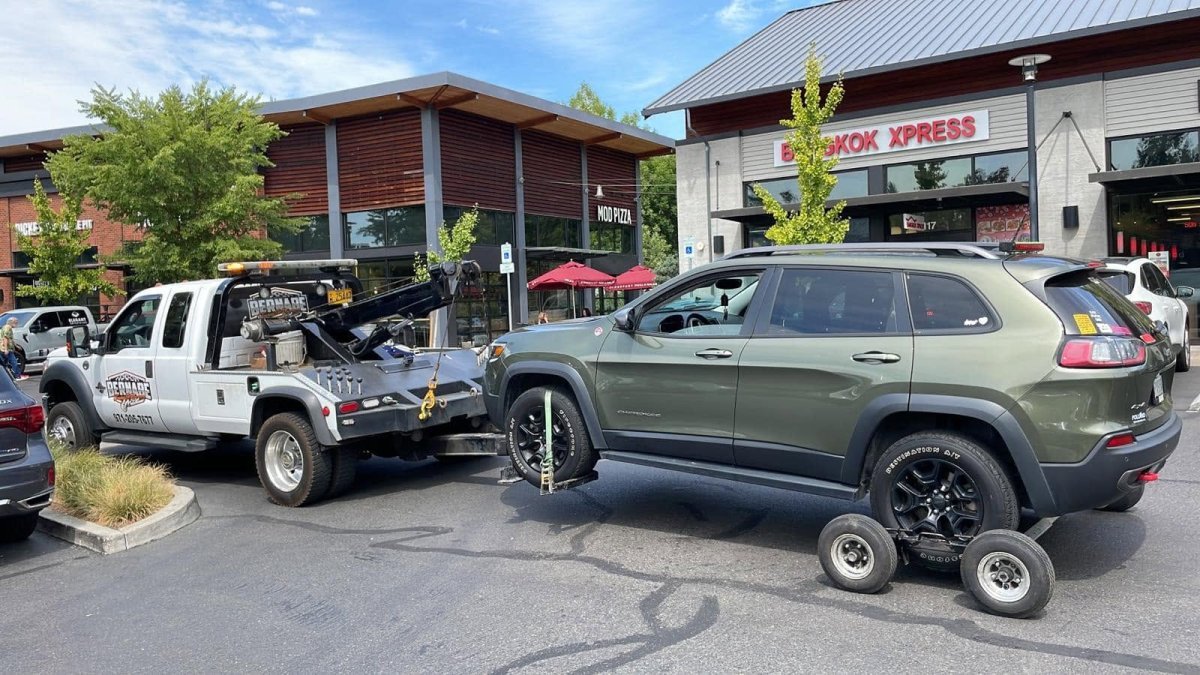
When your vehicle is disabled on the side of a busy Portland-area highway like I-5 or OR-217, your primary concern is getting it moved safely and without causing more damage. You’ve likely heard of flatbed towing, but you might wonder if it’s truly necessary for your specific situation. The answer is often a resounding yes. For many modern vehicles, a flatbed isn’t just a premium option—it’s the gold standard for protecting your investment.
This guide explains why flatbed towing is the safest method for vehicle transport, clarifies which cars absolutely require it, and helps you understand what to tell a dispatcher to get the right help in Tigard, Beaverton, or anywhere in the Portland metro area.
Understanding Flatbed Towing Service: The Basics of Vehicle Transport
A flatbed Tow truck is a specialized vehicle featuring a long, completely level bed on its rear chassis. Unlike traditional hook-and-chain or wheel-lift trucks that tow a vehicle by lifting one end, a flatbed allows the entire car to be secured on a flat surface, keeping all four wheels off the pavement. This “zero-contact” approach is the fundamental reason it’s considered the most secure method of transport.
The versatility of a flatbed makes it the preferred choice for a wide range of situations, from recovering a stalled SUV in a Hillsboro neighborhood to transporting a classic car to a show in Portland. By ensuring the vehicle rests entirely on the truck’s bed, it is protected from road hazards, driveline stress, and potential damage during transit.
The Mechanics of a Flatbed Recovery
A flatbed’s effectiveness comes from its integrated hydraulic system. The operator can tilt the bed and slide it downward to create a ramp. This low angle of approach is critical, especially for vehicles with low ground clearance, as it prevents scraping and damage to bumpers, spoilers, and the undercarriage. For a vehicle that cannot be driven onto the bed, a powerful, integrated winch is used to pull it safely and slowly into position. Once loaded, the vehicle is secured at all four corners, ensuring it remains stationary throughout the journey.
Flatbed vs. Traditional Wrecker: A Quick Overview
While you’ll see various tow trucks on Oregon roads, they generally fall into two categories: wheel-lift (a modern evolution of the “wrecker”) and flatbed. Wheel-lift trucks use a metal yoke that cradles the front or rear wheels to lift one end of the vehicle off the ground. They are fast and maneuverable, making them useful in tight spaces. However, as vehicle technology has evolved with all-wheel drive systems, complex electronics, and lightweight body materials, the industry has increasingly shifted toward flatbed technology as the default for damage-free towing.
Flatbed vs. Wheel Lift Towing: A Side-by-Side Comparison
Understanding the key differences between a flatbed and a wheel-lift tow helps you make an informed decision when you need assistance. While both have their place, a flatbed offers a superior level of protection for most modern passenger vehicles.
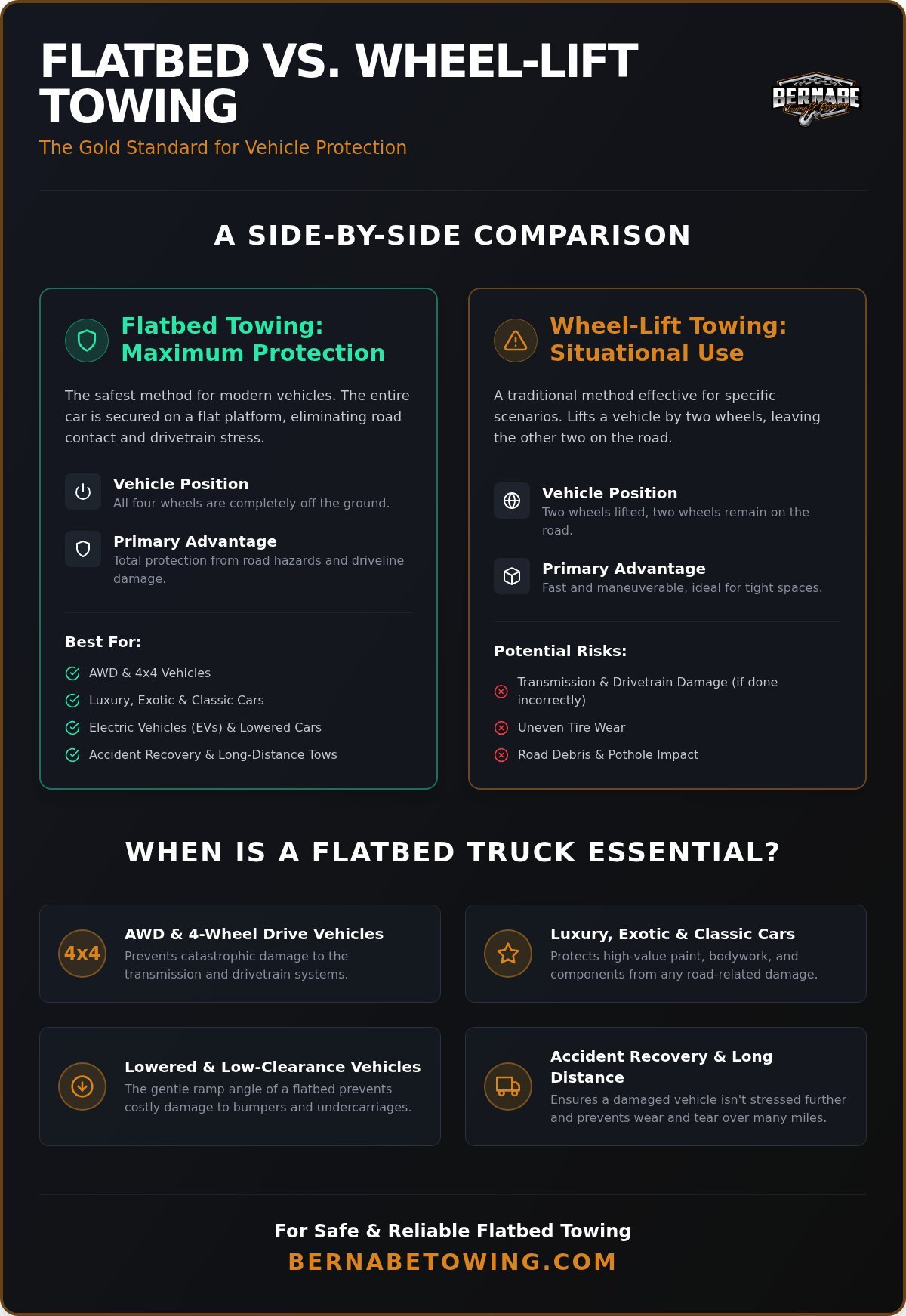
A wheel-lift tow involves lifting a vehicle by its drive wheels (or non-drive wheels) and letting the other two roll on the pavement. This method exposes the towed vehicle to several risks, including uneven tire wear, potential stress on the transmission and drivetrain, and damage from potholes, debris, or steep driveway transitions. In contrast, a flatbed provides a stable, secure platform that elevates your vehicle completely, offering a smoother ride and isolating it from the road surface.
While flatbed towing can sometimes be slightly more expensive, the value it provides in protecting your vehicle—a much larger investment—is undeniable. The peace of mind that comes from knowing your car is shielded from harm is often worth the difference in cost.
Towing Method Quick Comparison
| Feature | Flatbed Towing | Wheel-Lift Towing |
|---|---|---|
| Vehicle Position | All four wheels are off the ground and secured on a flat deck. | Two wheels are lifted; two wheels remain on the road. |
| Best For | AWD/4WD vehicles, luxury/exotic cars, lowered vehicles, EVs, accident recovery, long-distance tows. | Short-distance tows for FWD/RWD cars, vehicles in tight spaces (parking garages), repossessions. |
| Primary Advantage | Maximum protection from road hazards and eliminates drivetrain stress. | Speed, maneuverability in confined areas, and often lower cost. |
| Potential Risks | Very few risks to the vehicle when operated by a trained professional. | Potential for transmission/drivetrain damage (if done incorrectly), tire wear, and road debris impact. |
Wheel-Lift Towing: When Is It Used?
Despite the advantages of flatbeds, wheel-lift tow trucks remain essential for specific scenarios. Their smaller size and greater agility make them ideal for extractions from tight parking garages in downtown Portland or for recovering a car parked in a narrow alley in Beaverton. They are also commonly used for short-distance tows of standard front-wheel-drive (FWD) vehicles where drivetrain strain is not a concern. For simple situations, like moving a disabled FWD sedan a few miles to a nearby auto shop, a wheel-lift can be a perfectly safe and efficient solution.
The Flatbed Advantage: Total Vehicle Protection
The core benefit of a flatbed is total vehicle protection. By lifting the car completely off the ground, it eliminates any risk of damage to the transmission, axles, or differential—components that can be easily harmed if an AWD or 4WD vehicle is towed improperly. Furthermore, it protects your car’s body, tires, and undercarriage from the hazards of the road, such as potholes, debris, and steep inclines. For any transport longer than a few miles, especially on highways like I-205 or US-26, a flatbed is the mandatory choice for ensuring your vehicle arrives in the exact condition it was picked up in.
4 Critical Situations That Often Require a Flatbed Tow Truck
While a flatbed is a great choice for any tow, certain situations make it a necessity. If your vehicle falls into one of these categories, you should specifically request a flatbed when you call for service to prevent costly and avoidable damage.
- All-Wheel Drive (AWD) & 4-Wheel Drive (4WD) Vehicles: These systems are common in SUVs and cars popular in Oregon for their performance in wet weather. Towing them with two wheels on the ground can cause severe drivetrain damage.
- Low-Clearance & Lowered Cars: Vehicles with low front bumpers, side skirts, or custom lowered suspension are at high risk of scraping damage from traditional towing methods.
- Luxury, Exotic & Classic Vehicles: For high-value vehicles, a flatbed provides the “white-glove” treatment necessary to protect their pristine finish, custom wheels, and delicate components.
- Severe Accident Recovery: If a vehicle has sustained significant damage, such as broken axles, missing wheels, or a compromised frame, a flatbed is the only safe way to load and transport it.
The AWD Drivetrain Dilemma
All-wheel drive systems are designed to have all four wheels spinning at roughly the same speed. They achieve this through a series of differentials and couplings that link the front and rear axles. When you tow an AWD vehicle with a wheel-lift, two wheels are held stationary on the truck while the other two spin on the road. This speed difference creates immense internal friction and heat within the center differential or transfer case, potentially “cooking” sensitive components and leading to catastrophic failure. While some AWD vehicles can be towed with a wheel-lift if dollies are placed under the stationary wheels, a flatbed removes all doubt and is the manufacturer-recommended method in nearly all cases. Towing an AWD vehicle improperly can even void its warranty.
Protecting Specialized and High-Value Assets
The low, gentle ramp angle of a flatbed is essential for loading lowered vehicles without damaging expensive body kits or front splitters. For luxury and exotic cars, professional operators use soft nylon wheel straps instead of chains, which prevents scratches and damage to high-end alloy wheels. Flatbeds are also increasingly necessary for electric vehicles (EVs). Because their wheels can be connected to regenerative braking systems, towing an EV with its wheels spinning on the ground can generate electricity and potentially damage the motor or battery systems. A flatbed ensures the entire vehicle is inert during transport.
Professional Safety Standards in Flatbed Towing
Loading and securing a vehicle on a flatbed requires more than just the right equipment; it demands technical precision and adherence to strict safety standards. A professional operator will perform a pre-tow inspection to identify the best anchor points and assess the vehicle’s condition.
The industry standard is a four-point tie-down system, which secures each corner of the vehicle to the bed. This prevents any shifting during transit, even during sudden stops or turns. Proper tensioning of the straps is key to ensuring the vehicle’s suspension absorbs bumps on the road, not the tie-downs themselves. This meticulous process ensures your car is just as secure on the back of the truck as it is in your own garage.
Securing the Load: Chains vs. Straps
While safety chains are still used as a secondary backup, the primary method for securing a passenger vehicle is with high-strength, soft nylon wheel straps. These straps are looped around the tires, so no metal hooks or chains ever touch your vehicle’s frame, suspension, or wheels. This damage-free technique is a hallmark of a professional towing service and one that owners of new, classic, or high-end vehicles should insist upon.
The Dispatcher Checklist: What to Tell Your Towing Company
When you call for a tow in the Portland area, providing clear and accurate information ensures the right truck arrives quickly. To help the dispatcher at Bernabe Towing & Recovery send the appropriate equipment, be ready to share the following:
- Your Vehicle’s Make, Model, and Drivetrain: State whether your car is Front-Wheel Drive (FWD), Rear-Wheel Drive (RWD), All-Wheel Drive (AWD), or 4-Wheel Drive (4WD). If you’re unsure, just provide the year, make, and model.
- Any Modifications: Mention if your vehicle has been lowered, has a large spoiler, or features aftermarket body kits that could affect loading.
- The Vehicle’s Condition: Describe why you need a tow. For example: “It won’t start but it rolls,” “the wheels are locked,” or “it was in an accident and is missing a front tire.” This information is vital for determining if a tow is needed and what equipment is required for recovery.
Reliable Flatbed Recovery with Bernabe Towing & Recovery
When you’re stranded, you need a dependable local expert. At Bernabe Towing & Recovery, we are committed to providing professional, safe, and rapid vehicle transport throughout Tigard, Beaverton, Portland, and the surrounding communities. Our fleet includes modern flatbed and wheel-lift tow trucks capable of handling light-duty and medium-duty vehicles, from passenger cars and SUVs to work vans and light trucks.
Our expertise goes beyond a simple tow. We specialize in complex situations, including accident recovery and winch-outs, ensuring your vehicle is handled with the utmost care from the moment we arrive. Drivers across the Portland metro trust our straightforward, professional approach to resolving roadside emergencies.
Comprehensive Roadside Solutions
A breakdown doesn’t always require a tow. Bernabe Towing & Recovery provides a full suite of roadside assistance services. Whether you need a jump start in a Tualatin parking lot, help with a flat tire in Sherwood, or lockout service in Lake Oswego, our team is ready to help. For more serious situations, like a vehicle stuck in a ditch after heavy Oregon rain, our winch-out and accident recovery services are designed to get you and your vehicle to safety quickly. We combine our services to provide a complete solution, transporting your vehicle to your preferred destination with professionalism and care.
Why Professionalism Matters in an Emergency
A vehicle breakdown or accident is a stressful event. The last thing you need is uncertainty about the care of your vehicle. The value of a seasoned, professional operator who understands vehicle mechanics and safe recovery techniques cannot be overstated. At Bernabe Towing & Recovery, we focus on clear communication and efficient service to reduce your stress. From the initial dispatch call to the final, safe delivery of your vehicle, our goal is to provide a seamless and reassuring experience.
If you need immediate, professional flatbed assistance in the Portland metro area, don’t hesitate. Contact Bernabe Towing & Recovery for immediate flatbed assistance.
Frequently Asked Questions About Flatbed Towing
- Is flatbed towing safer for my car than a regular tow truck?
- Yes, for most vehicles, flatbed towing is the safest method. Because it lifts your entire vehicle off the road, it eliminates wear on your tires, prevents stress on the transmission and drivetrain, and protects the car from road hazards like potholes and debris.
- Can you tow an all-wheel-drive (AWD) car with a wheel lift?
- It is strongly discouraged and often against manufacturer guidelines. Towing an AWD vehicle with two wheels on the ground can cause severe, expensive damage to the drivetrain. While it’s sometimes possible with special equipment like dollies, a flatbed is always the safest and recommended option.
- How much does a flatbed towing service typically cost compared to a standard tow?
- Flatbed towing may have a slightly higher cost than a wheel-lift tow due to the specialized equipment involved. However, this minor additional expense serves as insurance against potentially thousands of dollars in drivetrain or cosmetic damage, making it a valuable investment in your vehicle’s protection.
- Do I need a flatbed for a lowered car or one with a low front bumper?
- Absolutely. The controlled, low angle of a flatbed’s loading ramp is essential to prevent scraping and damaging expensive bumpers, spoilers, and undercarriage components on lowered or sports cars.
- Can a flatbed tow truck pick up a car that won’t start or shift into neutral?
- Yes. Every flatbed truck is equipped with a powerful winch. The operator can safely pull a non-running or immobilized vehicle onto the flatbed, even if it cannot be driven or rolled into place. This is a key part of the process for recovering a stalled car.
- Is flatbed towing required for electric vehicles (EVs)?
- Yes, most EV manufacturers require flatbed towing. This is because their wheels are often permanently engaged with the electric motors and regenerative braking systems. Towing with the wheels spinning on the road can generate power and potentially damage sensitive electronic components.
- What is the maximum distance a flatbed tow truck can transport a vehicle?
- Flatbed trucks are ideal for both short and long-distance towing. There is no practical distance limit, and they are the required method for any long-haul transport to ensure the vehicle is not subjected to unnecessary wear and tear.
- Will my insurance cover the cost of a flatbed tow?
- Coverage depends on your specific auto insurance policy. Many policies with roadside assistance or towing coverage will cover the cost, but it’s always best to check with your provider to understand your policy’s limits and requirements.