Bernabe Towing & Recovery
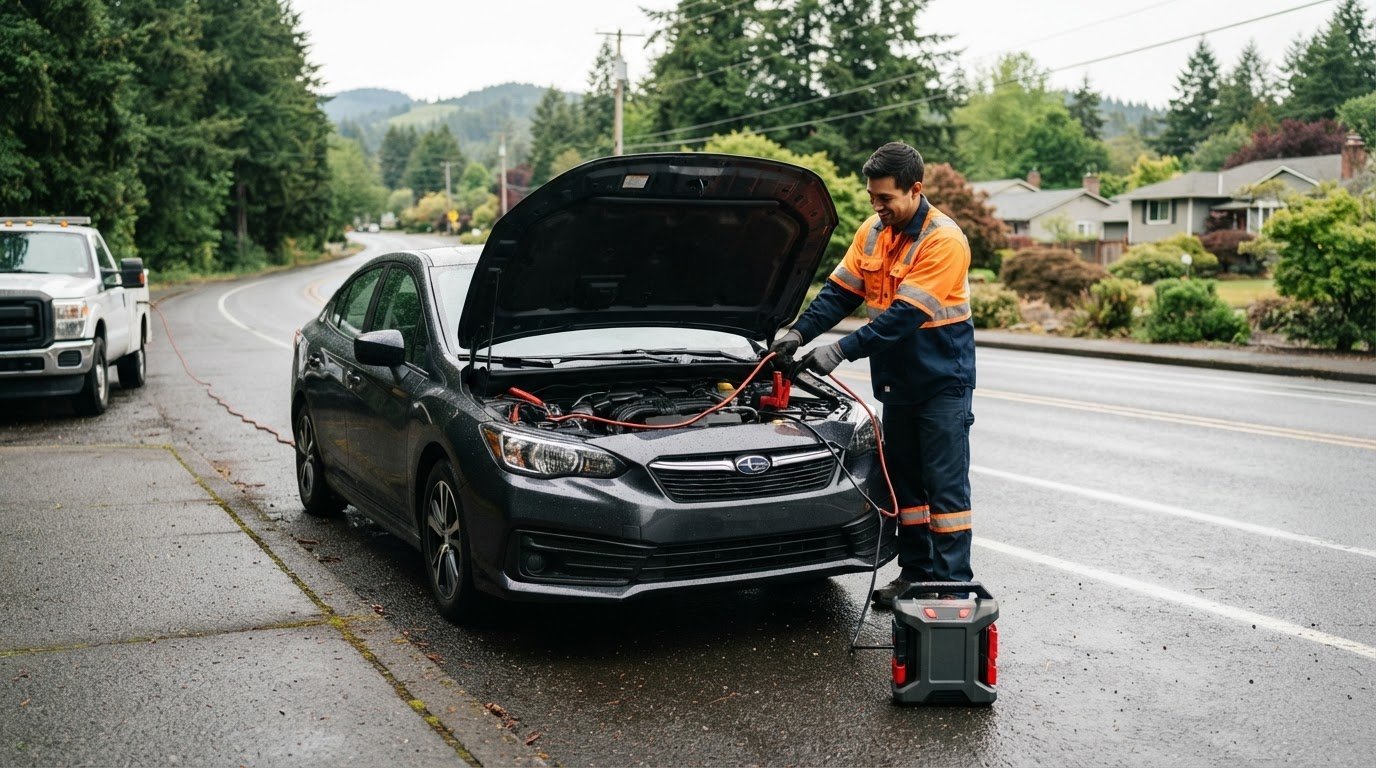
The quickest fix isn’t always the safest one. If your car won’t start, an emergency jump start may help, but a weak battery isn’t the only possible cause. The wrong boost can also put a vehicle’s electronics at risk. Before connecting cables or calling for help, consider what the car is doing and whether you can proceed safely.
It’s understandable to feel unsure when you’re stranded in the Portland metro area and need a clear next step. This guide compares a DIY boost, a portable jump starter, and professional roadside help so you can choose an option that fits your situation. Bernabe Towing & Recovery provides jump start service for cars and light-duty trucks in Portland and surrounding communities, including Tigard, Beaverton, Tualatin, Sherwood, Hillsboro, Wilsonville, King City, and Lake Oswego. Confirm service availability for your exact location.
You’ll also learn what details to share when requesting roadside assistance, such as your location, vehicle type, and what happens when you try to start it. A jump may get you moving, but continued trouble can point to an issue that a boost alone won’t resolve.
Key Takeaways
- A no-start doesn’t automatically mean the battery is the problem. Consider the symptoms before choosing a next step.
- Compare a DIY boost, a compatible portable jump starter, and an emergency jump start service based on your equipment, confidence, and surroundings.
- Use a simple decision framework: check your safety, note how the vehicle responds, and see whether it starts after assistance.
- When requesting roadside help, share your exact location, vehicle details, symptoms, and how a provider can safely reach you.
- If conditions feel unsafe or the vehicle still won’t start, professional jump-start help can offer a practical next step.
Emergency jump start basics: what may be keeping your vehicle from starting?
An emergency jump start supplies power to help start a vehicle with a weak battery. It may get the engine running, but it won’t identify why the vehicle failed to start or confirm that the battery can hold a charge. For a foundational overview of the jump-start procedure and common equipment, see Wikipedia, then follow the instructions specific to your vehicle before attempting a boost.
Pay attention to what happens when you turn the key or press the start button. Slow cranking or clicking can be consistent with a weak battery, but a no-start symptom alone doesn’t prove the battery is the cause. A vehicle that starts normally and then stalls presents a different pattern. A jump may not address what’s making the engine stop.
What symptoms can point to a weak 12-volt battery?
Dim lights, slow cranking, or a clicking sound are possible clues, not a definitive diagnosis. Dashboard warnings or unusual electrical behavior can also have causes beyond the battery, and symptoms vary by vehicle. Instead of naming a failed part, note what you observed: whether the engine cranked, whether the lights looked dim, and whether the vehicle started before stalling. That description helps a roadside provider understand the situation.
When might a jump start not solve the no-start problem?
A boost may not help if another starting or charging component is at fault. If the vehicle still won’t start, or repeatedly fails after starting, avoid repeated attempts and seek a professional assessment. A roadside jump-start service can provide a boost, but it isn’t a full mechanical repair or a complete diagnosis.
A jump start is a temporary boost, not a diagnosis or repair. If the engine starts, that’s useful information, but it doesn’t establish that the battery or charging system is healthy. If it starts and then stalls, or won’t restart, share that sequence when requesting assistance. If you can’t confidently determine whether a boost is suitable for your vehicle, don’t guess. Professional jump-start help can offer a practical next step.
DIY boost or emergency jump-start service: which option fits your situation?
The right choice depends on more than whether you have jumper cables. Consider whether you have suitable equipment, know what your vehicle’s manual allows, feel confident following its guidance, and can work away from traffic and other hazards. A DIY boost, a compatible portable jump starter, or professional help may each fit different circumstances. None is right for every vehicle or battery condition.
When is a do-it-yourself boost a reasonable consideration?
A boost may be worth considering if your vehicle’s owner’s manual permits it, you have appropriate equipment, and the location is safe. Read the manual first, since battery locations and procedures can vary. Don’t proceed if the battery appears damaged, swollen, or leaking, or if you notice another hazard. Stop if you’re unsure rather than relying on general instructions.
A portable jump starter can be convenient to carry, but it still needs to be compatible with your vehicle and used according to its instructions. Jumper cables also require a suitable assisting vehicle and a safe place to work. For a quick safety review, consult this roadside battery boost safety checklist.
When does professional emergency jump-start help make more sense?
Request assistance if you don’t have appropriate equipment, aren’t confident about the vehicle-specific guidance, or can’t safely work where the car is stopped. A shoulder beside fast-moving traffic or a hard-to-reach position can make an attempted boost a poor choice. If you’re weighing a boost against a tow, this overview of when you shouldn’t jump start your car can help frame the decision.
Give the provider clear information: your exact location, vehicle make and model if known, and what happens when you try to start it. Mention whether the engine cranks, clicks, starts and stalls, or doesn’t respond. Bernabe Towing & Recovery offers jump start service for cars and light-duty trucks in the Portland metropolitan area, including Portland, Tigard, Beaverton, Tualatin, Sherwood, Hillsboro, Wilsonville, King City, and Lake Oswego. Confirm service availability for your location. If you can’t safely or confidently attempt a boost, professional help can provide a clear next step.
Jump Start or Tow? How to Know What You Need
Choose the next step by checking three things: whether the location is safe, what the vehicle is doing, and what happens after assistance. If you’re exposed to traffic or another hazard, prioritize getting to a safe place if possible and requesting roadside help. If the vehicle won’t start and a boost can’t be attempted safely, ask whether towing is appropriate. A jump start may help with a weak battery, but it won’t resolve every no-start problem.
- Unsafe location: Don’t attempt a boost beside traffic or where you can’t work safely. Request assistance and describe the hazards.
- Vehicle starts after a boost: Note how it runs and watch for warning lights or unusual sounds. A successful start alone doesn’t confirm that the battery or charging system is healthy.
- Vehicle remains inoperable: If it still won’t start, or starts and then stalls, ask about towing and a vehicle-specific assessment.
What should drivers notice after a vehicle starts?
Pay attention to whether the engine continues running, whether warning lights remain on, and whether you hear anything unusual. Note what happened and whether the starting problem returns during normal use. Don’t repeatedly restart the vehicle to test it. If symptoms persist, arrange an assessment from a qualified automotive professional who can evaluate the specific vehicle.
Roadside jump-start help is different from towing, and neither should be confused with a full mechanical diagnosis or repair. A boost may provide temporary starting assistance, but it doesn’t establish what caused the problem. If the vehicle remains inoperable or shows concerning symptoms, tell the provider what you observed and ask which roadside option fits.
When should a driver request a tow instead?
Ask about towing if a safe boost isn’t possible or the vehicle remains inoperable after assistance. Give the provider your exact location, vehicle type, and a clear description of symptoms or hazards. That information helps them understand your request and discuss an appropriate next step. Bernabe Towing & Recovery offers jump start service and towing for cars and light-duty trucks. Confirm current service availability for your location.
Stop attempting a boost and request help if the location is unsafe, the vehicle shows a hazard, or it remains inoperable after assistance. For more details about towing and roadside safety, see the emergency towing guide.
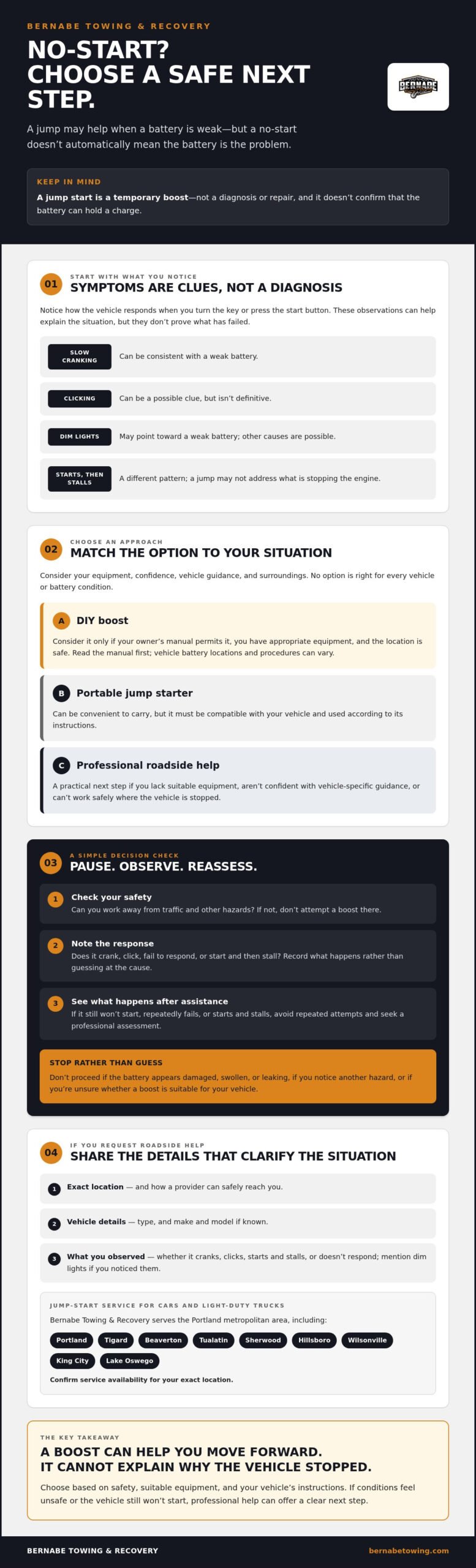
Before Requesting a Jump Start in Portland
A few clear details can help turn an emergency jump start request into a practical next step. Focus on safety first, then identify the vehicle and describe what it’s doing. You don’t need to diagnose the problem before you call. A clear account of what you observe is more useful than guessing at a failed part.
What information should you have ready for the provider?
Before contacting a roadside provider, gather what you can without putting yourself at risk:
- Move to a safer place if possible. Avoid standing near moving traffic or attempting repairs in an exposed location. If you can’t safely move, explain the situation when requesting help.
- Identify the vehicle. Share its make, model, approximate year, and whether it’s a car or light-duty truck. Mention anything that could affect access, such as a tight parking area or a vehicle stopped on a shoulder.
- Describe the symptoms. Say whether the engine cranks slowly, clicks, starts and stalls, or doesn’t respond. Include visible warning signs or unusual electrical behavior, but don’t assume these confirm a battery problem.
- Give your exact location. Provide the street address, nearby intersection, or a clear landmark, along with the safest way for the provider to reach the vehicle.
Bernabe Towing & Recovery provides jump start service for cars and light-duty trucks in the Portland metropolitan area, including Portland, Tigard, Beaverton, Tualatin, Sherwood, Hillsboro, Wilsonville, King City, and Lake Oswego. Coverage and availability can vary by location, so confirm both when you make contact.
How can you stay safer while waiting for assistance?
Stay out of immediate traffic hazards. If you can safely reach a place away from moving vehicles, do so. Don’t stand beside traffic or attempt an unsafe roadside repair while waiting. Follow local emergency guidance if your location presents an urgent danger. Share any access concerns with the provider so they know what to expect at the scene.
Having these details ready helps the provider understand whether you’re requesting a jump start and what conditions may affect the response. If a boost isn’t safe to attempt on your own, request jump start service and provide your vehicle details, symptoms, and exact location.
Choose local emergency jump-start help when you need a clear next step
Professional help is a practical option if the vehicle is stopped somewhere unsafe, you don’t have suitable equipment, or you’re not confident following the vehicle’s jump-start guidance. It can also make sense when the vehicle continues to have no-start symptoms after assistance. Describe what’s happening and ask whether a jump start or towing is the more suitable roadside service.
Bernabe Towing & Recovery provides jump start and towing services for cars and light-duty trucks in the Portland metropolitan area. Stated service communities include Portland, Tigard, Beaverton, Tualatin, Sherwood, Hillsboro, Wilsonville, King City, and Lake Oswego. Coverage and availability depend on your exact location, so confirm them when you contact the provider.
What can you expect when requesting Bernabe roadside assistance?
Share your vehicle’s make, model, approximate year, and whether it’s a car or light-duty truck. Explain whether it cranks, clicks, starts and stalls, or doesn’t respond, and mention any warning signs or hazards. Give your exact location and describe how the vehicle can be reached safely. This information helps clarify your request, but it doesn’t guarantee a particular outcome or provide a mechanical diagnosis.
A jump start is roadside assistance, not full mechanical repair. If the vehicle starts but the problem returns, or warning signs persist, arrange an assessment with a qualified automotive professional. A successful boost doesn’t confirm that the underlying issue has been resolved.
When should you request towing instead of another boost attempt?
Discuss towing if the vehicle remains unable to start or conditions make another boost unsafe. Explain what assistance has already been tried, what happened afterward, and any access or roadside hazards. Bernabe offers towing and roadside services, but not full mechanical repairs. Confirm which service is appropriate and whether help is available at your location.
If you’re stranded and need a clear next step, contact Bernabe Towing & Recovery to discuss your roadside situation. Share your location and vehicle symptoms to ask about jump-start help or towing for your circumstances.
Contact Bernabe Towing & Recovery
Choose a Safe Next Step for Your Vehicle
The right emergency jump start decision depends on your vehicle’s symptoms, the safety of your location, and whether you have equipment you can use confidently. A boost may help a weak battery, but it doesn’t confirm that the battery or charging system is healthy. If the vehicle remains inoperable or a boost isn’t safe, ask about towing rather than repeating attempts.
Bernabe Towing & Recovery provides jump start service for cars and light-duty trucks in Portland and surrounding communities, including Tigard, Beaverton, Tualatin, Sherwood, Hillsboro, Wilsonville, King City, and Lake Oswego. Confirm availability for your exact location and explain what the vehicle is doing so you can discuss a suitable roadside option.
Request local roadside jump-start assistance and take the next step with a clearer plan. Stay focused on safety, and remember that you don’t have to guess at the right response alone.
Frequently Asked Questions
Can I jump-start my car if the battery is completely dead?
Sometimes, if “completely dead” means the battery is deeply discharged but otherwise able to accept a boost. A jump may not work if the battery is damaged or another starting or charging component is causing the problem. Check your owner’s manual before attempting anything, and don’t try to boost a battery that’s leaking, swollen, or visibly damaged. If you’re unsure, request roadside help and describe what you see.
Is it safe to jump-start a modern car?
It can be safe when you follow the vehicle’s instructions and use compatible equipment, but don’t assume every car has the same procedure. Check the owner’s manual for vehicle-specific guidance before connecting a booster or cables. Stop if you see battery damage, leaking, swelling, or another hazard. If the instructions aren’t clear or you’re not confident, professional jump-start assistance is a safer next step than guessing.
How long does an emergency jump start take?
The time can vary with the vehicle, its condition, access to the battery or designated connection points, and roadside circumstances. There’s no reliable duration that applies to every emergency jump start, and a boost may not get a vehicle running if another component is involved. If you request service, describe your vehicle and location, then ask the provider for an estimate based on current conditions.
What happens if my car still will not start after a jump?
If it still won’t start, stop repeated attempts and tell the roadside provider what happened, including whether the engine clicked, cranked, or didn’t respond. A failed boost doesn’t identify the cause; another starting or charging component may be involved. Ask whether towing is appropriate, then seek a vehicle-specific assessment from a qualified automotive professional. Roadside jump-start service can provide a boost, but it isn’t a full mechanical diagnosis or repair.
Can roadside assistance jump-start my car in Tigard or Beaverton?
Bernabe Towing & Recovery provides jump start service for cars and light-duty trucks in the Portland metropolitan area. Its stated communities include Tigard, Beaverton, Tualatin, Sherwood, Hillsboro, Wilsonville, King City, Lake Oswego, and Portland, Oregon. Service availability depends on your exact location, so confirm coverage when you contact the provider. Share your vehicle type, symptoms, and precise location to help clarify your request.
Should I call for a jump start or a tow?
Request a jump start if a boost appears suitable and can be attempted safely. Ask about towing if the vehicle remains inoperable or the location makes a boost unsafe. Tell the provider what symptoms you observed and whether assistance has already been tried. A vehicle that starts after a boost may still have a battery or charging issue, so arrange a professional assessment if the problem returns or other symptoms persist.