Bernabe Towing & Recovery
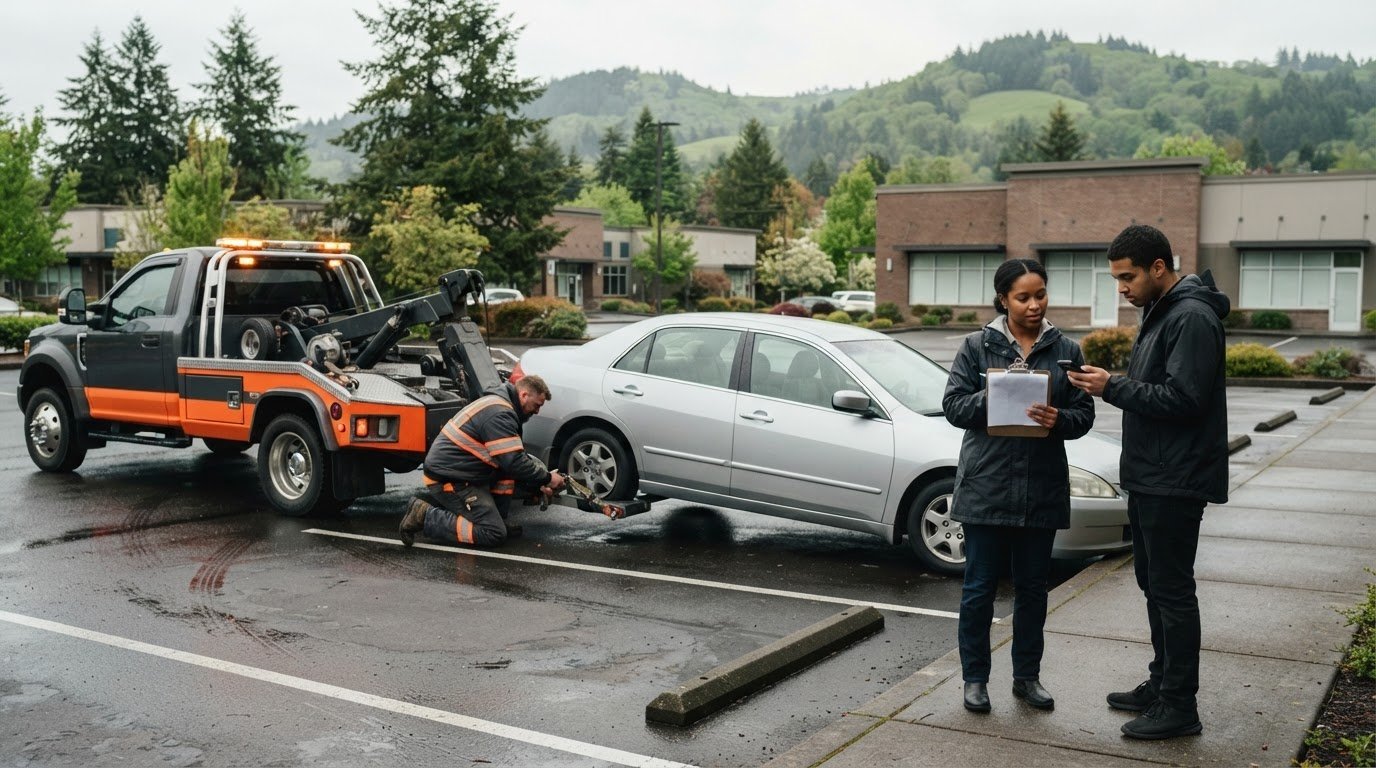
A vehicle is blocking your lot in Beaverton, but does the city or Washington County handle the next step? A Private Property Impound Washington County Oregon situation can depend on the exact address, and the process isn’t the same everywhere. Washington County is in Oregon, so Washington State towing rules shouldn’t be assumed to apply.
Whether you manage the property or are trying to locate your vehicle, start with the facts you can verify: the full address, whether the vehicle was on private or public property, and any signs or notices at the location. Record dates and save photos and messages so you can explain what happened clearly when you contact the relevant local authority or towing company.
This guide covers the general impound process, what to document, and practical steps for identifying the right contact and finding vehicle-retrieval information. Local rules and responsible agencies can vary by location, so don’t confuse Oregon requirements with Washington State law. For a separate towing or roadside issue, Bernabe Towing & Recovery serves Portland metropolitan communities including Beaverton, Tigard, Tualatin, Sherwood, and Hillsboro.
Key Takeaways
- For a Private Property Impound Washington County Oregon issue, begin with the exact address to identify which local jurisdiction may apply.
- Use a clear sequence: establish where the vehicle is, describe the issue, gather relevant records, then contact the appropriate local source.
- Property owners and vehicle owners have different immediate concerns. Organize vehicle details and documented circumstances around your role.
- Keep urgent safety concerns separate from administrative questions about a tow, impound, or vehicle retrieval.
- Distinguish local process questions from practical towing needs, and know where Bernabe Towing & Recovery serves Washington County.
Private Property Impound in Washington County, Oregon: Why the Exact Location Matters
A private-property impound is the removal of a vehicle from privately owned or managed land, such as an apartment parking area or business lot. That description alone doesn’t establish whether a particular tow was authorized or which rules apply. The general idea of an impound is explained in What is Impoundment?, but questions about a specific tow call for local information.
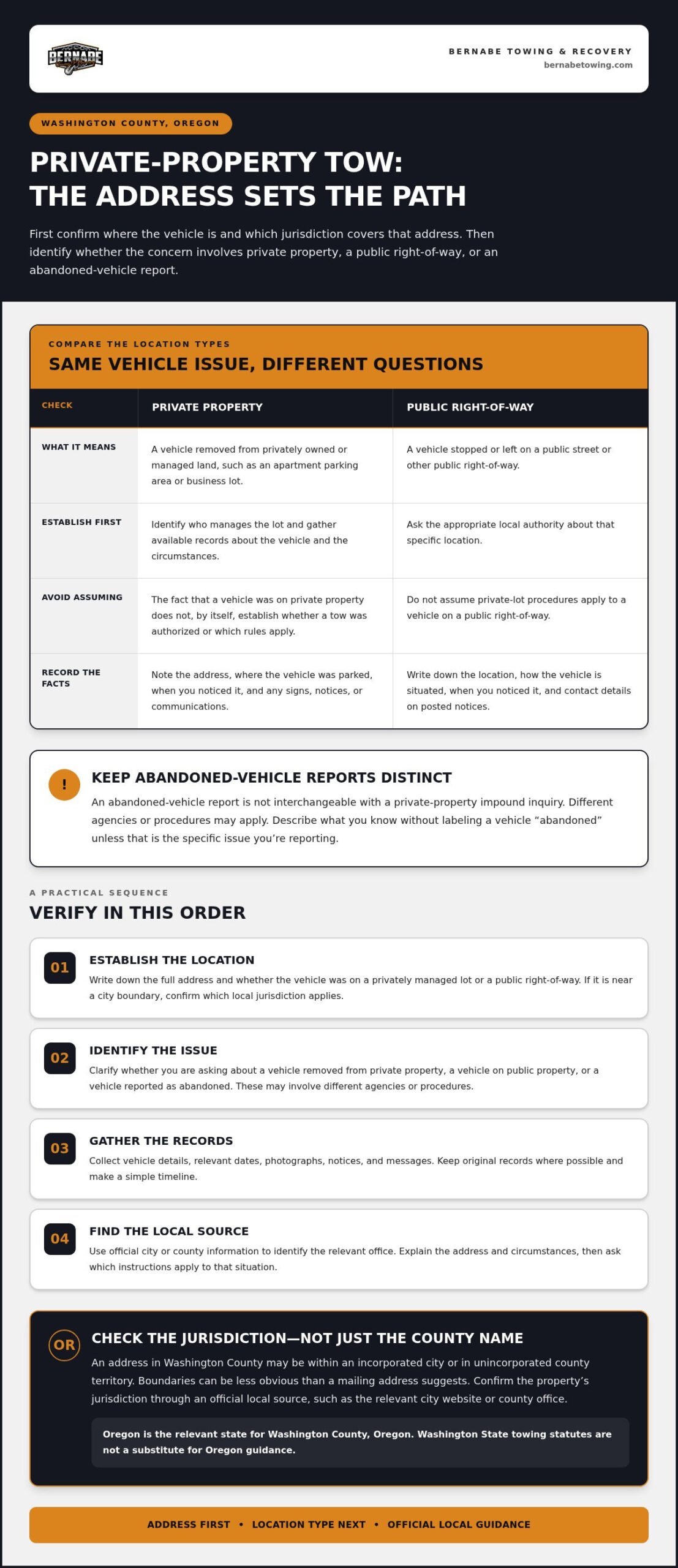
Start with the property address when researching a local impound. “Washington County” describes a broad area, but an address may be within an incorporated city or in unincorporated county territory. Local authority, procedures, and points of contact can differ. A Private Property Impound Washington County Oregon question should begin with the street address, not an assumption that one countywide process covers every location.
Does the property fall within a city or unincorporated Washington County?
Beaverton, Hillsboro, Tigard, and Tualatin are useful place names for orienting your search, but they don’t establish which city process applies to a particular property. Boundaries can be less obvious than a mailing address suggests. Confirm the property’s jurisdiction through an official local source, such as the relevant city’s website or county office, and identify which department handles the type of vehicle concern you’re reporting.
Use the complete address, including the street number and name and, where relevant, the lot, building, or entrance. If you’re unsure whether the location is inside city limits, verify that before relying on information you found for a nearby city. A countywide location does not mean one process governs every address.
Private property, public right-of-way, and abandoned vehicles
These are different situations. A vehicle in a privately managed parking lot raises a different question from one stopped or left on a public street or other public right-of-way. An abandoned-vehicle report is not interchangeable with a private-property impound inquiry either. Different agencies or procedures may apply, so describe what you know without labeling a vehicle “abandoned” unless that is the specific issue you’re reporting.
Washington County Sheriff’s Office information about vehicles and parking can be a starting reference. Use it to find relevant county guidance, then verify whether the exact address falls under county or city authority and whether another local office handles the matter. If the vehicle is on a public right-of-way, ask the appropriate local authority about that location instead of assuming private-lot procedures apply. If it’s on private property, establish who manages the lot and what records are available before drawing conclusions about the tow.
Write down the location, how the vehicle is situated, when you noticed it, and any contact information on posted notices. These details help you explain the situation clearly to an official source. Keep the next steps in order: identify the jurisdiction, establish whether the location is public or private, then ask the relevant authority about the process for that address.
How a Private-Property Tow or Impound May Be Handled in Oregon
A simple sequence can help property representatives and vehicle owners get oriented without assuming every tow follows the same procedure. Establish the exact location, describe what happened, collect available records, and contact the local office or other source responsible for that address and type of situation.
This is a general process overview, not a verified statement of the legal requirements for a specific tow. Requirements may depend on current Oregon law and local rules, so verify legal questions with an official source for the location. Washington State towing statutes apply to Washington, not Oregon, and are not a substitute for Oregon guidance.
- Establish the location. Record the full address and whether the vehicle was on a privately managed lot or a public right-of-way. If the address is near a city boundary, confirm which local jurisdiction applies.
- Identify the issue. Note whether you’re asking about a vehicle removed from private property, a vehicle on public property, or a vehicle reported as abandoned. These descriptions may point to different agencies or procedures.
- Gather records. Collect vehicle details, relevant dates, photographs, notices, and messages. Keep original records where possible and make a simple timeline.
- Contact the appropriate local source. Use official city or county information to identify the relevant office. Explain the address and circumstances, then ask which instructions apply to your situation.
What a property owner or manager should document
Keep a file with the property address and, if visible, the vehicle’s make, model, color, and plate number. Record when you first noticed the vehicle, where it was parked, and what happened before you sought guidance. Save photographs of the vehicle and its position, along with any notices or communications. Treat signage, notice, and authorization requirements as questions to verify against current local rules, not assumptions based on another Oregon city or state.
Separate what you observed from what you believe may have happened. For example, note that a vehicle was parked in a marked space rather than making an unsupported legal conclusion about its status. A factual record helps a local office understand the concern and direct you to the applicable process.
What a vehicle owner should establish after a tow
Start with the last place and time you remember parking, then record when you discovered the vehicle was gone. Check for notices at the location and use official local resources to identify the appropriate agency or find retrieval instructions. Have the plate number and a vehicle description ready when you ask for information. Don’t assume a release schedule, document list, or fee. Verify those details with the official source handling the vehicle.
For a separate towing need involving a car, SUV, or light-duty truck in the Portland metro area, Bernabe Towing & Recovery provides local towing assistance. That practical service is distinct from questions about who authorized an impound or which agency handles retrieval. For a Private Property Impound Washington County Oregon concern, keep those questions separate: verify the process locally and arrange towing help for a vehicle issue when needed.
Property Owner or Vehicle Owner? Compare the Right Next Step
Your first step depends on your role. A property representative needs to explain why a vehicle is on a particular lot and what happened there. A vehicle owner needs to find out where the vehicle was taken and which official source can provide retrieval information. For a Private Property Impound Washington County Oregon question, organize your records and check the process for the specific address. Neither role guarantees a particular result, and local procedures may differ.
| Reader role | Immediate concern | Useful records | Appropriate next step |
|---|---|---|---|
| Property owner, manager, or representative | Describe the vehicle’s presence and circumstances at the property. | Exact address, vehicle description, dates, photos, notices, and communications. | Identify the local jurisdiction and check the applicable official guidance, including any locally relevant notice or authorization rules. |
| Vehicle owner | Confirm whether the vehicle was towed and where it may be held. | Parking address, approximate time, plate number, vehicle details, and posted information. | Use official local resources to find the right agency or retrieval contact and follow its instructions. |
If you represent the property
State your role clearly: are you the owner, a property manager, or someone acting as a representative? Record where the vehicle was parked, its identifying details, when you saw it, and what happened before you sought guidance. Keep photographs and communications together so you can give a consistent account. Before relying on a notice, signage, or authorization requirement, check current rules for that address with an official local source.
Keep your observations factual. Note where the vehicle was parked and what signs or notices were visible rather than assuming those facts settle whether a tow is allowed. If another person manages the property or handled communications, preserve their records too. A clear timeline helps the relevant office understand your question.
If your vehicle was removed
Write down the exact address where you parked, the approximate time, and any posted information you remember seeing. Record when you discovered the vehicle was gone and keep any messages, notices, or receipts related to the tow. Then use official guidance for the city or county connected to that location to identify where a retrieval inquiry should go. Procedures vary, so follow the source responsible for the specific situation.
When contacting an agency or other official source, explain the location and provide the vehicle’s plate number or description if available. If that office doesn’t handle the matter, ask where to direct your next question. Record whom you spoke with, when you contacted them, and what instructions you received. Don’t assume a release timeline, required documents, or fees. Confirm those details through the appropriate official channel.
A Washington County Private-Property Impound Checklist Before You Act
Before making calls, gather the facts. A focused record helps you explain the situation and find the right local source without treating every Washington County address as if it follows the same process. Use this checklist whether you’re responsible for a property or trying to locate a vehicle.
Information to gather before making calls
Keep these details together in one note or folder. Share what you know and mark anything you still need to verify.
- Exact location: Write the full address and nearby cross streets. Note whether the vehicle was on a private lot or public right-of-way.
- Vehicle details: Record the make, model, color, and license plate information, if visible or available.
- Timeline: Note the date and approximate time you saw the vehicle, parked it, or noticed it was gone.
- Related records: Save photographs, signs or notices, messages, receipts, and official communications in one place.
- Jurisdiction: Identify whether the address is in an incorporated city or another part of Washington County. Beaverton, Hillsboro, Tigard, Tualatin, and Sherwood are useful local contexts, but the exact address still matters.
Keep observations distinct from assumptions. Record what a sign says or where the vehicle was parked rather than deciding on your own what those details mean under local rules.
Where to verify local rules and vehicle location
Start with Washington County Sheriff information when the situation falls within the Sheriff’s stated remit. For an address within an incorporated city, identify the relevant city or agency and use its current official guidance. If you’re unsure which office applies, provide the full address and ask where vehicle or parking questions for that location should go.
Separate immediate safety from administrative questions. If a vehicle creates an immediate hazard or there’s another urgent safety concern, prioritize the appropriate emergency or public-safety channel. Questions about whether a tow occurred, where a vehicle is held, or which local procedures apply are administrative. Direct those to the relevant official source. Don’t assume the same steps, notice rules, or retrieval instructions apply across jurisdictions. Verify legal and procedural details against current Oregon and local sources.
For a Private Property Impound Washington County Oregon situation, an organized checklist can make the first conversation more productive, but it can’t establish a legal outcome. For a separate breakdown or towing need, Bernabe Towing & Recovery serves communities across the Portland metro area, including Tigard, Beaverton, Tualatin, Sherwood, Hillsboro, Wilsonville, King City, Lake Oswego, and Portland. Drivers in Beaverton can also review the Beaverton towing service guide for local service-area information. For practical towing assistance, contact Bernabe Towing & Recovery.
Get Local Towing Help for a Washington County Vehicle Issue
Questions about whether a tow followed local rules or where an impounded vehicle is being held belong with the relevant agency or official source. A practical vehicle problem is different. If your car, SUV, or light-duty truck needs a flatbed tow or roadside help, Bernabe Towing & Recovery provides towing, accident recovery, and roadside assistance across the Portland metropolitan area. For urgent roadside situations in the region, see the 24/7 emergency towing service in Newberg and Dundee, Oregon. Keeping those needs separate helps you take the right next step without expecting a towing call to resolve a legal or retrieval question.
What to share when requesting towing assistance
Clear details help describe the vehicle issue and location. Be ready to explain where the vehicle is, its condition, and any access or safety concerns, such as limited space to reach it. Then specify the assistance you need. A direct description keeps the request focused on the practical vehicle problem.
- Location: Give the street address, nearby cross streets, or another clear landmark.
- Vehicle: Describe the make, model, color, and whether it’s a car, SUV, or light-duty truck.
- Condition: Explain whether it’s damaged, stuck, unable to start, has a flat tire, or is locked.
- Assistance needed: Specify towing, accident recovery, a jump start, tire change, winch-out, or lockout assistance.
- Access and safety: Mention obstacles, traffic exposure, or other details that may affect reaching the vehicle.
Keep the description factual. If the vehicle is already at an impound location, share the information you have, but direct questions about its location, release, or the tow’s authorization to the responsible agency or official contact. A towing request doesn’t establish who authorized an impound or determine which retrieval procedure applies.
Local towing and roadside support across the Portland metro area
Bernabe Towing & Recovery is a locally owned business serving Washington County communities including Tigard, Beaverton, Tualatin, Sherwood, and Hillsboro. The company provides towing and roadside assistance for cars, SUVs, and light-duty trucks, including accident recovery, jump starts, tire changes, winch-outs, and lockout assistance. Service areas also include Wilsonville, King City, Lake Oswego, and Portland.
If you’re dealing with a Private Property Impound Washington County Oregon situation, use current official guidance for legal, agency, or vehicle-retrieval questions. For a separate breakdown, accident, or roadside problem, share the vehicle’s location and condition so the practical need is clear. Contact Bernabe Towing & Recovery for towing help when you need local assistance with a vehicle issue.
Take the Next Step With Clear Information
Once you’ve identified whether you need an official answer or practical vehicle help, keep those requests separate. For a Private Property Impound Washington County Oregon concern, contact the local authority about jurisdiction, authorization, or retrieval. If a vehicle needs roadside assistance or towing, share its location and condition so the service request can focus on the immediate need.
Bernabe Towing & Recovery is a locally owned and operated Portland metropolitan-area business providing towing, accident recovery, and roadside assistance for cars, SUVs, and light-duty trucks. Take the next step with the right source for your question, then arrange vehicle assistance if needed.
Contact Bernabe Towing & Recovery for local towing help when you need towing or roadside assistance.
Frequently Asked Questions
Can a vehicle be towed from private property in Washington County, Oregon?
A vehicle may be towed from private property in Washington County, Oregon, but whether a particular tow is permitted depends on the exact address, circumstances, and applicable rules. This general answer isn’t a legal determination. For a Private Property Impound Washington County Oregon question, identify whether the lot is in a city or unincorporated county area, then consult current Oregon law and official local guidance.
How do I find out where my car was impounded in Washington County?
Start with the exact address and approximate time the vehicle was last parked, then check official vehicle or parking information for the city or county connected to that location. A Beaverton address, for example, may lead to different official guidance than an address outside city limits. The responsible agency depends on location and circumstances, so don’t assume there’s one countywide lookup tool or a single retrieval site.
What should I do if my car was towed from an apartment or business parking lot?
Write down the full address, vehicle make, model, color, and plate, along with when it was parked or discovered missing. Note any signs, notices, or messages you can document, and preserve call notes and emails. Use official local resources to identify who handles inquiries for that address and where retrieval instructions are available. Verify notice, authorization, or fee details directly, since they may vary by jurisdiction and situation.
Do private-property impound rules differ between Beaverton and unincorporated Washington County?
They may differ because jurisdiction and local procedures can depend on the property’s exact location. First determine whether the address is within Beaverton city limits or in unincorporated Washington County. A mailing address alone may not settle that question. County vehicle information can be a starting point, but it may not answer a city-specific concern. Check current official guidance from the city or county covering the property before relying on a procedure.
Does Washington State towing law apply to a private-property impound in Washington County, Oregon?
No. Washington State towing law is not Oregon law, and a Washington State RCW search result concerns rules for a different state. Don’t use it to decide whether a tow in Washington County, Oregon, was proper or what steps apply. Consult current Oregon statutes and the local authority responsible for the address. Verify specific legal requirements against those sources before relying on them.
What information should a property manager keep about a vehicle tow?
Keep a dated file with the full property address, vehicle make, model, color, and plate if known, where the vehicle was parked, and when it was observed. Add available photographs of the vehicle and nearby signs, plus copies of notices and relevant communications. These records help establish a factual timeline, but they don’t prove compliance by themselves. Verify sign, notice, and authorization requirements for the specific Oregon jurisdiction.
Can a towing company help if my vehicle is disabled in Washington County?
Yes. Bernabe Towing & Recovery provides towing and roadside assistance for cars, SUVs, and light-duty trucks across the Portland metro area, including Tigard, Beaverton, Tualatin, Sherwood, Hillsboro, Wilsonville, King City, Lake Oswego, and Portland. If your vehicle is disabled rather than held after an impound, describe its location and issue when requesting assistance, such as a flat tire or a no-start. A towing request doesn’t determine an impound’s legal status or official release instructions.